10 Years of Pre-competitive Collaboration in the Seafood Supply Chain: What Have we Learned?
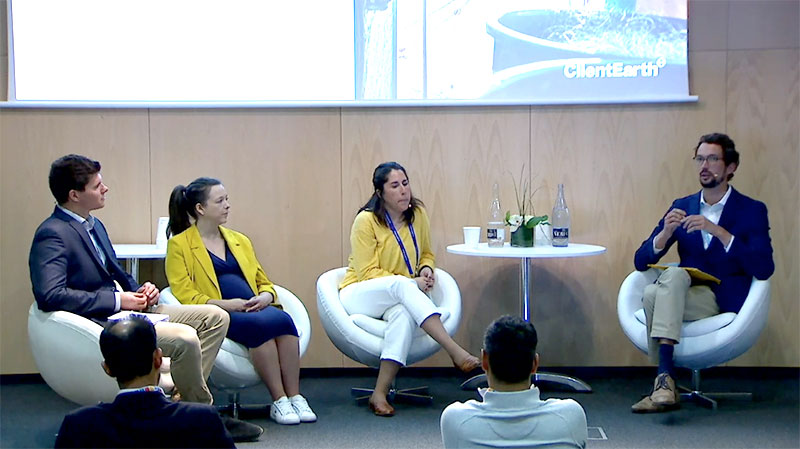
Precompetitive collaboration in the seafood industry has been at the forefront of transformative change towards improved seafood sustainability in supply chains internationally. For the past 10 years, collaborative industry platforms have multiplied in various markets around the world. These initiatives span various geographies and cover a range of topics. Some focus on a country whilst some aim to address transversal sustainability challenges faced by the sector. Over the years, these platforms have accumulated invaluable experience. We know today that there is no one size fits all solution, and that there are incredible differences between different seafood markets which justify the need for different approaches and modus operandi of these initiatives. This year, the Sustainable Seafood Coalition (https://www.sustainableseafoodcoalition.org/) is looking back at 10 years of collaboration in the UK seafood industry, an excellent milestone to reflect on the journey and the main successes and challenges along the way. As believers that buyers have a significant role to play in improving the fishery (or aquaculture activity) they source from, our session aims at providing a space to reflect on achievements of the SSC after 10 years and together with upcoming opportunities, and compare with similar initiatives in another geography, including the “Plataforma por la Sostenibilidad Pesquera” (https://www.es.clientearth.org/que-es-la-plataforma-por-la-sostenibilidad-pesquera/) a precompetitite platform in Spain. Taking into account the post-Covid economic and political context together with the context of a once in a generation European Green Deal to make our economy more sustainable, the participants will reflect on future opportunities to step up commitments and international collaboration further to strengthen the seafood sustainability agenda.
Content Access
|
$45.00
|
|
$45.00
|
|
10 Years of Pre-competitive Collaboration in the Seafood Supply Chain: What Have we Learned?
Precompetitive collaboration in the seafood industry has been at the forefront of transformative change towards improved seafood sustainability in supply chains internationally. For the past 10 years, collaborative industry platforms have multiplied in various markets around the world. These initiatives span various geographies and cover a range of topics. Some focus on a country whilst some aim to address transversal sustainability challenges faced by the sector. Over the years, these platforms have accumulated invaluable experience. We know today that there is no one size fits all solution, and that there are incredible differences between different seafood markets which justify the need for different approaches and modus operandi of these initiatives. This year, the Sustainable Seafood Coalition (https://www.sustainableseafoodcoalition.org/) is looking back at 10 years of collaboration in the UK seafood industry, an excellent milestone to reflect on the journey and the main successes and challenges along the way. As believers that buyers have a significant role to play in improving the fishery (or aquaculture activity) they source from, our session aims at providing a space to reflect on achievements of the SSC after 10 years and together with upcoming opportunities, and compare with similar initiatives in another geography, including the “Plataforma por la Sostenibilidad Pesquera” (https://www.es.clientearth.org/que-es-la-plataforma-por-la-sostenibilidad-pesquera/) a precompetitite platform in Spain. Taking into account the post-Covid economic and political context together with the context of a once in a generation European Green Deal to make our economy more sustainable, the participants will reflect on future opportunities to step up commitments and international collaboration further to strengthen the seafood sustainability agenda.
Content Access
|
|
How to Measure and Reduce Carbon Emissions in Tropical Aquaculture - Lessons Learned from the IDH Aquaculture Working Group on Environmental Footprint
Speaker:
Lisa Van Wageningen
Teresa Fernandez
Dominique Gautier
Björn Kok
Pamela Nath
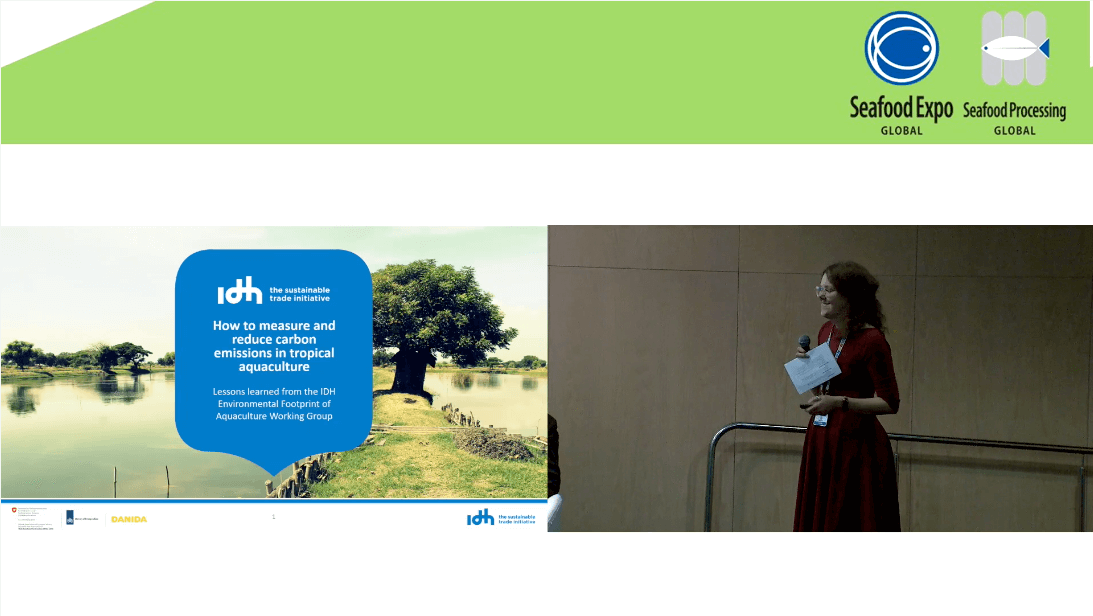
The recent IPCC report is very clear: we need to reduce greenhouse gas emissions now to avoid catastrophe. As food production accounts for a large share of global emissions, we cannot wait to start reducing the carbon footprint of different sectors, including seafood – both wild harvest and aquaculture. However, to date, methodology to calculate the footprint of seafood products has been lacking in the seafood industry, and without accurate baseline footprints, understanding hotspots and implementing improvement projects to meet targets is out of reach. To face this challenge, a few forward-looking companies have joined the IDH Aquaculture Working Group on Environmental Footprint, to among other environmental concerns, start measuring their carbon footprints along their entire supply chains – from the soy being produced for use in aquafeed, up until purchase by consumers. As the timeframe for reducing emissions is closing in, this Panel Presentation at Seafood Expo Global (Barcelona) will allow a platform for companies at different segments of the value chain to explain how they approach measuring carbon along their supply chains; and will explain where the carbon hotspots are in tropical aquaculture supply chains; and what they learned during the process of evaluating the footprint of aquaculture products. Along with the companies, the Panel Presentation will include experts in environmental foot printing in the agri-food sector. Join us in this session and listen to the experiences of companies that are calculating the footprint of their seafood products. Learn what your company can do in measuring and reducing your aquaculture carbon footprint.
Content Access
|
$45.00
|
|
$45.00
|
|
How to Measure and Reduce Carbon Emissions in Tropical Aquaculture - Lessons Learned from the IDH Aquaculture Working Group on Environmental Footprint
Speaker:
Lisa Van Wageningen
Teresa Fernandez
Dominique Gautier
Björn Kok
Pamela Nath
The recent IPCC report is very clear: we need to reduce greenhouse gas emissions now to avoid catastrophe. As food production accounts for a large share of global emissions, we cannot wait to start reducing the carbon footprint of different sectors, including seafood – both wild harvest and aquaculture. However, to date, methodology to calculate the footprint of seafood products has been lacking in the seafood industry, and without accurate baseline footprints, understanding hotspots and implementing improvement projects to meet targets is out of reach. To face this challenge, a few forward-looking companies have joined the IDH Aquaculture Working Group on Environmental Footprint, to among other environmental concerns, start measuring their carbon footprints along their entire supply chains – from the soy being produced for use in aquafeed, up until purchase by consumers. As the timeframe for reducing emissions is closing in, this Panel Presentation at Seafood Expo Global (Barcelona) will allow a platform for companies at different segments of the value chain to explain how they approach measuring carbon along their supply chains; and will explain where the carbon hotspots are in tropical aquaculture supply chains; and what they learned during the process of evaluating the footprint of aquaculture products. Along with the companies, the Panel Presentation will include experts in environmental foot printing in the agri-food sector. Join us in this session and listen to the experiences of companies that are calculating the footprint of their seafood products. Learn what your company can do in measuring and reducing your aquaculture carbon footprint.
Content Access
|
|
|
Product Total
|
$90.00 |
|
|
Grand Total
|
$90.00 |
|