Keynote: Economic Update
Speaker: Megan Greene, Harvard Kennedy School
Economic forecasting is a tricky business; they say the key to success is to forecast often. Megan Greene is unafraid to have out of consensus views and has a fantastic forecasting track record. She examines high frequency economic data, structural trends, global flows, political factors and policy developments to determine the state of the global recovery and to highlight risks and opportunities for businesses and markets. In this keynote presentation, Greene will examine these factors to offer insight on where the global recovery is heading, including an outlook for international supply chain challenges, inflation, and climate change.
Content Access
|
$45.00
|
|
$45.00
|
|
Keynote: Economic Update
Speaker: Megan Greene, Harvard Kennedy School
Economic forecasting is a tricky business; they say the key to success is to forecast often. Megan Greene is unafraid to have out of consensus views and has a fantastic forecasting track record. She examines high frequency economic data, structural trends, global flows, political factors and policy developments to determine the state of the global recovery and to highlight risks and opportunities for businesses and markets. In this keynote presentation, Greene will examine these factors to offer insight on where the global recovery is heading, including an outlook for international supply chain challenges, inflation, and climate change.
Content Access
|
|

How Do We Capitalize on Environmental Awareness to Accelerate Growth on the Heels of the Global COVID Pandemic?
Moderator: Erika Feller, MSC
Speakers:
Linda Cornish, Seafood Nutrition Partnership
Jason Cervone, McDonald’s Corporation
Eric Ditsch, Amazon Fresh
Christine Lamontagne, Globescan
Consumers are increasingly aware of their impact on the environment and specifically the impact of their consumption habits on environmental health. This is true for seafood consumers as well, with data showing consumers want more sustainable options. Consumers also demonstrated the importance of seafood to them and their families during a year of lockdowns and quarantines in 2020 with record sales of seafood. How can we leverage a consumer shift in awareness and desire to shop better for themselves and for the planet and move the sustainable seafood industry forward? Hear from industry, NGOs, and donors working hard to make sustainable seafood an easy option for consumers, and how they’re approaching sustainability and seafood consumers differently in response to COVID.
Content Access
|
$45.00
|
|
$45.00
|
|
How Do We Capitalize on Environmental Awareness to Accelerate Growth on the Heels of the Global COVID Pandemic?
Moderator: Erika Feller, MSC
Speakers:
Linda Cornish, Seafood Nutrition Partnership
Jason Cervone, McDonald’s Corporation
Eric Ditsch, Amazon Fresh
Christine Lamontagne, Globescan
Consumers are increasingly aware of their impact on the environment and specifically the impact of their consumption habits on environmental health. This is true for seafood consumers as well, with data showing consumers want more sustainable options. Consumers also demonstrated the importance of seafood to them and their families during a year of lockdowns and quarantines in 2020 with record sales of seafood. How can we leverage a consumer shift in awareness and desire to shop better for themselves and for the planet and move the sustainable seafood industry forward? Hear from industry, NGOs, and donors working hard to make sustainable seafood an easy option for consumers, and how they’re approaching sustainability and seafood consumers differently in response to COVID.
Content Access
|
|
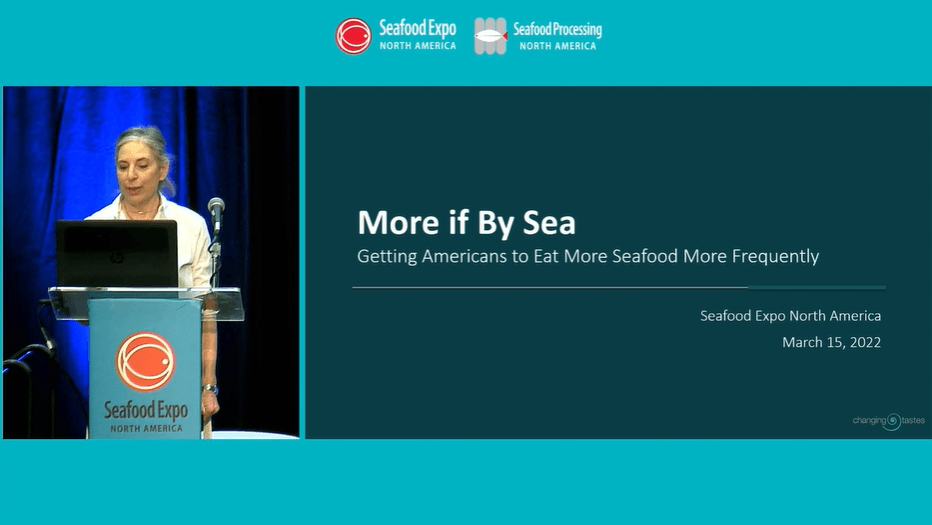
More if By Sea....Getting Americans to Eat Fish and Seafood More Frequently
Moderator: Arlin Wasserman, Changing Tastes
Speakers: RJ Harvey, Chef, Changing Tastes
Penelope Wasserman, Changing Tastes
Wild or farmed? Fresh or frozen? Contrary to the conventional wisdom, these perennial questions actually remain unanswered by American consumers and aren’t even the most important for our industry. That may be: Fish or Chicken? Or really, what should I eat? This session will feature results from an unprecedented new insights study into consumer, chef and purchasing manager opinions about fish and seafood and how they fit into American food choices. More importantly than the "wild" or "farmed" questions, how fish and seafood is harvested and handled may make the difference about whether fish and seafood is offered up and whether a consumer eats fish, seafood or maybe chooses something else entirely, like beef or chicken. That’s an important question as the American consumer is undergoing a substantial change in the types of protein we eat, and the next few years pose a unique time to fish and shellfish to win market share from birds and mammals. We'll explore that and also share some of Changing Tastes' latest insights and trends about how consumers think about protein choices in the US and on the menu, as seafood competes against poultry and meat, and how newly emerging cellular and plant-based manufactured alternatives fit into our preferences and intentions. One thing to know: attitudes and preferences vary by species, including whether cellular or plant-based replacements are of interest. And we’ll also look at how consumer thoughts and expectations about how fish is produced compared to other protein choices. Through this session, we hope to break the industry out of the "wild or farmed" paradigm and offer practical advice for how to increase the share of food from the ocean in the American diet and get us eating fish and seafood more often and instead of chicken (again).
Content Access
|
$45.00
|
|
$45.00
|
|
More if By Sea....Getting Americans to Eat Fish and Seafood More Frequently
Moderator: Arlin Wasserman, Changing Tastes
Speakers: RJ Harvey, Chef, Changing Tastes
Penelope Wasserman, Changing Tastes
Wild or farmed? Fresh or frozen? Contrary to the conventional wisdom, these perennial questions actually remain unanswered by American consumers and aren’t even the most important for our industry. That may be: Fish or Chicken? Or really, what should I eat? This session will feature results from an unprecedented new insights study into consumer, chef and purchasing manager opinions about fish and seafood and how they fit into American food choices. More importantly than the "wild" or "farmed" questions, how fish and seafood is harvested and handled may make the difference about whether fish and seafood is offered up and whether a consumer eats fish, seafood or maybe chooses something else entirely, like beef or chicken. That’s an important question as the American consumer is undergoing a substantial change in the types of protein we eat, and the next few years pose a unique time to fish and shellfish to win market share from birds and mammals. We'll explore that and also share some of Changing Tastes' latest insights and trends about how consumers think about protein choices in the US and on the menu, as seafood competes against poultry and meat, and how newly emerging cellular and plant-based manufactured alternatives fit into our preferences and intentions. One thing to know: attitudes and preferences vary by species, including whether cellular or plant-based replacements are of interest. And we’ll also look at how consumer thoughts and expectations about how fish is produced compared to other protein choices. Through this session, we hope to break the industry out of the "wild or farmed" paradigm and offer practical advice for how to increase the share of food from the ocean in the American diet and get us eating fish and seafood more often and instead of chicken (again).
Content Access
|
|
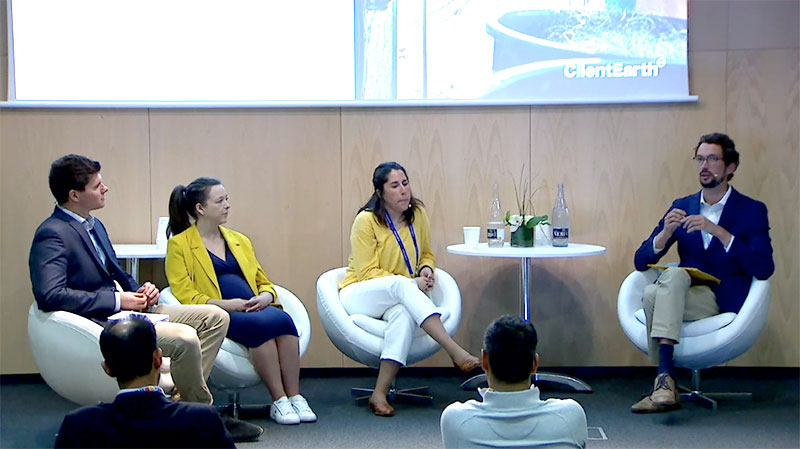
10 Years of Pre-competitive Collaboration in the Seafood Supply Chain: What Have we Learned?
Precompetitive collaboration in the seafood industry has been at the forefront of transformative change towards improved seafood sustainability in supply chains internationally. For the past 10 years, collaborative industry platforms have multiplied in various markets around the world. These initiatives span various geographies and cover a range of topics. Some focus on a country whilst some aim to address transversal sustainability challenges faced by the sector. Over the years, these platforms have accumulated invaluable experience. We know today that there is no one size fits all solution, and that there are incredible differences between different seafood markets which justify the need for different approaches and modus operandi of these initiatives. This year, the Sustainable Seafood Coalition (https://www.sustainableseafoodcoalition.org/) is looking back at 10 years of collaboration in the UK seafood industry, an excellent milestone to reflect on the journey and the main successes and challenges along the way. As believers that buyers have a significant role to play in improving the fishery (or aquaculture activity) they source from, our session aims at providing a space to reflect on achievements of the SSC after 10 years and together with upcoming opportunities, and compare with similar initiatives in another geography, including the “Plataforma por la Sostenibilidad Pesquera” (https://www.es.clientearth.org/que-es-la-plataforma-por-la-sostenibilidad-pesquera/) a precompetitite platform in Spain. Taking into account the post-Covid economic and political context together with the context of a once in a generation European Green Deal to make our economy more sustainable, the participants will reflect on future opportunities to step up commitments and international collaboration further to strengthen the seafood sustainability agenda.
Content Access
|
$45.00
|
|
$45.00
|
|
10 Years of Pre-competitive Collaboration in the Seafood Supply Chain: What Have we Learned?
Precompetitive collaboration in the seafood industry has been at the forefront of transformative change towards improved seafood sustainability in supply chains internationally. For the past 10 years, collaborative industry platforms have multiplied in various markets around the world. These initiatives span various geographies and cover a range of topics. Some focus on a country whilst some aim to address transversal sustainability challenges faced by the sector. Over the years, these platforms have accumulated invaluable experience. We know today that there is no one size fits all solution, and that there are incredible differences between different seafood markets which justify the need for different approaches and modus operandi of these initiatives. This year, the Sustainable Seafood Coalition (https://www.sustainableseafoodcoalition.org/) is looking back at 10 years of collaboration in the UK seafood industry, an excellent milestone to reflect on the journey and the main successes and challenges along the way. As believers that buyers have a significant role to play in improving the fishery (or aquaculture activity) they source from, our session aims at providing a space to reflect on achievements of the SSC after 10 years and together with upcoming opportunities, and compare with similar initiatives in another geography, including the “Plataforma por la Sostenibilidad Pesquera” (https://www.es.clientearth.org/que-es-la-plataforma-por-la-sostenibilidad-pesquera/) a precompetitite platform in Spain. Taking into account the post-Covid economic and political context together with the context of a once in a generation European Green Deal to make our economy more sustainable, the participants will reflect on future opportunities to step up commitments and international collaboration further to strengthen the seafood sustainability agenda.
Content Access
|
|
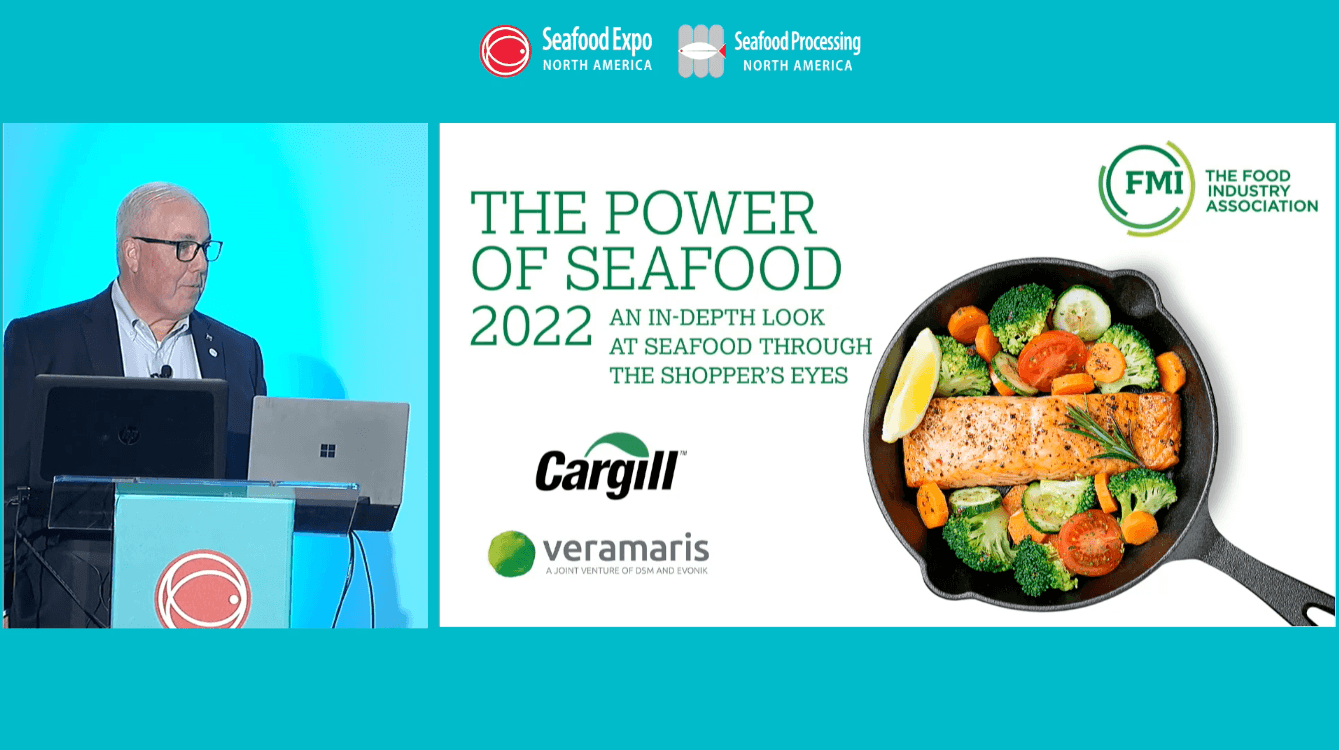
FMI Power of Seafood 2022: Consumer Insights Into How and Why They Shop Seafood
Moderator: Rick Stein, FMI
Speakers:
- Rich Castle- Giant Eagle
- Steve Markenson – FMI-Food Industry Association
- Guy Pizzuti- Publix
- David Wier - The Fishin' Company
The annual Power of Seafood report has become a staple of research for the supermarket industry. This is our 4th annual consumer survey. Our insights into shopper behavior and data provided is considered a tool for retailers in their efforts to grow seafood sales. We explore why consumers are buying what they are buying and why they are not buying what they are not buying. We utilize IRI data to compare the answers consumers give us, to what is actually happening. This comparison gives some real insights into how the consumer is navigating the seafood counters. We will address issues like sustainability, social responsibility and overall seafood sales growth since the pandemic. We will have a panel of retail experts weigh in on how they utilize this data to go to market. Join us as we present the survey results and speak with industry leaders on how they utilize this information in the business.
Content Access
|
$45.00
|
|
$45.00
|
|
FMI Power of Seafood 2022: Consumer Insights Into How and Why They Shop Seafood
Moderator: Rick Stein, FMI
Speakers:
- Rich Castle- Giant Eagle
- Steve Markenson – FMI-Food Industry Association
- Guy Pizzuti- Publix
- David Wier - The Fishin' Company
The annual Power of Seafood report has become a staple of research for the supermarket industry. This is our 4th annual consumer survey. Our insights into shopper behavior and data provided is considered a tool for retailers in their efforts to grow seafood sales. We explore why consumers are buying what they are buying and why they are not buying what they are not buying. We utilize IRI data to compare the answers consumers give us, to what is actually happening. This comparison gives some real insights into how the consumer is navigating the seafood counters. We will address issues like sustainability, social responsibility and overall seafood sales growth since the pandemic. We will have a panel of retail experts weigh in on how they utilize this data to go to market. Join us as we present the survey results and speak with industry leaders on how they utilize this information in the business.
Content Access
|
|
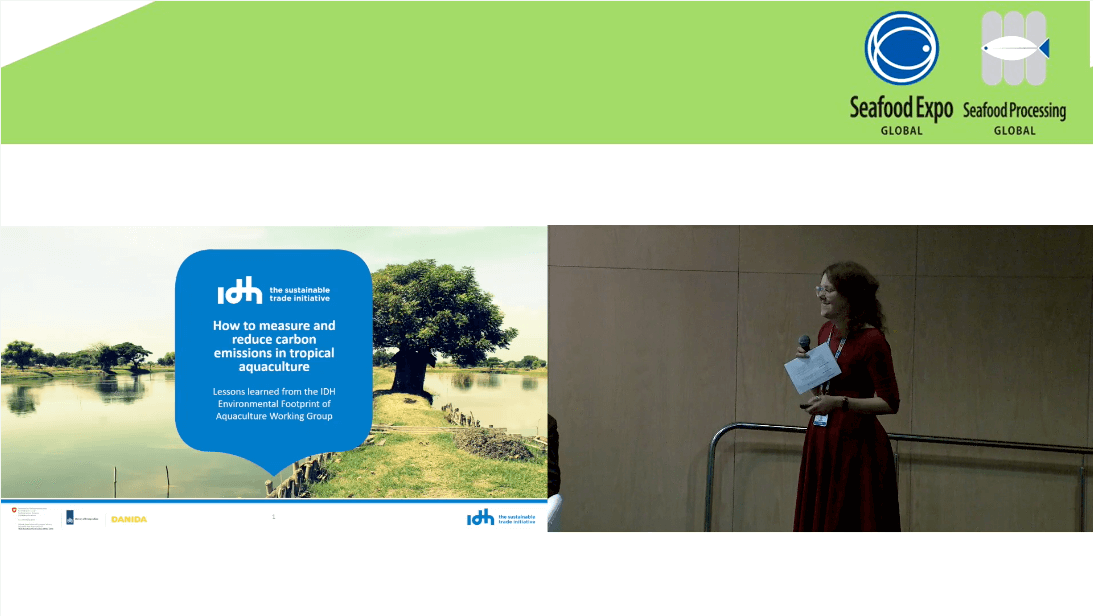
How to Measure and Reduce Carbon Emissions in Tropical Aquaculture - Lessons Learned from the IDH Aquaculture Working Group on Environmental Footprint
Speaker:
Lisa Van Wageningen
Teresa Fernandez
Dominique Gautier
Björn Kok
Pamela Nath
The recent IPCC report is very clear: we need to reduce greenhouse gas emissions now to avoid catastrophe. As food production accounts for a large share of global emissions, we cannot wait to start reducing the carbon footprint of different sectors, including seafood – both wild harvest and aquaculture. However, to date, methodology to calculate the footprint of seafood products has been lacking in the seafood industry, and without accurate baseline footprints, understanding hotspots and implementing improvement projects to meet targets is out of reach. To face this challenge, a few forward-looking companies have joined the IDH Aquaculture Working Group on Environmental Footprint, to among other environmental concerns, start measuring their carbon footprints along their entire supply chains – from the soy being produced for use in aquafeed, up until purchase by consumers. As the timeframe for reducing emissions is closing in, this Panel Presentation at Seafood Expo Global (Barcelona) will allow a platform for companies at different segments of the value chain to explain how they approach measuring carbon along their supply chains; and will explain where the carbon hotspots are in tropical aquaculture supply chains; and what they learned during the process of evaluating the footprint of aquaculture products. Along with the companies, the Panel Presentation will include experts in environmental foot printing in the agri-food sector. Join us in this session and listen to the experiences of companies that are calculating the footprint of their seafood products. Learn what your company can do in measuring and reducing your aquaculture carbon footprint.
Content Access
|
$45.00
|
|
$45.00
|
|
How to Measure and Reduce Carbon Emissions in Tropical Aquaculture - Lessons Learned from the IDH Aquaculture Working Group on Environmental Footprint
Speaker:
Lisa Van Wageningen
Teresa Fernandez
Dominique Gautier
Björn Kok
Pamela Nath
The recent IPCC report is very clear: we need to reduce greenhouse gas emissions now to avoid catastrophe. As food production accounts for a large share of global emissions, we cannot wait to start reducing the carbon footprint of different sectors, including seafood – both wild harvest and aquaculture. However, to date, methodology to calculate the footprint of seafood products has been lacking in the seafood industry, and without accurate baseline footprints, understanding hotspots and implementing improvement projects to meet targets is out of reach. To face this challenge, a few forward-looking companies have joined the IDH Aquaculture Working Group on Environmental Footprint, to among other environmental concerns, start measuring their carbon footprints along their entire supply chains – from the soy being produced for use in aquafeed, up until purchase by consumers. As the timeframe for reducing emissions is closing in, this Panel Presentation at Seafood Expo Global (Barcelona) will allow a platform for companies at different segments of the value chain to explain how they approach measuring carbon along their supply chains; and will explain where the carbon hotspots are in tropical aquaculture supply chains; and what they learned during the process of evaluating the footprint of aquaculture products. Along with the companies, the Panel Presentation will include experts in environmental foot printing in the agri-food sector. Join us in this session and listen to the experiences of companies that are calculating the footprint of their seafood products. Learn what your company can do in measuring and reducing your aquaculture carbon footprint.
Content Access
|
|
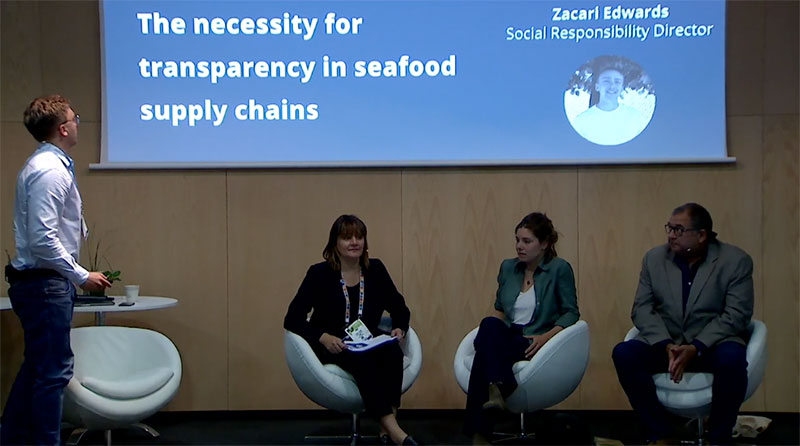
Case Study: IPNLF's Sourcing Transparency Platform - The Necessity for Transparency in Seafood Supply Chains
In order to promote the vital social, economic and environmental benefits of one-by-one tuna fishing, we need to address the lack of readily available data surrounding small-scale tuna fisheries. This is why IPNLF decided to launch the Sourcing Transparency Platform (STP), the first platform to drive greater transparency in one-by-one tuna supply chains throughout the globe. The STP has been designed to make one-by-one tuna supply chains more transparent and to create a conversation from B2B and from company-to-customer. The STP allows commercial IPNLF members to clearly showcase how their sourcing decisions both align with the Sustainable Development Goals (SDGs), and directly support one-by-one tuna fisheries; thereby safeguarding coastal livelihoods, contributing to food security and strengthening local economies. Each company has populated their page with information to give in-depth insight into their sustainable operations. This enables transparency that is vital for creating conversations for how we should be sourcing and consuming tuna, to be responsible, ethical, and truly support the coastal communities that we rely upon for our seafood. The health of our oceans is becoming an increasing concern for consumers, heightening the need for greater transparency throughout seafood supply chains. In this session, we want demonstrate the Sourcing Transparency Platform on the basis of the profiles of Marks & Spencer, Fish Tales, and Woolworths SA and the market industry decisions on sourcing commitments, general CSR, or sustainability, or, on the side of legislation – how the concerns raised for our oceans and tuna stock management are justified.
Content Access
|
$45.00
|
|
$45.00
|
|
Case Study: IPNLF's Sourcing Transparency Platform - The Necessity for Transparency in Seafood Supply Chains
In order to promote the vital social, economic and environmental benefits of one-by-one tuna fishing, we need to address the lack of readily available data surrounding small-scale tuna fisheries. This is why IPNLF decided to launch the Sourcing Transparency Platform (STP), the first platform to drive greater transparency in one-by-one tuna supply chains throughout the globe. The STP has been designed to make one-by-one tuna supply chains more transparent and to create a conversation from B2B and from company-to-customer. The STP allows commercial IPNLF members to clearly showcase how their sourcing decisions both align with the Sustainable Development Goals (SDGs), and directly support one-by-one tuna fisheries; thereby safeguarding coastal livelihoods, contributing to food security and strengthening local economies. Each company has populated their page with information to give in-depth insight into their sustainable operations. This enables transparency that is vital for creating conversations for how we should be sourcing and consuming tuna, to be responsible, ethical, and truly support the coastal communities that we rely upon for our seafood. The health of our oceans is becoming an increasing concern for consumers, heightening the need for greater transparency throughout seafood supply chains. In this session, we want demonstrate the Sourcing Transparency Platform on the basis of the profiles of Marks & Spencer, Fish Tales, and Woolworths SA and the market industry decisions on sourcing commitments, general CSR, or sustainability, or, on the side of legislation – how the concerns raised for our oceans and tuna stock management are justified.
Content Access
|
|
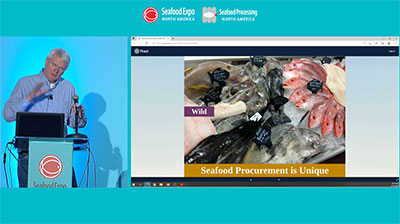
Seafood Procurement: Strategies for Success
Moderator:
Chuck Anderson, Certified Quality Foods
Panelists:
Kyle Graser, Euro USA
Shawn Oliver, Giant Eagle
Casey Rutherford, Patagonia SeaFarms Inc.
Phil Walsh, LegitFish
Seafood is unlike any other protein, particularly in procurement. The right product is neither the most expensive nor the least expensive, but rather the product that will deliver or exceed budgeted profit. Correct procurement makes selling it easy and serving it a pleasure. The conference session will provide seafood novices with the fundamentals of procurement, veteran buyers with the procurement tools, methods, and protocols in place today, and the supply community with the immoveable expectations of today’s seafood buyers. Topics will include: How do logistics challenges affect procurement strategies? How does product cost inflation impact buying decisions? Additional topics addressed include wild vs. farmed sourcing strategies, fresh vs. frozen sourcing strategies, paying the right price, timely communications, visiting suppliers, the definition of a good supplier and the importance of integrity.
Content Access
|
$45.00
|
|
$45.00
|
|
Seafood Procurement: Strategies for Success
Moderator:
Chuck Anderson, Certified Quality Foods
Panelists:
Kyle Graser, Euro USA
Shawn Oliver, Giant Eagle
Casey Rutherford, Patagonia SeaFarms Inc.
Phil Walsh, LegitFish
Seafood is unlike any other protein, particularly in procurement. The right product is neither the most expensive nor the least expensive, but rather the product that will deliver or exceed budgeted profit. Correct procurement makes selling it easy and serving it a pleasure. The conference session will provide seafood novices with the fundamentals of procurement, veteran buyers with the procurement tools, methods, and protocols in place today, and the supply community with the immoveable expectations of today’s seafood buyers. Topics will include: How do logistics challenges affect procurement strategies? How does product cost inflation impact buying decisions? Additional topics addressed include wild vs. farmed sourcing strategies, fresh vs. frozen sourcing strategies, paying the right price, timely communications, visiting suppliers, the definition of a good supplier and the importance of integrity.
Content Access
|
|
Picture this: How sharing digital media is transforming seafood purchasing
Information management in seafood has become more multimedial to accommodate rapid advancements in the technology sector. Spreadsheets and PDFs are no longer enough - the appeal of complementary media, like digital images, is on the rise and it is influencing industry purchasing decisions like never before. How can seafood sellers best keep tabs on image data and leverage it to enhance operations and sales? Join SeafoodSource and José Castro Fuentes, Director of CYRSE, to explore the power of sharing and archiving images in the seafood realm.
Basic Product
|
$40.00
|
|
$40.00
|
|
Picture this: How sharing digital media is transforming seafood purchasing
Information management in seafood has become more multimedial to accommodate rapid advancements in the technology sector. Spreadsheets and PDFs are no longer enough - the appeal of complementary media, like digital images, is on the rise and it is influencing industry purchasing decisions like never before. How can seafood sellers best keep tabs on image data and leverage it to enhance operations and sales? Join SeafoodSource and José Castro Fuentes, Director of CYRSE, to explore the power of sharing and archiving images in the seafood realm.
Basic Product
|
|
|
Product Total
|
$400.00 |
|
|
Grand Total
|
$400.00 |
|