How to Measure and Reduce Carbon Emissions in Tropical Aquaculture - Lessons Learned from the IDH Aquaculture Working Group on Environmental Footprint
Speaker:
Lisa Van Wageningen
Teresa Fernandez
Dominique Gautier
Björn Kok
Pamela Nath
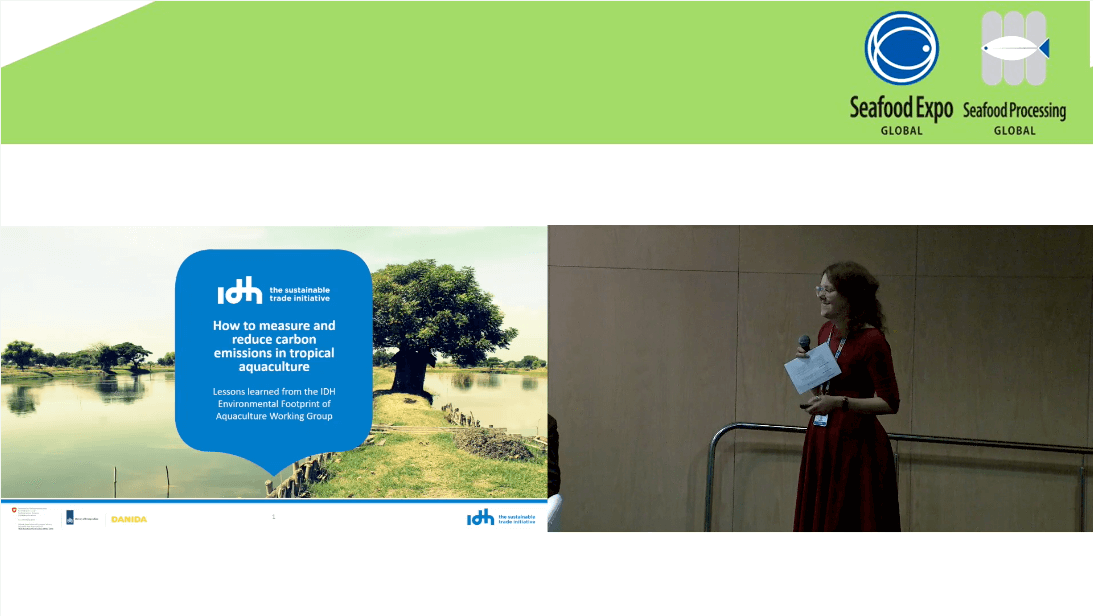
The recent IPCC report is very clear: we need to reduce greenhouse gas emissions now to avoid catastrophe. As food production accounts for a large share of global emissions, we cannot wait to start reducing the carbon footprint of different sectors, including seafood – both wild harvest and aquaculture. However, to date, methodology to calculate the footprint of seafood products has been lacking in the seafood industry, and without accurate baseline footprints, understanding hotspots and implementing improvement projects to meet targets is out of reach. To face this challenge, a few forward-looking companies have joined the IDH Aquaculture Working Group on Environmental Footprint, to among other environmental concerns, start measuring their carbon footprints along their entire supply chains – from the soy being produced for use in aquafeed, up until purchase by consumers. As the timeframe for reducing emissions is closing in, this Panel Presentation at Seafood Expo Global (Barcelona) will allow a platform for companies at different segments of the value chain to explain how they approach measuring carbon along their supply chains; and will explain where the carbon hotspots are in tropical aquaculture supply chains; and what they learned during the process of evaluating the footprint of aquaculture products. Along with the companies, the Panel Presentation will include experts in environmental foot printing in the agri-food sector. Join us in this session and listen to the experiences of companies that are calculating the footprint of their seafood products. Learn what your company can do in measuring and reducing your aquaculture carbon footprint.
Content Access
|
$45.00
|
|
$45.00
|
|
How to Measure and Reduce Carbon Emissions in Tropical Aquaculture - Lessons Learned from the IDH Aquaculture Working Group on Environmental Footprint
Speaker:
Lisa Van Wageningen
Teresa Fernandez
Dominique Gautier
Björn Kok
Pamela Nath
The recent IPCC report is very clear: we need to reduce greenhouse gas emissions now to avoid catastrophe. As food production accounts for a large share of global emissions, we cannot wait to start reducing the carbon footprint of different sectors, including seafood – both wild harvest and aquaculture. However, to date, methodology to calculate the footprint of seafood products has been lacking in the seafood industry, and without accurate baseline footprints, understanding hotspots and implementing improvement projects to meet targets is out of reach. To face this challenge, a few forward-looking companies have joined the IDH Aquaculture Working Group on Environmental Footprint, to among other environmental concerns, start measuring their carbon footprints along their entire supply chains – from the soy being produced for use in aquafeed, up until purchase by consumers. As the timeframe for reducing emissions is closing in, this Panel Presentation at Seafood Expo Global (Barcelona) will allow a platform for companies at different segments of the value chain to explain how they approach measuring carbon along their supply chains; and will explain where the carbon hotspots are in tropical aquaculture supply chains; and what they learned during the process of evaluating the footprint of aquaculture products. Along with the companies, the Panel Presentation will include experts in environmental foot printing in the agri-food sector. Join us in this session and listen to the experiences of companies that are calculating the footprint of their seafood products. Learn what your company can do in measuring and reducing your aquaculture carbon footprint.
Content Access
|
|
Picture this: How sharing digital media is transforming seafood purchasing
Information management in seafood has become more multimedial to accommodate rapid advancements in the technology sector. Spreadsheets and PDFs are no longer enough - the appeal of complementary media, like digital images, is on the rise and it is influencing industry purchasing decisions like never before. How can seafood sellers best keep tabs on image data and leverage it to enhance operations and sales? Join SeafoodSource and José Castro Fuentes, Director of CYRSE, to explore the power of sharing and archiving images in the seafood realm.
Basic Product
|
$40.00
|
|
$40.00
|
|
Picture this: How sharing digital media is transforming seafood purchasing
Information management in seafood has become more multimedial to accommodate rapid advancements in the technology sector. Spreadsheets and PDFs are no longer enough - the appeal of complementary media, like digital images, is on the rise and it is influencing industry purchasing decisions like never before. How can seafood sellers best keep tabs on image data and leverage it to enhance operations and sales? Join SeafoodSource and José Castro Fuentes, Director of CYRSE, to explore the power of sharing and archiving images in the seafood realm.
Basic Product
|
|
|
Product Total
|
$85.00 |
|
|
Grand Total
|
$85.00 |
|