



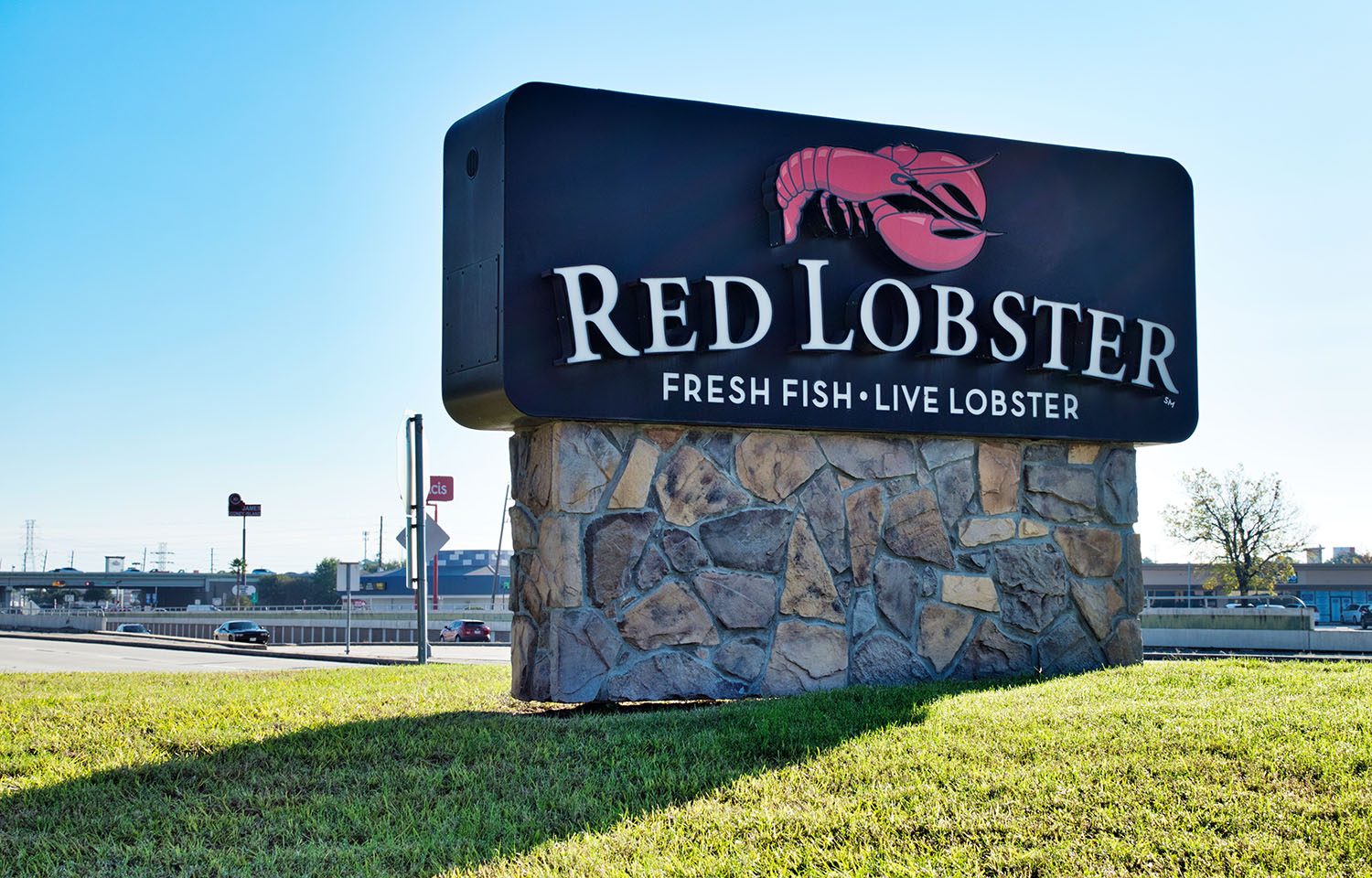
Red Lobster officially entered a Chapter 11 bankruptcy filing on Monday, 20 May.
The beleaguered restaurant chain filed for bankruptcy protection in U.S. Bankruptcy Court in Orlando, Florida, U.S.A., where it is based. Red Lobster said it intends to use the process to drive operational improvements, simplify the business through a reduction in locations, and “pursue a sale of substantially all of its assets as a going concern.”
That sale process is already underway, as Red Lobster has entered into a stalking horse purchase agreement with an entity formed and controlled by its existing term lenders, it said.
Red Lobster closed nearly 100 restaurants in May, but it said remaining restaurants will remain open and operate on normal schedules during the Chapter 11 process.
Red Lobster said it is also investigating Thai Union’s involvement in the failure of its Ultimate Endless Shrimp promotion, which cost the company USD 11 million (EUR 10 million), saying it exerted an “undue influence” on its shrimp purchasing.
Samut Sakhon, Thailand-based Thai Union invested millions into the chain in 2016 and then was part of a consortium that acquired it outright in 2020, aiming to find synergies on supply and marketing.
Red Lobster CEO Jonathan Tibus wrote in court documents the Endless Shrimp offer was originally intended to be a limited-time promotion. However, in May 2023, Paul Kenny, Red Lobster’s CEO at the time, made the decision to add the promotion to the chain’s menus permanently, priced at USD 20.00 (EUR 18.41), “despite significant pushback from other members of the company’s management team,” Tibus said.
“This decision created both operational and financial issues for the debtors … saddling the company with burdensome supply obligations, particularly with its equity sponsor: Thai Union,” Tibus said.
Red Lobster is investigating the circumstances around these decisions, including whether Kenny’s decision-making process circumvented the company’s normal supply chain and demand planning processes.
Red Lobster’s supply process was strained by virtue of its relationship with Thai Union, according to Tibus. In addition to being the company’s equity sponsor and 100 percent owner of Red Lobster Master Holdings GP, Thai Union is a primary supplier of seafood to Red Lobster.
At the direction of Thai Union, Kenny became acting interim CEO following the resignation of then-CEO Delli Valade in April 2022.
Thai Union exerted “outsized influence on the company’s shrimp purchasing,” including Kenny’s April 2023 purported direction to Thai Union to continue producing shrimp for Red Lobster that “did not flow through the traditional supply process or bid cycle or adhere to the company’s demand projections,” Tibus said.
Additionally, in “apparent coordination with Thai Union and under the guise of a ‘quality review,’ Kenny made a series of decisions that eliminated two of the company’s breaded shrimp suppliers, leaving Thai Union with an exclusive deal that led to higher costs to Red Lobster,” Tibus said.
Red Lobster is also investigating whether Thai Union and Kenny encouraged “excessive merchandising” of the Ultimate Endless Shrimp promotion in-store, which was atypical for the company, according to Tibus.
“The excessive merchandising decision led to supply issues resulting in major shortages of shrimp, with restaurants often going days or weeks without certain types of shrimp,” he said.
Red Lobster’s sales plummeted USD 76 million (EUR 70 million) in its 2023 fiscal year, Tibus said in the bankruptcy filing, and its customer count has dropped 30 percent since 2019.
Thai Union announced in January 2024 that it would divest from its minority share in Red Lobster and take a one-time non-cash impairment charge of THB 18.5 billion (USD 530 million, 481 million) in Q4 2023.
“Thai Union has a been a supplier to Red Lobster for more than 30 years, and we expect that relationship will continue,” Thai Union said in a statement to SeafoodSource. "We are confident that a court-supervised restructuring process will allow Red Lobster to address its financial obligations and restructure its business to realize its long-term potential in a more favorable operating environment. We are aware of the meritless allegations in the bankruptcy court pleadings and look forward to a full representation of the facts.”
Thai Union did not address the specific allegations Tibus included in court documents.
Performance Food Group and Gordon Food Service are among the largest of Red Lobster’s 100,000 creditors, according to the bankruptcy filing. Red Lobster’s liabilities were listed between USD 1 billion (EUR 920 million) and USD 10 billion (EUR 9.2 billion).
Richmond, Virginia, U.S.A.-based Performance Food Group is owed around USD 24.4 million (EUR 22.5 million), while Toronto, Ontario, Canada-based Gordon Foodservice Canada is owed USD 1.2 million (EUR 1.1 million). The chain's other major creditors include Rubin Postaer and Associates, The Wasserstrom Company, DoorDash, law firm Baker & Hostetler, Pepsi Co., and Proctor & Gamble Distribution. Seafood suppliers and distributors that are owed funds can file claims online or via mail. The bankruptcy court has not yet set a deadline to file claims.
Red Lobster, which still operates around 550 restaurants, has been working with vendors to ensure its operations are unaffected, the company said in a press release. It said it has received a USD 100 million (EUR 92 million) debtor-in-possession financing commitment from its existing lenders, led by Fortress Investment Group.
The bankruptcy filing is “the best path forward for Red Lobster,” Tibus said in the release. “It allows us to address several financial and operational challenges and emerge stronger and refocused on our growth. The support we've received from our lenders and vendors will help ensure that we can complete the sale process quickly and efficiently while remaining focused on our employees and guests."
According to Tibus, Red Lobster has begun to execute internal strategies to “make its brand even more compelling by leveraging its partners to extend the company’s voice, presence, and impact within the market.”
To that end, the company intends to simplify Red Lobster’s menu by implementing a core menu that balances efficiency and appeal.
Filing for bankruptcy allows Red Lobster to “position its balance sheet for recovery and potential sale of the company to a new, optimistic owner,” FoodserviceResults CEO Darren Tristano told SeafoodSource. The buyer will likely be a private equity firm, he said.
Consumers should brace for additional closures of Red Lobster locations and higher prices, Tristano said.
"Current leadership will be challenged to improve operations, streamline the menu, and make remaining locations financially efficient,” he said. “The challenge will be to get the right leaders in place and to observe the issues and listen to staff on the front line to understand priorities.”
Tristano said the bankruptcy filing revealed a large disconnect between Red Lobster’s current ownership and its restaurant managers and staff.
“I can’t believe many current leaders spend time in the restaurants,” he said.
