

SalMar's Q1 2024 featured difficult biological conditions that led to drops in the Frøya, Norway-headquartered salmon producer's EBIT and revenues.
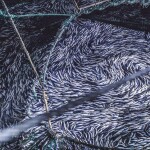
Harsh winter conditions, extreme weather events, and string jellyfish attacks impacted the quarterly performance of SalMar’s farming segments in Norway, with particularly severe challenges in its Farming Northern Norway operations resulting in lower average harvest weights and a low superior-quality yield affecting cost and price achievements.
SalMar CEO Frode Arntsen said the quarter was a difficult one.
“Our ability to understand biology and the environment is of great importance for our operational and financial performance. That is why we believe so strongly that our many improvement initiatives, including Salmon Living Lab, are important for the continued success of our company and our industry as a whole,” Arntsen said.
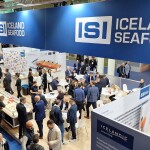
The Salmon Living Lab is a new R&D initiative aimed at building in-depth knowledge about the drivers of biological performance. Launched by SalMar at the 2024 North Atlantic Seafood Forum (NASF) in March, the project will include a state-of-the-art innovation center with the central aim to bring together industry leaders, supply chain members, and NGOs.
SalMar’s operational EBIT for its Norwegian operations sunk to NOK 1.55 billion (USD 145.1 million, EUR 133.4 million), down from NOK 1.72 billion (USD 160 million, EUR 148 million) in Q1 2023. The region’s harvest volume was 45,400 metric tons (MT), while the operational EBIT per kilogram was NOK 34.10 (USD 3.19, EUR 2.94).
For the wider group, the operational EBIT totaled NOK 1.51 billion (USD 141.4 million, EUR 130 million), compared to NOK 1.88 billion (USD 176 million, EUR 161.9 million) in Q1 2023. Its operating revenues declined to NOK 6.6 billion (USD 617.8 million, EUR 568.3 million) from the NOK 6.8 billion (USD 636.6 million, EUR 585.5 million) it achieved in Q1 2023. Its overall harvest volume was 52,900 MT, and its operational EBIT per kilo was NOK 28.60 (USD 2.68, EUR 2.46). In Q1 2023, these measures totaled 48,500 MT and NOK 38.80 (USD 3.63, EUR 3.34), respectively, with the decrease this year attributed to lower prices.
The company’s Sales and Industry segment, which sells the fish the group harvests in Norway, generated gross operating income of NOK 6.45 billion (USD 603.4 million, EUR 555 million), up from NOK 6.24 billion (USD 583.8 million, EUR 536.8 million) year over year. Its operational EBIT also improved by NOK 50 million (USD 4.7 million, EUR 4.3 million), but remained negative at a loss of NOK 37 million (USD 3.5 million, EUR 3.2 million).
Norway’s production tax increased to almost NOK 0.94 (USD 0.09, EUR 0/08) per kilo from 1 January 2024 onward, and this tax, as well as the resource tax in Iceland, led to SalMar paying NOK 55 million (USD 5.1 million, EUR 4.7 million) in taxes the quarter, compared with NOK 32 million (USD 3 million, EUR 2.8 million) in Q1 2023.
SalMar’s Icelandic Salmon business, of which it owns 51 percent, also reported high costs due to biological challenges in the quarter, which affected its results. However, the firm has maintained its harvest guidance for the full year.
In Q2 2024, SalMar subsidiary Arnarlax is expected to receive final confirmation of additional licenses granting 10,000 MT of maximum allowable biomass (MAB) of sterile salmon.
Elsewhere, SalMar Aker Ocean had two semi-offshore projects come into operation in Q1 2024, following the move that made Arctic Offshore Farming part of the segment in Q4 2023.
Looking ahead, SalMar’s harvest guidance for 2024 has remained steady after Q1 2024, with its Norwegian farms expected to produce 237,000 MT of salmon, 37,000 MT coming from Scotland, 15,000 MT in Iceland, and 7,000 MT coming from SalMar Aker Ocean.
As for long-term growth, SalMar has identified “substantial untapped organic growth potential” within its existing value chain. It estimates current volume potential in Norway to be 300,000 MT, 45,000 MT for Scottish Sea Farms, 26,000 MT for Iceland, and 13,000 MT for SalMar Aker, implying an eventual volume projection for the group at its current standing of 362,000 MT, including its share from Scottish Sea Farms.
“In SalMar, we have a positive view on the future of the aquaculture industry, and we are committed to grow our business sustainably and create value for society and our various stakeholders," Arntsen said. "We see significant untapped potential for further growth in the industry and want to lead the development further. Because food does not go out of style, the world needs more healthy and nutritious food."
