






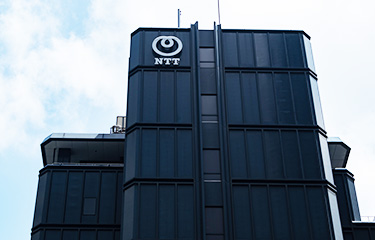
Tokyo, Japan-based NTT Corporation has created a subsidiary aiming to use artificial intelligence, IoT, and other information communications technologies to develop more efficient and sustainable aquaculture production methods.
NTT is one of the five largest global technology and business solutions providers in the world, serving 190 countries and more than 75 percent of Fortune Global 100 companies and thousands of other clients.
Launched 1 July as a joint venture with Japan’s Regional Fish Institute, NTT Green and Food Corporation, will be focused on three initiatives: the production and sale of algae, including omega-3 enriched products for aquafeed; the production and sale of fast-growing, high-performance seafood from land-based aquaculture; and the development and provision of a sustainable land-based aquaculture system, using renewable energy and energy-efficient water-purification plants.
NTT said it aims to achieve USD 70 million (EUR 62.9 million) in revenue within five years and more than USD 200 million (EUR 180 million) in revenue within the next decade. It has been capitalized with JPY 9.2 billion (USD 66.4 million, EUR 60 million), according to a Regional Fish Institute press release.
“Through the creation and implementation of carbon dioxide conversion process, the new organization… initially aims to solve future food shortages while mitigating negative environmental impacts associated with onshore seafood production,” it said in a press release.
As a first step, NTT Green and Food will develop a carbon dioxide conversion system using the company’s technology and the Regional Fish Institute’s gene-editing technology. The system will optimize the production of algae that stores large amounts of carbon dioxide, while activating photosynthesis and plant growth in aquaponic set-ups. That algae, which will contain DHA and EPA, will be converted into aquafeed for fish and shellfish, and as agricultural fertilizer.
“NTT Green & Food will initially provide algae to aquaculture operators and farmers facing soaring feed and fertilizer costs due to recent price surges in raw materials,” the company said.
The joint venture is also seeking to develop high-tech land-based aquaculture facilities. Eventually, it plans to use feed it produces at its own aquaculture production systems to grow high-value seafood, and then use the wastewater from the farms to feed its algae.
“This system will consist of three plants: a plant that produces fish and shellfish, a plant that produces the algae to feed them, and a water purification plant that purifies fish and shellfish excrement,” it said. “Full commercialization would include sales of the system to third parties through NTT Corporation and its operating companies.”
The land-based component of the project is key to better controlling the many variables involved in the complex, three-part operation NTT Green and Food is hoping to create, it said.
“By utilizing breeding-improvement technology in land-based aquaculture facilities, NTT Green and Food can reduce the impact of natural disasters, parasites such as anisakis and the risk of infectious diseases on production. Furthermore, recycling breeding water containing excrement from fish and shellfish as nutrients for algae will minimize water waste. The seafood produced from this project will be provided to distributors, wholesalers, and processors,” it said.
The Regional Fish Institute said its goals with seafood production including addressing rising demand for seafood from the world’s growing population and reinvigorating Japan’s seafood economy.
“Japan, which was once a fishery kingdom, is losing its luster, with both the number of workers and the amount of fishery production by decreasing about 60 percent in the last 30 years,” it said. “The rise in seawater temperature and overfishing due to climate change are beginning to have a major impact on local fisheries, processing, ice-making businesses, etc., resulting in the loss of fish that used to be caught in nearby waters.”
Stimulation of Japan’s national economy and regional economies across the country is another primary goal for NTT, it said.
“By collaborating with local companies in production, processing, and sales, the NTT Green and Food aims to create jobs, promote local industries, and contribute to the development of sustainable local communities by providing educational opportunities for cutting-edge aquaculture and environmental protection technologies,” it said. “In addition to reducing the impact on the natural environment, it will also reduce the risk of parasites and infectious diseases, thereby enabling safe, secure and high-value-added seafood production.”
The social mission of the project is a vital component of the joint venture, both organizations said.
“NTT believes in resolving social issues through our business operations by applying technology for good. An innovative spirit has been part of our culture for over 150 years, making breakthroughs that enable a more naturally connected and sustainable world,” it said.
The Regional Fish Institute issued a similar mission-based statement backing the project.
“Based on our corporate philosophy of ‘Utilizing nature's bounty with technology to design the future of the earth and food,’ we will contribute to solving problems such as decline in the fishery industry, food shortages, and environmental problems,” it said.
Photo courtesy of h4fiz/Shutterstock
