


By 2050, there will be a 50-million-metric-ton supply deficit unless an additional USD 55 billion (EUR 51 billion) is invested in technology, according to Planet Tracker.
The London, U.K.-based nonprofit, which provides analytics on the role capital markets play in environmental degradation, released its “Avoiding Aquafailure” report on 11 May.
“Aquafailure is the inability of aquaculture to produce enough seafood – sustainably or otherwise – to meet demand. Our report … shows that without significant changes to current practices, the aquaculture and fishing industry will not only fail to meet demand for their products by nearly 50 million MT by 2050 but [also] drive significant environmental harm in the process,” Planet Tracker Head of Oceans Program François Mosnier said. “This will have wide-ranging ramifications, contributing to worldwide food insecurity and destabilizing the market.”
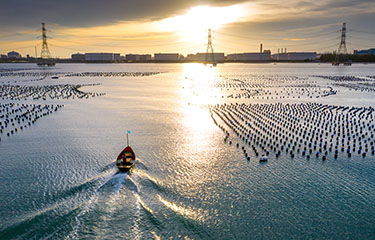
Pressure is rising on aquaculture to fill the growing need for healthy animal protein production. With USD 30 billion (EUR 28 billion) in investment into technological progress in the aquaculture sector, including in land-based and offshore farms, and USD 25 billion (EUR 23 billion) to transition current models of aquaculture toward regenerative aquaculture, the aquaculture industry can meet projected future demand, Planet Tracker found. Though technological solutions, such as offshore farms or labs, would provide an estimated 5 million MT more to fill the demand gap, regenerative aquaculture – the production of species that benefit their surrounding ecosystem, including bivalves like oysters, mussels, and clams, as well as seaweed, which can filter ocean water and sequester carbon – has the potential to produce 45 million MT more with less capital costs, according to the report.
“Embracing a regenerative approach will not only allow aquaculture to meet rising demand for seafood but insulate it from damaging environmental regulation that traditional methods are uniquely exposed to. This will require investments, but our analysis shows that capital expenditures for regenerative aquaculture, around USD 0.55 to USD 1.47 [EUR 0.51 to EUR 1.35] per kilogram, are at least 10 times lower than offshore aquaculture or RAS [recirculating aquaculture systems],” Mosnier said.
Aquaculture has lower greenhouse gas emissions compared to other forms of protein production, so as more consumers demand eco-conscious and sustainable food options, it will likely create additional demand for seafood. But while traditional methods of aquaculture generate more seafood than wild-catch production, current aquaculture production methods leave companies vulnerable to higher costs, more regulation, coastal conflicts, potential capping of future production, and other risks related to aquaculture’s prevailing use of intensive monoculture approach, which heightens the risk of disease, nutrient pollution, non-native fish species escapes, and other issues, according to Planet Tracker.
“A business-as-usual approach to aquaculture has significant regulatory and environmental risks attached to it that makes it a plainly unsustainable approach. In Thailand, for instance, the shrimp industry lost more than USD 11 billion [EUR 10.1 billion] to a disease that is more prevalent in the least environmentally friendly ponds,” Mosnier said. “[Another example is that] several regulators around the world are creating obstacles toward salmon aquaculture expansion because of its environmental effects. The current industry, typically concentrated on a small number of species in a small geographical area, will always be vulnerable to these risks.”
Transitioning toward regenerative aquaculture will also reduce the pressure of reduction fisheries used in fishmeal and fish oil production, Mosnier said.
“Moving to non-fed aquaculture, as bivalves and seaweed do not need to be fed, will remove pressure on wild fish stocks used in aquaculture feeds. This will, in turn, benefit both local ecosystems and local populations that depend on these species for their diet,” Mosnier said. “In addition, any reduction in unsustainable aquaculture production is likely to result in a decline in harmful algal bloom, which can negatively impact fisheries.”
Beyond protein production, companies can use regenerative aquaculture for other economic and ecological purposes. Using some types of seaweed in cattle feed can reduce methane emissions, and seaweed has also been found to improve immunity in farm-raised animals from swine to shrimp, and it can be used as a more sustainable fertilizer option for global agriculture.
Besides regenerative aquaculture, Planet Tracker also called for investment in bivalve depuration technologies, including UV light treatment, ozonation, and antimicrobial peptides, polysaccharides, and bacteriophages to mitigate concerns of contamination from algal toxins, bacteria, viruses, and other environmental contaminants, which is a potential limiting factor for shellfish consumption.
The external investment must account for the bulk of the investment, according to Planet Tracker, which found the 57 aquaculture companies that are publicly listed globally “generally cannot afford to self-finance it.”
“Planet Tracker found it will take at least USD 55 billion in capital expenditure to finance this transition, which most aquaculture companies cannot afford. That’s why we’re calling on investors and lenders to assist with diversifying the aquaculture industry and closing the supply gap,” Mosnier said. “Investors can make a significant contribution by using their existing power in publicly listed companies.”
The market for regenerative aquaculture products remains fragmented and is primarily comprised of small family businesses. To find ways to encourage more investment in the industry, Planet Tracker is co-convening a seafood investor engagement group aimed at ensuring that investors are aware of both its economic and ecological upsides.
Announced in February 2023 as a collaboration between WWF, the FAIRR Coller Initiative, UNEP FI’s Sustainable Blue Economy Finance Initiative, the World Benchmarking Alliance, and Planet Tracker, the investor action group will initially focus on engaging seafood companies on best practice sustainability efforts, such as developing full-chain traceability systems, reducing bycatch and discards, reducing food loss and waste, and working towards meeting globally recognized standards.
“Investor collective engagement is a useful tool both for driving change at the company level, and for helping investors to strengthen their own internal risk management policies and processes,” FAIRR Thematic Research and Corporate Innovation Director Jo Raven said in a press release. “Over the past six years FAIRR has worked with over 350 investors managing USD 70 trillion [EUR 64.4 trillion] in assets under management to collectively address issues ranging from biodiversity loss to antimicrobial resistance. We’ve seen how the collective engagement format supports pre-competitive peer-to-peer learning. We think the potential to address seafood risks in this format is huge.”
Photo courtesy of Joke Panumast/Shutterstock
