





Grieg Seafood ASA’s first-quarter 2021 results represented a significant drop in earnings and revenue, but were “as expected” and characterized by the COVID-19 pandemic, which has caused a significant shift in demand and lower prices in core markets, the Bergen, Norway-headquartered salmon farming group has reported.
In Grieg’s Q1 results statement, CEO Andreas Kvame highlighted that operations went as planned and in line with expectations in the three-month period. Its British Columbia (BC) operations sustained a strong biological performance, while Finnmark, Norway, was impacted by biological challenges in the region – including low temperatures, infectious salmon anaemia (ISA), and winter ulcers.
While mitigating efforts reduced the occurrence of winter ulcers in Grieg Seafood compared to last year, the challenge spread to large parts of the Norwegian industry this quarter, which increased the overall supply of downgraded fish and impacted prices negatively, Kvame said.
The biological performance in Norway’s Rogaland was “relatively good,” with increased survival and no outbreaks of salmon pancreas disease (PD), while the new Newfoundland freshwater operations “also went well” and according to schedule, and the first fish will be transferred to sea during the coming summer, he added.
For the first-quarter 2021, Grieg’s operational earnings before interest and taxes (EBIT) represented a loss of NOK 16 million (USD 1.9 million, EUR 1.6 million) before fair value adjustment of biomass, down from earnings of NOK 216 million (USD 25.8 million, EUR 21.4 million) in Q1 2020.
At the same time, its sales revenues fell by 43 percent, or NOK 499 million (USD 59.5 million, EUR 49.4 million), to NOK 660 million (USD 78.7 million, EUR 65.3 million), while the total volume of salmon harvested in the quarter slipped to 13,583 metric tons (MT).
The company’s EBIT-per-kilogram represented losses of NOK 1.20 (USD 0.14, EUR 0.12), significantly behind earnings of NOK 13.30 (USD 1.59, EUR 1.32) a year previously.
Grieg calculated that the difference in price achievement, measured as sales revenue/kilogram compared with Q1 2020, had a direct negative impact on EBIT contribution of NOK 141 million (USD 16.8 million, EUR 13.9 million) compared to the corresponding period last year.
The lower volume impacted EBIT before production fee and fair value adjustment, causing losses of NOK 40 million (USD 4.8 million, EUR 4 million), while the price effect of operational cost impacted EBIT negatively before production fee and fair value by NOK 57 million (USD 6.8 million, EUR 5.6 million).
“The first quarter turned out largely as expected. COVID-19 continued to characterize our markets, impacting price achievement. Equally, our employees and supply chains continued to show resilience and flexibility, keeping the wheels turning on a steady pace,” Kvame said. “Our plan stays firm; we will improve profitability, streamline the organization, and secure financial capacity. The bulk of our investment in Newfoundland is now behind us and we have gained increased flexibility through the bridge loan that has been extended to Q1 2022. The process to divest our business in Shetland is ongoing, and is proceeding according to plan.”
Grieg’s Q1 2021 harvest comprised 5,346 MT and 7,385 MT from the Norwegian farming sites of Rogaland and Finnmark respectively, and 853 MT from BC.
The harvest volume for the second-quarter is expected to total 15,400 MT, with its operations in Rogaland providing 6,000 MT, Finnmark 4,000 MT, and BC 5,400 MT.
It maintains its long-term harvest target volume of 130,000 MT by 2025.
The process to divest Grieg’s business in Shetland is proceeding according to plan. Because Shetland is classified as held for sale, it’s not included in the group’s EBIT. Nevertheless, the region’s first-quarter harvest totaled 13,583 MT. This is expected to climb to 15,400 MT in Q2, and total 80,000 MT for the full-year 2021.
With regards to market outlook, the report stated that the underlying demand was high during the first quarter, demonstrating a strong trend for fresh salmon. Also, despite the higher-than-expected supply growth in the period, salmon spot prices in both Norway and the United States “surprised on the upside.”
This positive development is driven by stronger than expected demand both from retail in Europe but also solid demand from Asian countries, it said, with Grieg expecting “an even stronger demand response” when the HoReCa (hotel, restaurant, and cafe) market in Europe normalizes, which is expected to happen gradually from late Q2 2021 as COVID restrictions are eased.
The report also noted that average price for the first month in Q2 2021 was around NOK 63 (USD 7.51, EUR 6.23) per kilogram.
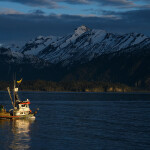
Photo courtesy of Grieg Seafood Group
