





Thai Union reported a drop in its sales and profits in Q3 2023, with greater losses from chain restaurant Red Lobster particularly affecting the company’s bottom line.
According to Thai Union’s Q3 2023 results, released on 6 November, company-wide sales over the period fell 16.8 percent year over year to THB 33.9 billion (USD 953.3 million, EUR 893 million) from “an extraordinary high baseline” in 2022. The Samut Sakhon, Thailand-headquartered seafood producer said it saw lower sales volumes across all categories and a drop in the average selling price of its products.
After a solid performance in Q2 2023, Thai Union’s Red Lobster restaurant chain posted a Q3 2023 loss of THB 395 million (USD 11.1 million, EUR 10.4 million). That total is a worse performance than the THB 339 million (USD 9.5 million, EUR 8.9 million) the brand lost in Q3 2022. Thai Union mainly attributed these losses to industry challenges such as elevated material and labor costs and high interest rates.
Thai Union had revised Red Lobster’s loss guidance for this year to THB 500 million (USD 14 million, EUR 13.2 million) from its original THB 600 million (USD 16.9 million, EUR 15.8 million) thanks to the chain’s improved results in Q2; however, with the increased losses the brand posted in the third quarter, Red Lobster’s expected year-end loss will likely rise to an adjusted THB 700 million (USD 19.7 million, EUR 18.4 million), the company said.
In an effort to tackle increasing losses, Red Lobster management has enlisted the services of management consulting company AlixPartners for operational guidance. It is also receiving advisory services from Guggenheim Partners, with which it has collaborated in the past, Bloomberg reported on 19 October. Thai Union was considering an exit from Red Lobster after multiple years of losses, the Bangkok Post reported in March 2023.
Thai Union’s sales of ambient seafood – shelf-stable items sold through retail channels and sometimes wholesalers that includes canned tuna, sardines, salmon, mackerel, and herring – decreased by 6.7 percent year over year, with the sales volume in the category dropping 11.2 percent. And its frozen and chilled seafood sales experienced a 21.8 percent year-over-year decrease, driven by the normalization of seafood market prices and a reduction in sales volumes due to the “rightsizing” of its frozen business in the U.S., according to Thai Union.
“After a careful review of Chicken of the Sea Frozen Foods’s (COSFF) product portfolio, competitive strengths, and customer needs, we have refreshed our strategy to drive improved performance in this challenging business climate,” the company said in a statement. “Of particular note, it is our decision to exit the North Atlantic lobster category. This is an outcome of our choice not to rebuild our New Brunswick production facility after a fire in 2020, and the subsequent consolidation that has occurred in that market. We are also redeploying resources to support other product categories. As a result, we had to make the difficult decision to eliminate a small number of roles across our North American operations to reflect changing business demands. We are grateful to our former team members for their contributions and are supporting them with a financial package as they transition out of the organization. Out of respect for our former colleagues, we have not and will not identify or discuss the names of any impacted individuals.”
Thai Union said it will open an office in Pittsburgh, Pennsylvania, U.S.A. in early 2024, “creating an East Coast hub that will primarily house our Chicken of the Sea International (COSI) team members to complement our West Coast headquarters in El Segundo, California, U.S.A.
“COSI, our shelf-stable division, currently has about 20 employees living in the Pittsburgh area, including Andy Mecs, executive vice president of COSI,” it said. “These changes are a necessary next step to pave the way for sustained growth and success for Thai Union North America.”
Thai Union’s pet care business suffered a 39.2 percent year-over-year drop in sales, primarily attributed to a 35.3 percent drop in sales volume due to what Thai Union attributed to general destocking trends throughout the year, a negative product mix, and lower freight prices. However, its sales in the category in Q3 2023 actually jumped 19.1 percent compared to Q2 2023, thanks to customers resuming restocking activities, particularly in the U.S. and Europe, with growth also observed in Asia and Oceania.
In Thai Union’s value-added and other businesses segment, sales declined 1.6 percent year over year, mainly due to an 8 percent drop in sales volume, as lower sales in the ambient business caused the company’s packaging business sales to fall. Like the pet care category, though, its value-added and other businesses category saw a quarter-over-quarter improvement, with sales jumping 19.4 percent compared to Q2, driven by higher average sales prices and a recovery in demand across all categories.
Thai Union’s Q3 gross profit amounted to THB 6.2 billion (USD 174.2 million, EUR 163.3 million), up 8.4 percent from Q2 2023, but down 15.8 percent year over year, due to reduced sales volume across all categories; falling freight revenues; an unfavorable category mix; and higher raw material costs, including an 8 percent year-over-year increase in average tuna prices.
This decline was partially offset by an improvement in margins, resulting from the shift in strategy the company employed in its frozen and chilled seafood segment. The gross profit margin was at 18.4 percent – a slight increase from the 18.2 percent in Q3 2022.
“Thai Union continued to successfully improve its profitability and delivered another strong quarterly gross profit margin – the second-highest ever performance – across all business categories. This is proof that the implementation of the profit protection plan across all our operations is effective,” Thai Union CEO Thiraphong Chansiri said. “We continue to focus on strategies to strengthen our profitability. Overall, our financials remain strong, which was reinforced by the TRIS rating that affirmed our company rating and the ratings on our senior unsecured debentures at an A+.”
The company reported a net profit of THB 1.2 billion (USD 33.7 million, EUR 31.6 million) – a 52.3 percent drop year over year – primarily due to unfavorable nonoperating factors, such as negative impacts from foreign exchange losses and a dilution on the net profit of its subsidiary i-Tail [Thai Union’s pet care brand].
Thai Union was able to partially offset this loss as well, due to a higher tax credit and a reduction in the share of losses from associates. The net profit also improved quarter over quarter for the second consecutive quarter, mainly due to a robust improvement in gross and operating profits. The company’s net profit margin overall stood at 3.6 percent in Q3 2023.
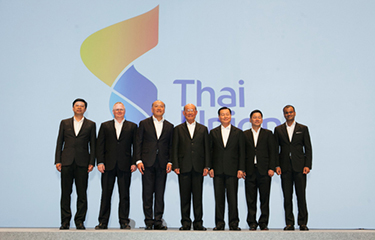
Photo courtesy of Thai Union
