






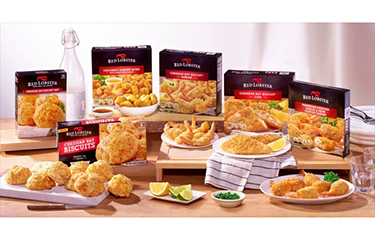
As part of the seafood restaurant chain’s efforts to turn around lagging restaurant sales, Red Lobster is teaming up with Chicken of the Sea Frozen Foods on a Red Lobster-branded frozen seafood line.
The new frozen line is part of the restaurant chain’s multi-pronged turnaround plan, which includes a focus on selling packaged retail products. After success with its frozen Red Lobster Cheddar Bay Biscuits, rolled out last year, it is partnering with El Segundo, California-based Chicken of the Sea Frozen Foods (COSFF), owned by Thai Union North America, on a new frozen seafood entree line.
The four Red Lobster-branded frozen seafood items, available in retailers nationwide, include: Cheddar Bay Biscuit Shrimp, combining the restaurant chain’s famous biscuits and crispy shrimp; Coconut Shrimp Bites, which is crispy shrimp coated with coconut flakes and paired with Sweet Chili Sauce; Cheddar Bay Biscuit Cod, which features wild cod breaded with Cheddar Bay Biscuit seasoning; and Parmesan Crusted Garlic & Herb Stuffed Shrimp, which includes shrimp stuffed with garlic, herbs and cream cheese coated with a parmesan-crusted breading.
“We are excited to see all the ingredients of this great partnership come together: Red Lobster’s 99 percent consumer awareness, a fan favorite menu, and a national restaurant footprint, along with Chicken of the Sea Frozen Foods’ expertise in frozen seafood,” COSFF Senior Director, Innovation Patty Essick told SeafoodSource.
A further benefit of launching with the Red Lobster brand is bringing its loyal restaurant customers to the frozen seafood aisle, Essick said.
“Last year’s launch of the Red Lobster Cheddar Bay Biscuit into the frozen aisle resulted in record-breaking buzz, thanks to the cult following of the famous Cheddar Bay Biscuit,” she said.
Consumers are increasingly looking for a “restaurant experience” at home, Essick added, which has resulted in restaurant-branded retail product lines maintaining or exceeding their COVID growth.
“But we saw a gap in the market here: there was no national seafood restaurant brand in retail,” she notes.
And, while overall frozen seafood sales dropped in 2022, value-added seafood items grew 1 percent, according to IRI.
“Value-added seafood has been outpacing the market … We believe the overall category will bounce back, and the convenience trend of ready-to-eat and ready-to-cook is here to stay,” Essick said.
The company’s efforts come as Bangkok, Thailand-based Thai Union, a majority owner of Orlando, Florida, U.S.A.-based Red Lobster, said the restaurant chain's poor performance dragged down its net profits. Thai Union’s net profit dropped 35.9 percent in Q4 2022, while net profit for the full year also dropped 10.9 percent year-on-year to THB 7.138 billion (USD 207.3 million, EUR 194.1 million).
Thai Union mainly attributed the lower net profits for both Q4, and FY 2022, to higher losses from Red Lobster, which rose to THB 456 million (USD 13.2 million, EUR 12.4 million) for the quarter.
Red Lobster also shut down eight of its U.S. restaurants over the past few months, per Restaurant Business. Restaurants in Syracuse, New York; Albemarle County, Virginia; St. Louis, Missouri; Beachwood, Ohio; San Angelo, Texas; Oakhurst, New Jersey; Danville, Virginia; and Naples, Florida reportedly closed. The company also reportedly shuttered a restaurant in Charleston, South Carolina.
"We regularly review our restaurant portfolios as part of the normal course of business. As a result, we made the difficult decision to close locations that were no longer right for Red Lobster. Management teams and team members were given the chance to relocate to other Red Lobster restaurants whenever possible," Red Lobster said. "
For the past two years, Red Lobster implemented other turnaround measures before its latest retail launch, including opening its first-ever franchise restaurant in Bangkok, Thailand, this year. It plans to add four additional franchise branches in Thailand over the next five years, Thai Union said during its third-quarter analyst meeting.
To drive guest count and sales traffic, the restaurant chain is focusing on value deals such as Summerfest and Ultimate Endless Shrimp. It also recently rolled out coupons granting 10 percent off orders of USD 40.00 (EUR 37.63) or more to drive traffic during the back-to-school season.
Red Lobster also began raising prices in August to cover cost inflation, “uplifting price per pax (check) to be in line with industry,” Thai Union said. It also improved its menu mix to focus on more profitable items and continues to push beverages.
The company plans a new senior/operations leadership team to make the organization leaner, and is exploring a new “lower-cost" labor model, Thai Union told investors, but declined to provide further details to SeafoodSource.
But like many full-service restaurants, Red Lobster continues to struggle post-Covid-19, FoodserviceResults Chief Executive Officer Darren Tristano told SeafoodSource.
“Many American consumers have changed their habits to increase frequency at limited-service restaurants and use full-service for pick-up and delivery. Seafood doesn’t travel well compared to many other options,” he said.
Red Lobster’s business model as a larger casual dining chain, Tristano said, is part of why the company is facing trouble.
“Red Lobster continues to ring themselves in a situation with too many seats and not enough butts to fill them, one of the many issues facing a large casual dining chain today,” he said. “With so many larger stores, this full-service seafood casual dining chain will likely have to shutter some restaurants to keep the remaining restaurants operations afloat.”
Executive management has also been an issue “with changes at the helm and a lack of consistent leadership of late,” Tristano noted. Red Lobster is still without a permanent CEO after Kelli Valade resigned nearly a year ago after only eight months in the role.
Paul Kenny, a member of Red Lobster's board, is serving as the liaison between Red Lobster's leadership and the board during the time of transition, a Red Lobster spokesperson told SeafoodSource.
Valade took over from CEO Kim Lopdrup, who retired in 2021 after 14 years leading the restaurant chain, which was purchased in 2020 by Thai Union, Red Lobster management, and an investor group named the Seafood Alliance.
Tristano said in addition to its management issues, competition in the seafood restaurant category has heightened, “with so many other options in the polished-casual space just one step above Red Lobster in price and greater options in quality, preparation, variety, and flavor.”
Plus, poke restaurants have saturated many more-affluent markets, and provide lower-cost alternatives that satisfy consumers’ taste for seafood.
“Red Lobster is not the brand many younger Gen Z and Millennials grew up with and feel loyal to,” Tristano said.
Photo courtesy of Red Lobster
