


Singapore-based Barramundi Group recorded a SGD 31.9 million (USD 23.6 million, EUR 21.6 million) loss in 2022, according to financial results released 23 June.
The results, which the company delayed releasing, were bluntly prefaced by company CEO James Kwan who said they leave him with “great heaviness of spirit.” The results also caused its stock to be placed on the Oslo Stock Exchange’s penalty bench.
“Our business did not perform well in 2022 and key developments in early 2023 have not panned out. We now find our group in extremely challenging times,” he said in a letter to shareholders included in Barramundi Group’s 2022 report.
Barramundi Group has fallowed its farming sites in Singapore and failed in an attempt to sell its Australian assets. In Singapore, its fish have been ravaged by the scale drop disease virus, and two rounds of trials of a vaccine developed in conjunction with an unnamed pharmaceutical company proved inconclusive. In response, Barramundi Group has paused stocking its farms in Singapore “until an efficacious vaccine is available, for animal welfare and ethical reasons.”
After a strategic review of its Australian operations, Barramundi Group had planned to sell most of its business in Australia, which included farming sites in the Buccaneer Archipelago and plans to develop 13 sites around the country’s West Kimberley Coast. But the buyer, Wild Ocean Australia, could not secure the funding necessary to complete the deal and the purchase agreement expired 31 May, 2023.
“Consequently, we had to start a restructuring of our Australian business through initiating voluntary administration on 24 May, 2023,” Kwan said. “This change has significant negative accounting effects for the whole group, with the necessary impairments and disclosures in accordance with the accounting standards.”
Kwan has overseen a shift in the company’s production base to Brunei, where results have been better.
“In 2022, we have successfully grown and harvested table-sized fish both at sea and in our [recirculating aquaculture system] facility in Serasa,” Kwan said. “The trials in our RAS has shown that we can safely grow barramundi to harvest sizes quicker, in significantly higher densities, while achieving stellar feed-conversion ratios, and with very low mortalities. With these results, we have adjusted our strategy to include land-based farming; which together with our existing plans for open-pen production, provide an additional hedge against seaborne risks. This RAS grow out facility will require additional funding and we have commenced operational and financial planning since the start of the year.”
Nonetheless, Barramundi Group’s net losses increased 28.1 percent year-over-year, and its net cash use of SGD 14.1 million (USD 10.4 million, EUR 9.6 million) exceeded its non-restricted cash and bank balances by SGD 12.5 million (USD 9.2 million, EUR 8.5 million). It listed impairments of goodwill attributable to its Australian assets of SGD 2.2 million (USD 1.6 million, EUR 1.5 million) and SGD 4 million (USD , EUR 2.7 million) attributable to Allegro Aqua, a genomics and bioscience firm it acquired in January 2020.
It experienced an additional SGD 2.8 million (USD 2.1 million, EUR 1.9 million) impairment related to trademarks affiliated with its Marine Products Australia holdings, which it had been using for its expansion plans. And it wrote off SGD 1.1 million (USD 813,000, EUR 747,000) related to physical plant and equipment at its Semakau farms in Singapore. It also recorded unrealized foreign exchange losses amounting to SGD 3 million (USD 2.2 million, EUR 2 million) due to a weakening of the Australian dollar against the Singaporean dollar.
“The management has proactively taken steps to inform and discuss with the banks on the next course of action,” Kwan said. “As at the date of these financial statements, the bank has not requested for repayment of the outstanding loans. In addition, as at date of these financial statements, the group and the company has not received any notice of event of default and/or early repayment of the loan from the banks.”
Additionally, Barramundi Group said Covid-related restrictions on its subsidiary in China damaged the business enough that it decided to cease operating it on 31 May, 2023.
“Barramundi Asia (Shanghai) Co Ltd did not historically contribute much to the group's overall performance. Its dormant status is cash flow neutral to the group,” Kwan said.
Despite the significant financial issues facing Barramundi Group, Kwan insisted “the going concern assumption is appropriate.”
“Management has prepared and approved cash flow projection for the 12-month period from 31 December, 2022, that contemplates that the group is able to meet its debts and obligations during the said 12-month forecast period,” he said. “The fundamental business case for sustainable, tropical aquaculture of a fast growing premium whitefish like barramundi, remains strong; as global population growth remains the key driver for the increasing need of sustainable protein production. We farm a tropical fish in tropical waters close to very attractive growth markets where food security is increasingly important. We have approached this opportunity with a robust business model, covering the value-chain from vaccines, broodstock, and genetics to branded retail products. The pandemic and events following it, have been material factors that has led to the significant losses.”
However, the company’s auditors warned they were not able to form an opinion on whether the company could continue as a going concern.
"Certain events that have occurred during and after the financial year end may have significant financial and operational impact on the group and the company,” they wrote in the company’s annual report. “These factors indicate the existence of material uncertainties that may cast significant doubt on the company's ability to continue as a going concern and to realize [its] assets and discharge [its] liabilities."
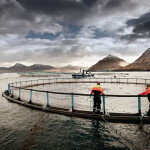
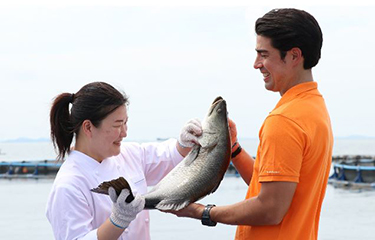
Photo courtesy of Barramundi Group
