






To some seafood restaurants, the fins, scales, and collar of a fish are nothing but waste, but to executive chef Michael Nelson and his team at New Orleans, Louisiana, U.S.A.-based GW Fins, they’re pivotal ingredients in many of the restaurant’s innovative dishes.
Operating just around the corner from Bourbon Street in the legendary French Quarter of New Orleans, the team at GW Fins is unafraid to employ new strategies in an attempt to elevate the presentation and flavor of its offerings, including a butchering technique Nelson pioneered that yields 60 percent of meat on some fish cuts.
“This came from a sustainability angle,” Nelson said. “[In other words,] how can I use more of this product that I respect, that the fishermen are risking their lives to get, and not have any go to waste?”
Red snapper typically produces about a 43 percent yield when traditionally broken down, but chefs at GW Fins get around 60 percent yield using the in-house butchering approach.
“When I was coming up with new ways to butcher the fish, I wondered, ‘How do I make it approachable for the guest?’” Nelson said.
The key is using fish parts other restaurants usually throw away, such as the collar, belly, and fins of a fish, in dishes like “seacuterie,” which includes pork-like sausage made from swordfish and tuna belly.
Made from the fin and meat under a fish’s chin, the eatery’s fin wings appetizer – similar to chicken wings – is another unique menu item, which the restaurant features daily.
“We pop the fin wings off of every fish we butcher – meat and all,” Nelson said. “No one uses that at all; It’s my invention.”
The dish, containing drumfish, sheepshead, red snapper, and other species, features an upscale presentation, and the team instructs guests to pick up the fin and eat it like a chicken wing. After offering the dish for a few years to general acclaim, it’s now so popular that it’s difficult to keep up with demand, Nelsons aid.
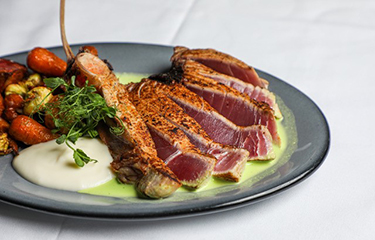
Another novel technique that has gained local notoriety is Nelson’s dry-aged tuna and swordfish steaks, a method Nelson developed that delivers a flavor customers compare to top-notch, dry-aged beef.
GW Fins chefs typically cut bigeye or yellowfin tuna steaks, dry age them at specific temperatures and humidity levels for around 11 days – sometimes more – and then serve them like bone-in steaks.
“We are trying to elevate it to the level of Kobe or wagyu beef,” Nelson said. “It is completely different than any other tuna, swordfish, [or] anything [else] you have ever had.”
The technique is complex and relies heavily on technological equipment, including monitors that provide humidity readings every two to five minutes and a UV light filtration system to ensure the drying cabinets remain sterile. The Louisiana Department of Health inspects the process for safety purposes, and Nelson has developed his own hazard analysis and critical control points (HACCP) plan to ensure the utmost safety.
The dry-aged fish, which includes offerings such as swordfish tomahawk chops and tuna ribeyes, is so popular that Nelson and his team “can’t source enough to get the quality [they] need on a consistent basis.”
“I can’t have it [on the menu] every night,” Nelson said.
Even though the dry-aged fish is double the price of most other entrees, it’s usually the first to sell out, a GW Fins spokesperson told SeafoodSource.
The restaurant, which opened its doors in 2001, supports local Gulf of Mexico fishers by purchasing between 800 and 1,000 pounds of fresh seafood daily.
“We try to find the farmers, foragers, [and fishermen] who are doing things in a way that we feel is sustainable, such as fishing with the right kind of gear and not getting a lot of bycatch,” Nelson said.
GW Fins’ chefs often go out on the water with the fishers to see how they catch the fish, determining whether their methods meet the high standards the restaurant has set for its product sourcing.
When Nelson or his team aren’t on the water directly to inspect the catch, they often connect with specific boat owners via FaceTime right when they’re unloading the fish to ensure they’re buying the freshest product possible.
“We are sustaining [the fishers] in their efforts directly; that is our goal,” Nelson said. “That way, we know our resources are going to the right people.”
Photo courtesy of GW Fins
