
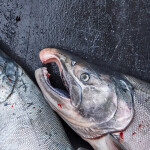

As the global market for high-value tuna undergoes a significant shift, a Canada-based bluefin tuna exporter to broaden it sales beyond Japan.
Jason Thompkins, the owner of North Lake, Prince Edward Island, Canada-based One Tuna, told SeafoodSource during the Foodex Japan expo he hoped to make new contacts outside of Japan. Foodex Japan is the largest annual food and beverage trade show in Asia, offering exhibitors access not only to Japan’s food market but to many other Asian markets as well. Over its four-day run from 7 to 10 March, the show attracted 73,789 total visitors to the Tokyo Big Sight convention center.
Thompkins said that the Japanese market-distribution system, in which tuna goes through public auctions and then through multiple layers of distributors, is very traditional and somewhat outdated. He said that while he has a good relationship with his Osaka-based distributor, branching out to new markets is a chance for him to go direct to buyers.
Thompkins has seen firsthand the changes in the raw, fresh bluefin tuna market, which has expanded beyond its previous narrow focus on Japan to worldwide distribution.
“It used to be that in Japan going out for sushi and ordering bluefin was a status thing. That was a big deal, but now young people in Japan are shifting to more Western diets,” Thompkins said. “At the same time, there’s a Japanese food boom going on in the rest of the world. It’s in vogue.”
Following a Covid-related suppression of Japan's demand for bluefin, Thompkins has broaded his sales to customers in the European Union and North America, with each market receiving around one-third of the 1,000 fish his company catches annually. He also sells in smaller amounts to Hong Kong and Dubai.
”You might see a tuna that was caught in New Zealand going direct to Las Vegas – this is new. Consumers in New York, Los Angeles, Las Vegas – they know good tuna,” Thompkins said. “And that’s starting to happen in Europe too, though not to the same extent yet.”
Thompkins got his start in the industry and learned how to grade tuna in 2000 by working at Chubby Fish Inc., based in Wakefield, Rhode Island, U.S.A. where he worked through 2009. He started as CEO of TNT Tuna, based in East Souris, Prince Edward Island, in 2013.
In 2018, he established One Tuna as the first facility in Canada certified by the Canadian Food Inspection Agency to conductbluefin tuna processing. The plant, which specializes in importing and exporting tuna globally, is also HACCP- and E.U.-certified. A sister company in Newfoundland deals in lobster and snow crab.
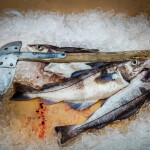
Thompkins has a list of what his customers are looking for, and when he receives a fresh fish, he grades it by size, fattiness, and quality using a core sample and a tail cut. He then makes custom matches between fish and buyers.
The fish are cut in his plant, and are typically shipped by air in polystyrene boxes with the head and tail off, and reach their destination within 48 hours. Prior to opening his plant, Thompkins could only ship whole fish. Now, he can also send a loin cut to one customer and a belly to another.
Quality is always a priority for One Tuna, Thompkins said. At the Foodex show, he said he fielded inquiries from a couple of Hong Kong visitors who, unsure if they had the skill to cut up a whole tuna, asked if he could pre-slice the fish for sushi. Thompkins said he avoids the practice for quality reasons.
“If we cut it, then the oxidation and the bloom that gives the tuna a bright red color would happen during the plane trip. But if you cut it, it will happen in front of the customer," Thompkins said.
Cutting tuna is a skill that can be learned by practice, he said, and he encouraged them to try.
Tompkins also said that depending on what a customer wants, the biggest fish may not always be the best for them.
“The largest fish aren’t always the fattiest. An aggressive younger fish that eats well can become very fat," he said. "There’s also a tendency for the females to become fattier than the males, but it’s very difficult to differentiate them before cutting.”
Preference for type of tuna varies – for example, he said, Europe has a preference for red meat over fattiness, in contrast to most other markets.
Thompkins stressed both the sustainability of the Atlantic bluefin fishery and the care he gives to the quality of the fish he sells. He said the stock is carefully managed and is rising, and bycatch is low – points that he said are especially important for eco-conscious European customers.
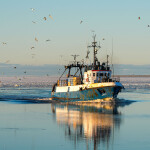
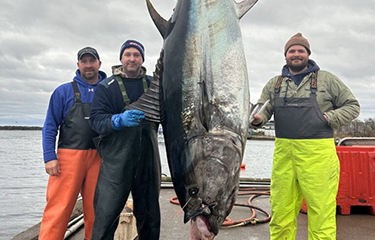
Prince Edward Island vessels currently have a two-fish limit on bluefin. Because the vessels have such a low limit, they treat the fish very carefully to get them on board without bruising. After catching them by rod and reel, they tow them behind the boat for a calming period to lower the lactic acid levels that have risen from the struggle. They avoid the use of a harpoon, and get them on board gently and kill the fish with the ikejime method – the Japanese method of bleeding a fish and removing nerves from the spine.
Photo courtesy of One Tuna
