






Eric Bloom, the president of Teaneck, New Jersey, U.S.A.-based Eastern Fish Co., says he doesn’t remember the details of the initial meeting with Nekkanti Sea Foods Managing Director Venkat Nekkanti in 2003, but he acknowledges – as Nekkanti claims – that it could have been as short as 15 minutes.
“I'm going to say this: he has a better memory of it than I do,” Bloom told SeafoodSource. “From that that particular first meeting, unfortunately, I can't give a lot of color. I would have guessed if he flew all the way in from India, would have given him more than 15 minutes. But what I remember about it was that we left the meeting with a very good feeling.”
At the time, India ranked fourth in volume of shrimp it exported to the U.S. By 2014, a decade later, India was number one, a position it has retained for nine straight years.
Eastern Fish, a major importer of shrimp to the U.S., did not have many business connections in India at the time. But as part of an aggressive growth strategy, the company was looking to new markets and building connections with new suppliers. But In 2004, the U.S. instituted a 10 percent duty on all Indian shrimp imports, making India virtually impossible for Eastern to do business with, Bloom said.
“We didn’t really have a presence in India at all until right about then. We had plans to grow the business, we have a good business plan, and we had a large-scale customer interested [in sourcing from India]. And we were talking with Nekkanti about that,” Bloom said. “But the U.S. move on anti-dumping put a monkey wrench in it. I don't believe there's any ever dumping going on – they were just creating a fair market for an item people want to eat in large volumes. But when the U.S. got shut down for them, it became a real problem for them.”
Nonetheless, the relationship between Eastern Fish and Nekkanti Sea Foods continued to bud, Bloom said.
“They were serious about wanting to do business. We built mutual trust, and that's the basis of any relationship right and Venkat, coming in from a younger generation, had different ideas, bigger ideas, and obviously wanted to grow his company and was aggressive at wanting to establish and maintain a market,” Bloom said. “He wanted to take on China, which at that time, was one of the largest shrimp exporters to the U.S. Venkat said he wanted to grow with us. The reputation of the company created by his father was there – he had established a really good company, with good principles – and that's what drew us in and made us ask, ‘How do we stay together through this?’”
Bloom said his trust in Nekkanti grew following a trial with a European client.
“I had a nice-sized European customer and I thought that Nekkanti’s product would really work well there. I thought Nekkanti would be a good place to incorporate them and as things worked out, they were extremely happy with their product.”
Eastern Fish maintained a small portion of business with Nekkanti Sea Foods through subsequent years. But when the U.S. lowered its India anti-dumping duty in 2007, “it changed the landscape,” Bloom said.
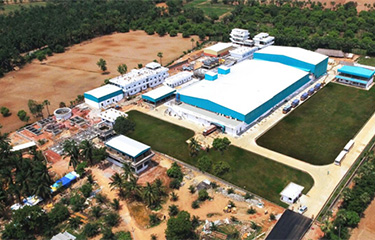
“We had dipped our toe into India, as we were expanding our buying base. We always wanted to develop one or two different suppliers from different countries because we had learned over time that limiting our supply base hurt us – there were always challenges somewhere, and if one country had difficulty, at least you had another place to turn,” Bloom said. “When it reopened, that became a huge opportunity. The U.S. has always been Eastern’s biggest area of volume. When we were able to, we began introducing a lot of our customers, really our private-brand business, to Nekkanti. We brought them to their plant in India, and they were duly impressed. If you go back 15 years or so, there were concerns about sanitary conditions in India, but that tour showed them that Nekkanti is as safe anywhere you're ever going to be,” he said.
Over the years, Nekkanti became a big partner of Eastern Fish. When more of its clients began asking for and then requiring sustainability credentialing, Eastern Fish asked Nekkanti to follow suit. Bloom said he was impressed by the company’s response.
“As we had demands for sustainability, Nekkanti was always there in front. They were the first farms in India to get a lot of eco-certifications. They were the first ones to get ASC certification for many of their farms. So, they that was a big deal, and it showed the commitment to us and our customers,” he said.
Bloom said he’s thrilled to have had Eastern Fish play a role in Nekkanti’s success, and the growth of India into a shrimp superpower.
“Always when you start with certain countries – and usually it’s countries that have less of a track record or where you've had less experience – you want to be cautious. But we always felt comfortable with Nekkanti,” Bloom said. “All credit belongs to them. They were always great partners and they continue to be great partners. Through sheer hard work, they have created something great.”
