






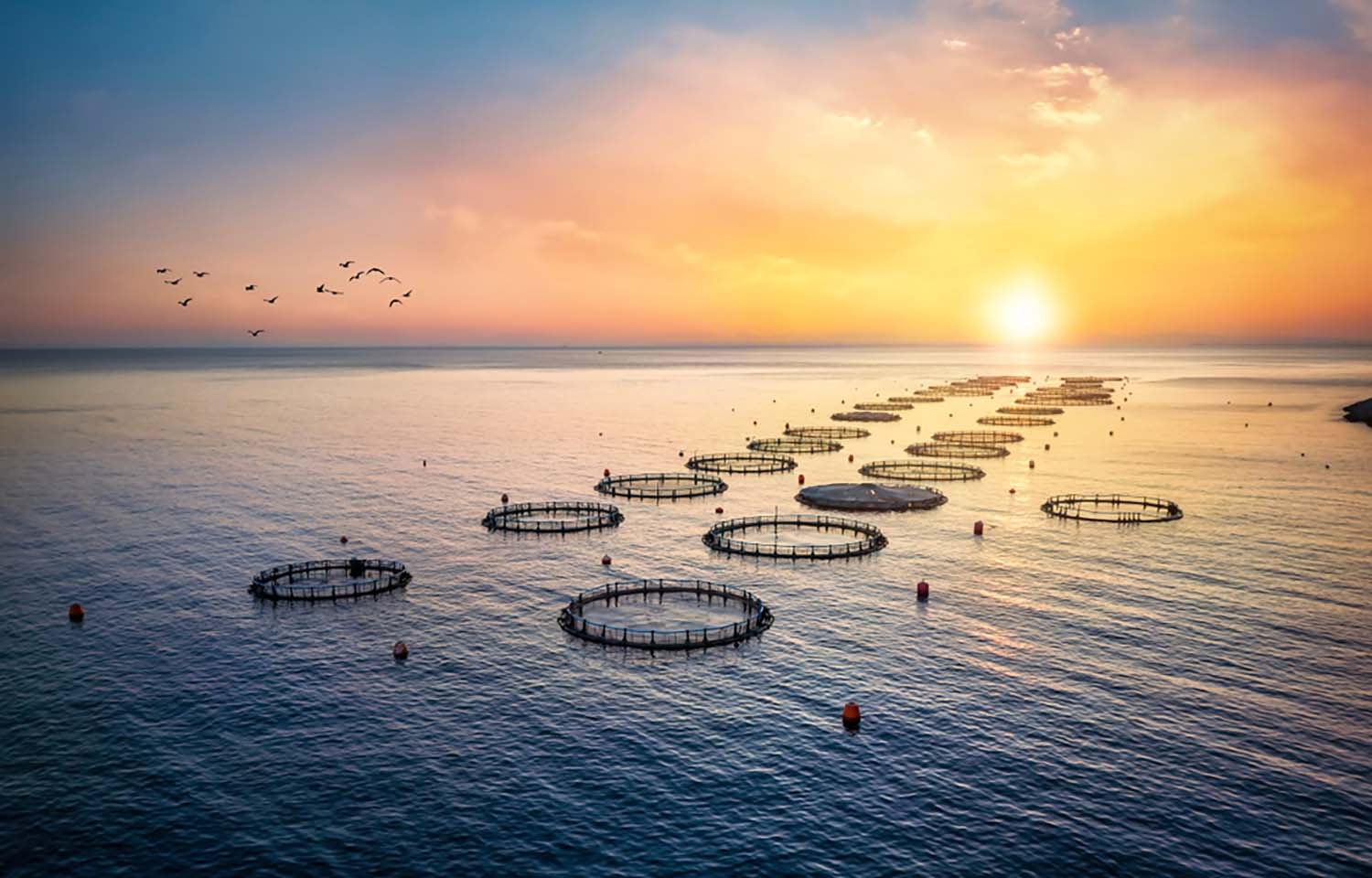
The recent provision of accessible financing has not been enough to help Europe's aquculture sector, according to the Federation of European Aquaculture Producers (FEAP), making it likely the region’s already heavy reliance on imported seafood products will increase.
The Brussels, Belgium-based federation said E.U.’s production standards are incredibly demanding, and make it difficult to compete with imported products, which it said face fewer obstacles to reaching the European marketplace.
FEAP is asking for "simplified, realistic, science-based governance" to be put in place, together with a coherent E.U. food production policy, in order to increase domestic seafood supply and ensure regional food security.
"The E.U.’s aquaculture production has been stagnating since the turn of the century, while it has grown exponentially around the world," FEAP said in a statement. "Difficulties in obtaining licenses for new fish farms and excessive red tape had made fish farming in the E.U. extremely burdensome and challenging.”
FEAP said the E.U. must give food production a similar level of importance as environmental protection, and it called for aquaculture to have its own common policy, since aquaculture and fisheries production are too different to warrant being classified under the same policy. When it comes to regulatory oversight, aquaculture actually has more in common with land-based livestock agriculture than fishing, FEAP said.
A new aquaculture-specific policy could align Europe's various public administrations and solve the technical bottlenecks of spatial planning and licensing procedures currently impeding growth in the sector, according to FEAP.
“Today, we clearly see that if E.U. aquaculture, in its different types and species, is ever to grow, a balance needs to be achieved between environmental protection and food production,” FEAP General Secretary Javier Ojeda said. “The interesting point is that this balance can be reached without compromising nature protection. Furthermore, the European Commission should recognize that the intensification of food production, including aquaculture, as FAO strongly recommends, is key to a sustainable future.”
Ojeda said while the Covid-19 pandemic and Russia's invasion of Ukraine have brought food production and security to the forefront of political priorities in Europe, this has not translated to an improvement in business conditions for the aquaculture sector.
The European Union a “very large political region,” with “a big distance” between the political offices in Brussels and ground-level stakeholders, Ojeda said.
“For this reason, lobbying is key for explaining [to] policymakers the needs and challenges faced by the farmers,” he said. “Today, everybody can see that NGOs have, in most cases, and certainly in the case of aquaculture, a higher lobbying capacity than fish farmers. The awkward situation here is that many of those NGOs are financed with funds that come from third countries like the U.S. This means that their interests are not necessarily in line with E.U. citizens’ interests.”
Ojeda criticized the E.U.'s focus on building up niche aquaculture sectors like seaweed and organics rather than the intensive production of finfish and shellfish, which are consumed in much larger volumes.
“Intensification of food production, done in an environmentally sustainable way, is the only way forward for a super-populated world to be able to face limited natural resources,” Ojeda said.
According to FEAP’s latest “European Aquaculture Production Report,” the continent's total seafood production from aquaculture was 2.8 million metric tons (MT) in 2022, down 0.9 percent from 2021. Of this, marine coldwater species represented 67 percent of total production, freshwater species were 14 percent of production, and marine Mediterranean species accounted for 19 percent.
Norway remained the dominant producer in Europe, accounting for 58 percent of the total supply, primarily consisting of salmon and trout. The other countries that produce more than 100,000 MT annually are Turkey, the U.K., and Greece. Salmon, trout, sea bream, sea bass, and carp comprised 96 percent of the total European production in 2022.
Moving forward, FEAP said with the right support from the European Commission, the E.U.'s aquaculture industry can be both environmentally responsible and produce much more food, without lowering standards.
“Aquaculture in general and fish farming in particular has proven through decades of environmental controls and surveillance that it can be carried out with no significant environmental impact. Norway is a perfect example,” Ojeda said. “E.U. farmed fish production could double or triple, and the environment would not notice. On the contrary, the effects can be positive.”
