






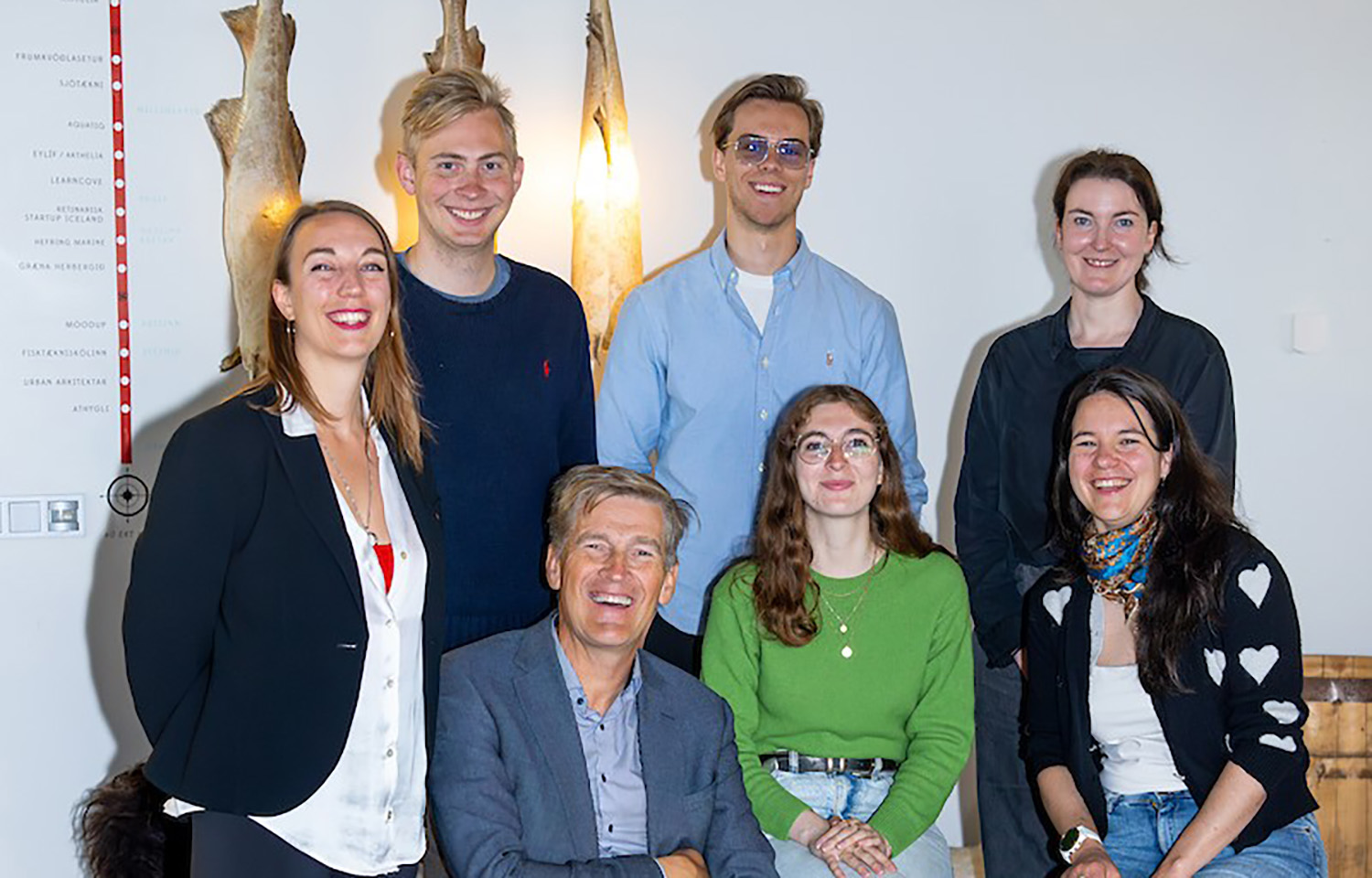
“100% Fish” – a movement which champions the full utilization of fisheries and aquaculture products – is experiencing rapid expansion and garnering attention from both inside and outside the seafood sector, according to Alexandra Leeper, the CEO of the Iceland Ocean Cluster (IOC).
The IOC was established in 2011 with the aim of strengthening relations between various parts of Iceland’s seafood industry. The cluster’s work started with traditional fishing and processing ventures but quickly began to incorporate newer sectors and startups.
After courting a wide swathe of the Icelandic seafood industry, full utilization of raw materials became the main emphasis of the IOC. These raw materials include heads, skins, bones, guts, cut-offs, and more, which according to Leeper, should not be thought of as waste but rather as valuable resources.
Leeper cited the example of Atlantic cod. When only considering the fillet, the seafood supply chain is only taking advantage of 45 percent of the fish, but with recent advancements in full utilization, the supply chain now often uses more than 90 percent of each fish to create a wide range of commercial products across sectors, including food, feed, cosmetics, nutraceuticals, textiles, and biomedical products. As a result, the average Atlantic cod has gone from having a value of around USD 12 (EUR 11) essentially just for the fillet to potentially being worth USD 5,000 (EUR 4,600), when all the different value chains are taken into account.
The IOC launched the 100% Fish movement in Iceland, and has since expanded it globally, resulting in large-scale economic and environmental benefits, according to Leeper.
“I've been with the cluster now for three and a half years, and even within that time frame, there's been a lot of long-term development and success stories to talk about," Leeper said. "We’ve really been focusing on international engagement and visibility, and now we're getting that kind of tidal momentum. There’s a big focus with many stakeholders saying, ‘We can't afford to be wasting anything.’ This conversation has become a lot more global. There's a lot of outreach happening, and a lot of people questioning if this is something they can do and asking where best to start.”
Specific breakthroughs in global markets include IOC collaboration with organizations like Great Lakes and Saint Lawrence Governors and Premiers (GSGP), a Chicago, Illinois U.S.A.-based organization that represents states in the Great Lakes region of the U.S. and the Canadian provinces of Ontario and Quebec. Ongoing for the past three years, the relationship first focused on Great Lakes whitefish, with the central aim of addressing commercial catch going to landfill. Alternative uses for more commercially important species have since been explored.
“We know what the biological characteristics are [of Great Lakes fish], but then it’s about what that means in terms of potential functions and how that matches with interesting products for the Great Lakes market – both on the Canadian and U.S. sides,” Leeper said. “That kicked off the thinking that this is a model that could be used or adapted to enable the 100% Fish function to be applied anywhere – not just in Iceland and not just with fish like Atlantic cod.”
With the goal of expansion in mind, a two-year project is also underway for 100% Fish models in Alaska. Led by the Alaska Seafood Marketing Institute (ASMI), IOC is serving as an expert consultant on the project.
Leeper said she sees some key similarities between Alaska and Iceland – not least in that there are clustered processing areas and a few key species with large-scale volumes. The project's initial efforts will focus on pollock, Chinook salmon, and several crustacean species.
“Again, IOC will be looking at the potential value, feasible development, and then move into value-chain mapping, value-chain development, and product conceptualization,” Leeper said.
IOC and the 100% Fish initiative are also supporting the Pacific Islands Ocean Cluster (PIOC). With the PIOC’s region being home to more than 70 percent of the world’s total tuna resources, the aim with the partnership is to help reduce waste and greenhouse gas emissions, while also retaining and creating more value for the islands and their Indigenous populations.
“There are already some guys in Kiribati working with tuna jerky development, so it makes a lot of sense to get started there as they’re already thinking about this,” Leeper said.
Leeper advised those looking to advance the 100% Fish movement look at “information capture,” particularly how local seafood businesses are currently is performing in terms of raw material utilization and waste.
Regional initiatives often begin with the capturing of information and the identification of which products, species, or processes could generate the biggest gains, according to Leeper. Next steps include finding secondary processors capable of working with and utilizing raw materials.
“In Iceland, we found that there are always innovators doing things. These companies may not consider themselves to be part of the blue economy, but they've developed products, they're doing primary processing, and then selling their products on. The next thing is to shout about these success stories – telling people that there are already entrepreneurs out there and that there's already this opportunity to explore,” Leeper said. “They’ve done that very well in the Great Lakes. For example, there's fish skin leather company Fiskur that was pretty small scale at the start of the project, but which is now inundated with orders. It’s about finding those people and opportunities that already exist.”
Leeper said she’s very happy with the number and variety of 100% Fish projects now underway.
“Just from a business perspective, the ocean cluster is getting a lot more tangible products to work with,” Leeper said. “We're learning more because every species is different, so with every new project we develop, we get better knowledge and understanding of what might work elsewhere.”
Leeper said she's also excited for what the next few years will bring to the movement. She said IOC is keen to facilitate the development of more ocean clusters. Originally from the U.K., Leeper said she would love to work on more projects there.
“The dialogue in the U.K. is really exciting right now. There's a lot of focus on local value creation, and I’ve already been speaking to a lot of entrepreneurs,” she said. “In the country’s salmon industry, there's quite a lot of processing happening, while in the south and southwest England, there's a lot of will to do something with scallop shells.”
