



Deepwater fish, shellfish, and squid populations in the Gulf of Mexico dropped significantly following the 2010 Deepwater Horizon oil spill and have yet to recover 16 years later, according to a new study.
“Our findings are particularly concerning because these are species that are abundant, widespread, and historically might not have been considered vulnerable,” Florida International University (FIU) marine researcher Pedro Peres said in a release. “What we are seeing suggests that even species that appear abundant can experience substantial changes that may go unnoticed without monitoring.”
The long-term study was led by the Deep-Pelagic Nekton Dynamics of the Gulf (DEEPEND) Consortium and published 19 October in the peer-reviewed Proceedings of the National Academy of Sciences (PNAS) journal.
The Deepwater Horizon disaster resulted in 4 million to 4.9 million barrels of oil flowing into the ocean, while the response involved 770,000 gallons of chemical dispersant being injected. Oil firm BP ultimately paid billions in settlements to compensate for the damage done. While much of the immediate focus was on how the spill harmed commercial species and the more visible damage on the surface and along the shoreline, the DEEPEND study documented substantial declines in the deep pelagic ecosystem between 600 and 5,000 feet in the decade after the spill.
The study found that the spill resulted in “sudden, severe, and persistent declines in the abundance of deep pelagic fishes, crustaceans, and cephalopods,” with ripple effects for the Gulf of Mexico ecosystem as well as managed or protected Gulf species that prey on deep pelagic species. According to the study, the abundance of all deep pelagic fish declined 63.5 percent in the years after the spill. Krill declined 72.8 percent, while cephalopods declined 59.7 percent.
“This represents the largest faunal decline recorded for Earth's largest ecosystem type. These data show that despite their immense size, open-ocean ecosystems have become finely tuned over millennia with little disturbance and, thus, are not equipped to handle sudden, large-scale changes. In essence, the deep pelagic domain appears to be much more fragile than we had imagined,” Tracey Sutton, the founder and chief scientist of the DEEPEND study team, said in a release.
The study also covered the deep scattering layer, home to species that stay deep underwater during the day and rise to the surface at night for feeding.
“The community of organisms that comprise the deep scattering layer is a diverse complex of animals,” FIU marine scientist Kevin Boswell said in a release. “To be able to measure changes in the ecosystem across independent methodologies really drives home the point that the midwater ecosystem has undergone a significant change.”
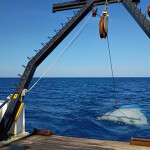
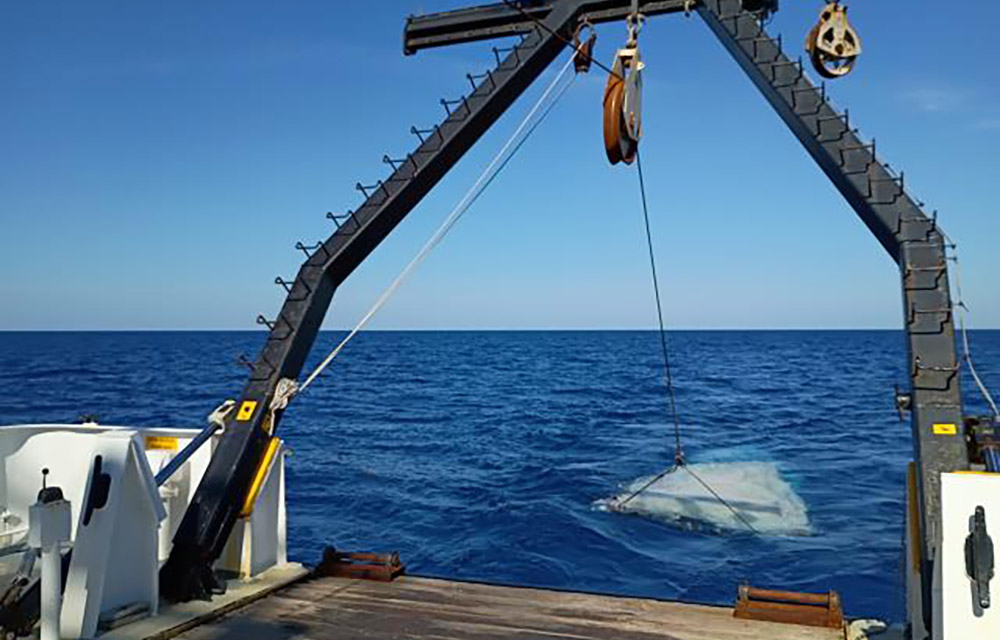
The study involved conducting 10 sampling efforts, beginning in 2011 immediately after the spill and continuing intermittently through 2023. Scientists used a 10-square-meter multiple opening/closing net and environmental sensing system (MOCNESS) to collect samples from 0 to 1,500 meters deep, counting each animal pulled out of the ocean. Echosounders were also used to take measurements that were used to estimate abundance levels.
“We had few measurements of what was really going on in the deep open Gulf before the oil spill,” John Quinlan, a fisheries biologist at the Southeast Fisheries Science Center and co-author of the paper, said in a release. “This event really showed us where we lacked critical information. So, scientists developed a program specifically designed to fill those gaps.”
Researchers said they were unable to identify natural factors correlating with the loss in abundance, ruling out marine heatwaves, hypoxia, and food supply limitations and leaving the massive oil spill as the likely culprit.
“These findings suggest that despite its immense size, the deep pelagic biome is vulnerable to human-induced disturbance and possesses limited resilience to facilitate recovery,” the study concluded.
