




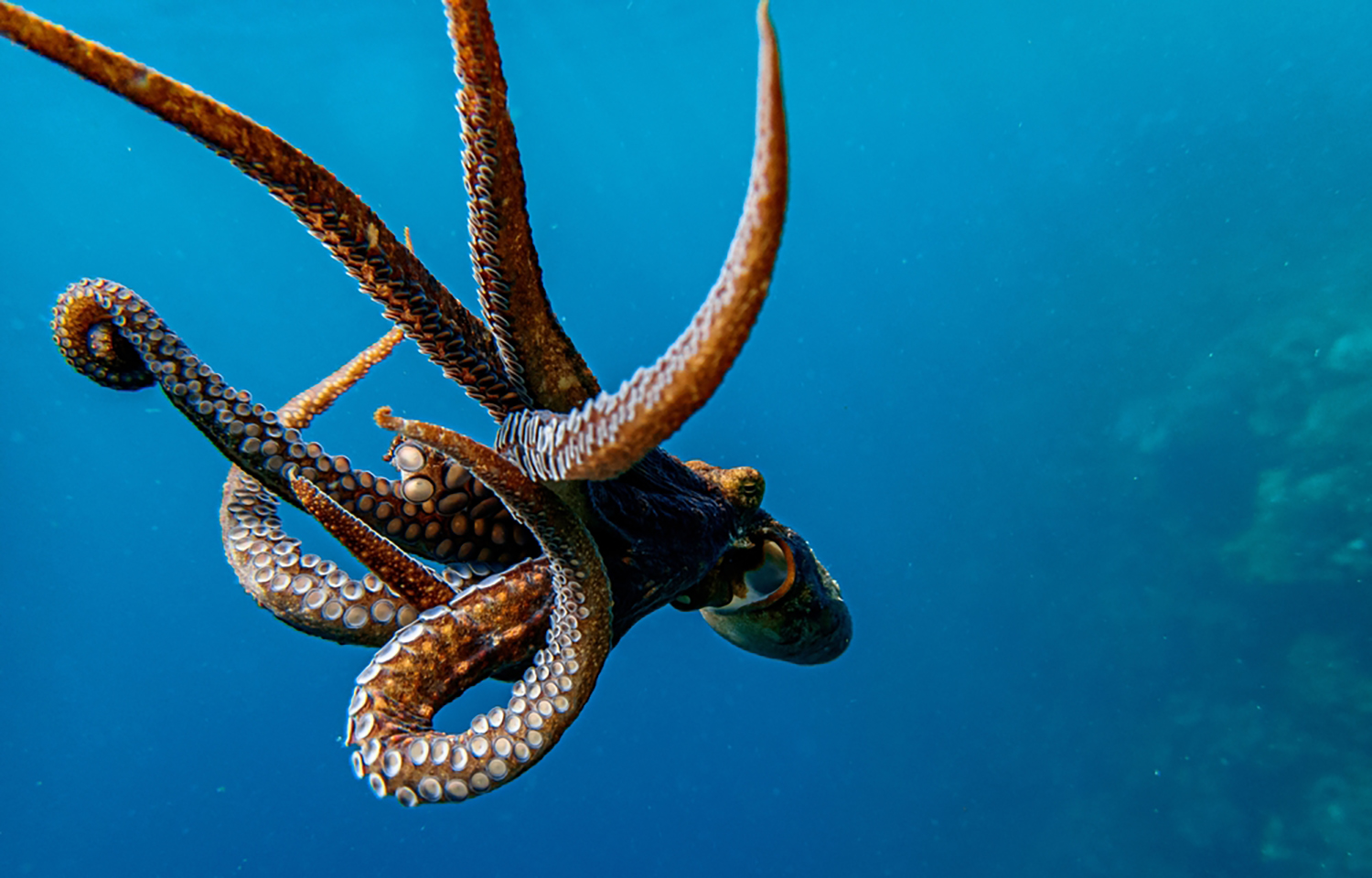
A recent study has investigated the unique challenges of managing the global octopus fishery.
Global octopus landings in 2020 totaled 377,818 metric tons (MT), according to the Food and Agriculture Organization (FAO). China landed 27.8 percent of this total, while countries in West Africa, including Morocco and Mauritania, accounted for 24 percent of the catch.
Other large producers of octopus include Mexico, which hauled in 9.2 percent of the worldwide total; Japan, at 8.6 percent; and South Korea at 5.1 percent. The FAO estimated global trade in octopus amounted to 283,577 metric tons, valued at USD 2.1 billion (EUR 1.8 billion at the time), in 2020.
A study recently published in Marine Biology, “Towards global traceability for sustainable cephalopod seafood,” has warned about the difficulties being encountered in octopus stock management, particularly in finding appropriate methods for assessing stocks properly. Octopuses typically live for only 12 to 14 months, and females stop eating to guard their eggs, then die soon after their eggs hatch. Thus, there is little to no carryover of the population from year to year, the study found.
“An annual stock is effectively a new population every year, and its abundance cannot be determined from standing biomass carried over from prior years,” the study said.
The study found octopus populations are harmed even by countries with management systems that seemingly follow scientific advice. For example, Morocco has used a “depletion model” since 2011 for the assessment of its total allowable octopus catch. Rather than using sampling to estimate overall stock, depletion models reference a decrease in the catch per unit effort (CPUE) by commercial vessels as an indication the stock is being depleted. The trouble with such models is that they can be thrown off by the migration of octopuses from other areas, which may result in a sudden increase in catch and a misreading of actual population levels, according to the study.
In addition, CPUE as a statistic is not always directly related to abundance, meaning that small changes in CPUE may indicate a relatively large change in abundance. The study proposes refinements to CPUE algorithms, as well as better migration tracking, to make the CPUE model more dependable.
Another issue impeding sustainable octopus fishery management is the fact that many octopus fisheries are artisanal, and fishers are secretive about their fishing locations and tend to underreport if they are violating rules, such as the number of pots put out and their total catch. They may also barter some of their catch, rather than selling through monitored channels.
The study promotes citizen science, in which recreational divers photograph and report octopus sightings digitally. The data could help scientists understand the distribution and density of various species in a certain area. The study also suggests people experienced in octopus identification can be used to train artificial intelligence to identify octopuses in images.
The study also proposes DNA sampling in the water, even as octopuses remain hidden, in order to gather more genetic information on octopus populations, which are often misidentified. Since octopuses are boneless and can change their shape and colors, identifying them can be tricky, especially in regions where similar species coexist. For instance, the giant Pacific octopus was originally thought to have three subspecies, but octopus specialists now identify just two distinct subspecies.
The study's authors said they were not proposing absolute fixes to overall octopus conservation management issues, but rather hoped to point out measures that could create improvements. They said they also hoped generate more awareness around “the necessity for the strengthening and international coordination of legislation and more rigorous standards for seafood labeling and for taxonomic curation of DNA sequences available in public databases for use in seafood identification.”
The availability of octopus in the seafood supply chain may soon be aided by way of aquaculture, but octopus farming has faced heavy backlash, stalling some projects that aim to get underway in the near future.
