






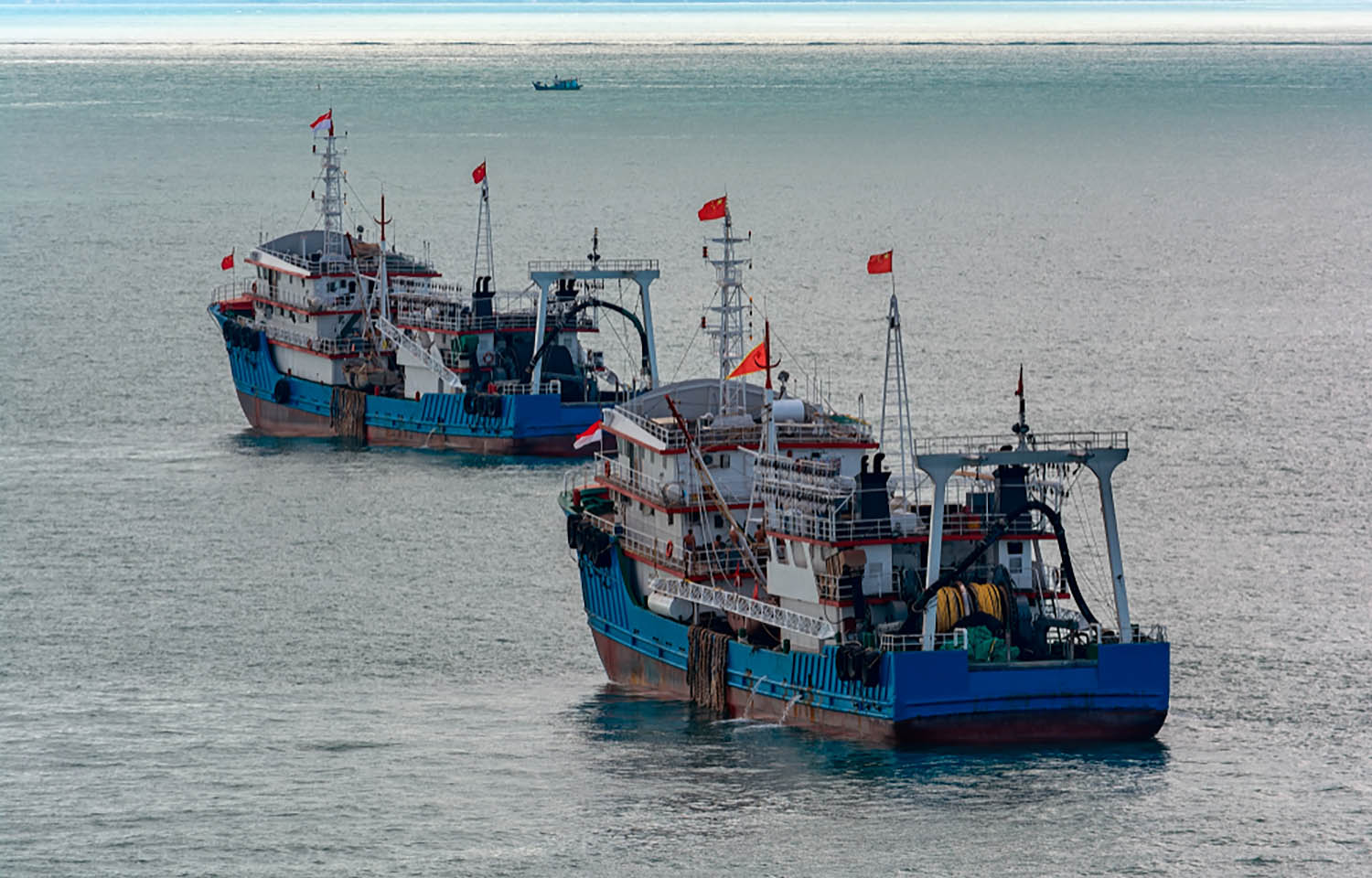
Chinese officials recently announced the country will cancel subsidies to a number of distant-water fishing companies that do not meet standards set by the 2022 World Trade Organization (WTO) Agreement on Fishery Subsidies.
China formally accepted the agreement in June of 2023. According to the WTO, it is one of 52 countries that have signed onto the deal; two-thirds of WTO member countries, or 110 in total, need to sign in order for the deal to enter into force.
Referencing the agreement’s stipulations, Chinese authorities alerted WTO officials that “for a small number of distant-water fisheries subsidies that do not meet the provisions of Article 4.1 or 5.1 of the Agreement on Fisheries Subsidies, China will abide by the Agreement and cancel the relevant subsidies once it comes into effect.”
This commitment was outlined in a recently published review of China’s WTO membership, which served as the first such review of Chinese industries under WTO standards since 2013.
Article 4.1 of the 2022 deal on prohibiting harmful subsidies states that no WTO member “shall grant or maintain subsidies for fishing or fishing-related activities regarding an overfished stock.” Article 5.1 prohibits subsidies to fishing operations in areas of the world’s oceans that are outside of the jurisdiction of regional fisheries management organizations or exclusive economic zones.
The Chinese government submitted three seafood subsidy programs overseen by the central government and 22 programs overseen by local or provincial governments for WTO review.
“Support has been [subsidized] for the construction of national-level coastal fishing port economic zones as pilot projects to promote high-quality and efficient fisheries, liveable and profitable fishing areas, and the prosperity of fishers,” the WTO report said. “Support has [also] been granted for green and circular development pilot projects in fisheries, where provinces are encouraged to take counties as pilot units, promote standardized renovation of inland aquaculture ponds, and achieve the standardization of tailwater treatment in aquaculture.”
Chinese subsidies are also being paid for “the provision of intelligent water-quality monitoring and environmental control systems” in aquaculture operations, according to the report.
In relation to the review, Chinese officials assured the WTO that China “has taken into account the general direction of fisheries subsidy negotiations when formulating existing fisheries subsidy policy,” even before the recently published review was organized.
To that end, officials pointed out that in 2021, the country canceled the qualification certificate of one distant-water fishing enterprise and suspended the qualification certificates of four others. Over 70 fishing vessels identified with violations have been penalized, according to officials, with penalties totaling over CNY 80 million (USD 11.2 million, EUR 10.4 million) in the 2021 to 2022 period.
None of the companies or vessels were identified.
The Chinese authorities further told the WTO that they will be confining subsidies solely to distant-water fishing enterprises that comply with international conventions for the conservation of international fisheries resources, “guiding distant-water fishing vessels to engage in responsible fishing and conserve international marine fisheries resources.”
It also emphasized its 2021 implementation of a "zero tolerance" policy against illegal, unreported, and unregulated (IUU) fishing activities “by conducting investigations into fishing vessels suspected of violating regulations, as reported by relevant organizations or embassies and imposed penalties on distant-water fishing enterprises and vessels identified with violations.”
Nevertheless, reports of Chinese vessels engaging in IUU activities continue to surface.
In May 2024, Peruvian authorities fined a Chinese vessel allegedly caught fishing illegally in the nation’s waters PEN 242 (USD 65, EUR 60), which fisher representative groups in the country called “laughable.”
In April, the Environmental Justice Foundation (EJF) released a report alleging China’s distant-water fishing fleet in the Southwest Indian Ocean (SWIO) is connected to IUU fishing and human rights abuses.
“While the Chinese government portrays its investment in the countries bordering the SWIO as a win-win, the clear reality is that it is doing direct harm,” EJF Founder and CEO Steve Trent said in a release.
Additionally, in March, a joint U.S.-Vanuatu patrol mission boarded six Chinese distant-water vessels in March that were accused of violating Vanuatu’s fishing laws by not properly recording catch in logbooks.
Though the nixing of a few subsidies represents a step toward China aligning with the 2022 agreement, the WTO is currently negotiating a more stringent extension to the agreement that would fully ban fisheries subsidies that lead to overcapacity and overfishing among the world’s fishing fleets.
If approved, it would force major fishing powers like China, Russia, and the E.U. to disclose more detailed information on a more regular basis regarding the subsidies they pay out and in-depth details regarding their distant-water operations.
