
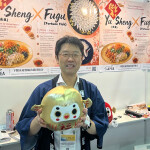




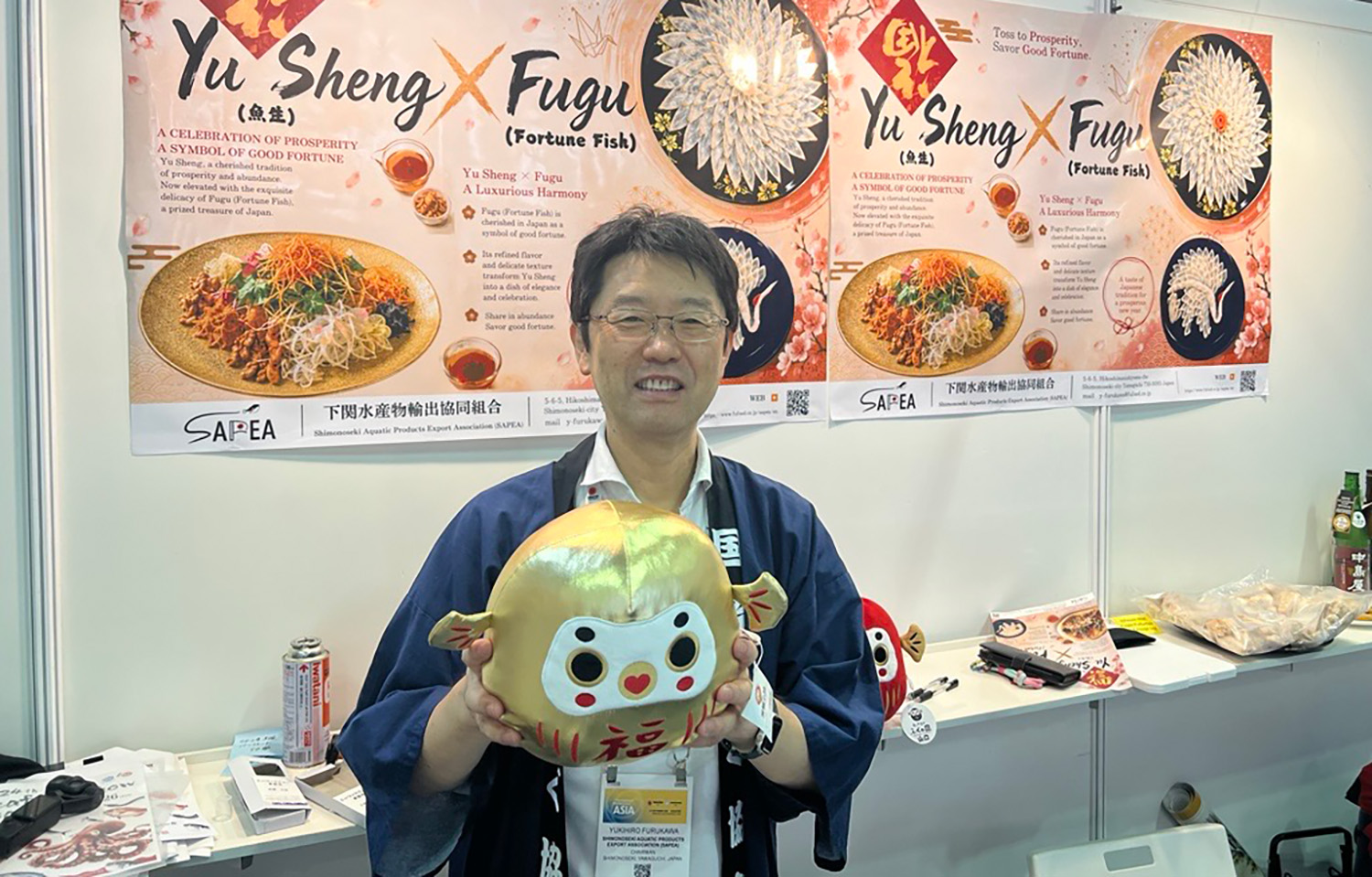
As a third-generation professional within Japan’s pufferfish industry, Yukihiro Furukawa is well aware of the dangers associated with preparing and eating pufferfish, also known as fugu in Japanese.
“If I mess up the process, people can die, so it’s very serious,” he told SeafoodSource at the 2026 Seafood Expo Asia in Singapore.
Furukawa, who is the chairman of the Shimonoseki Aquatic Products Export Association (SAPEA), is referring to a deadly toxin called tetrodotoxin found within the fish, which is over 1,000 times more powerful than cyanide. When ingested, it takes effect rapidly and can quickly lead to muscle paralysis, respiratory failure, and death.
Nevertheless, Japanese people have eaten fugu for nearly 3,000 years, with archaeological digs at ancient sites finding evidence of consumption from well before the fourth century B.C.
The key to safe consumption is in precise preparation, whereby chefs dissect the fish to remove its toxic body parts – often the liver, ovaries, and intestines – intact so they have no interaction with its surrounding edible meat.
To prepare pufferfish legally in Japan, chefs must undergo a three-year training program and pass a rigorous exam before securing a license granted by the Japanese government.
Furukawa is one of those professionals granted clearance to prepare the fish, and even though the country has an intense licensing process, he said conversation around whether pufferfish is safe to consume is often dominated by headlines of preventable deaths that have occurred due to improper, and unlicensed, preparation.
For instance, in 2023, a couple in Malaysia, where there are over 30 species of pufferfish off the coast, purchased illegal pufferfish from an online vendor, prepared the fish at home, quickly fell ill, and died.
Instances like these, Furukawa said, have caused fear in global markets such as Singapore, which took over a decade of lobbying before accepting imports of pufferfish across its border. Malaysia, the United Arab Emirates, and Australia are among the only other countries in the world that have granted approval for pufferfish imports.
Now, Furukawa and his colleagues at SAPEA are aiming to spread the message farther abroad that when prepared professionally, fugu is a delicacy worth trying.
“My goal is to expand fugu consumption and encourage it around the world,” he said.
In an attempt to expand consumption, SAPEA is targeting the high-end Chinese restaurant sector with a marketing campaign that utilizes word play between the Japanese and Chinese languages.
Furukawa explained that the word fugu sounds similar to a Chinese word for blessing or good fortune, and high-end chefs can play off that similarity to promote the species to customers.
“When people eat fugu, it’s usually associated with some sort of celebration … so in Singapore, for example, which has a large Chinese population, we are trying to make fugu more popular during Chinese New Year. We are trying to generate cultural fusion,” he said. “Special chefs in fine-dining restaurants often slice it as sashimi, but opportunity is also growing at sushi chains and in other spots like Italian restaurants.”
As SAPEA aims to expand the market for fugu, Furukawa said production needs to remain as responsible as possible.
Shimonoseki, located in the southern Yamaguchi Prefecture and also serving as the headquarters of SAPEA, handles most of the pufferfish production in the country. The fish continues to be caught in the wild, either through longline fishing or by setting specialized trap nets in the water, but farmed operations produce steady supply, as well.
“If you take too much from the wild, you will deplete that resource. The industry is aiming for a 50-50 split between wild catch and farmed,” Furukawa said.
Besides marketing efforts, SAPEA’s main objective remains education, with the ultimate goal of making people less fearful to try pufferfish.
“Our top priority is to educate people. Globally, people think about the poison first but may also want to try it. We are trying to get more people to try it, and the word will hopefully spread,” Furukawa said.
