





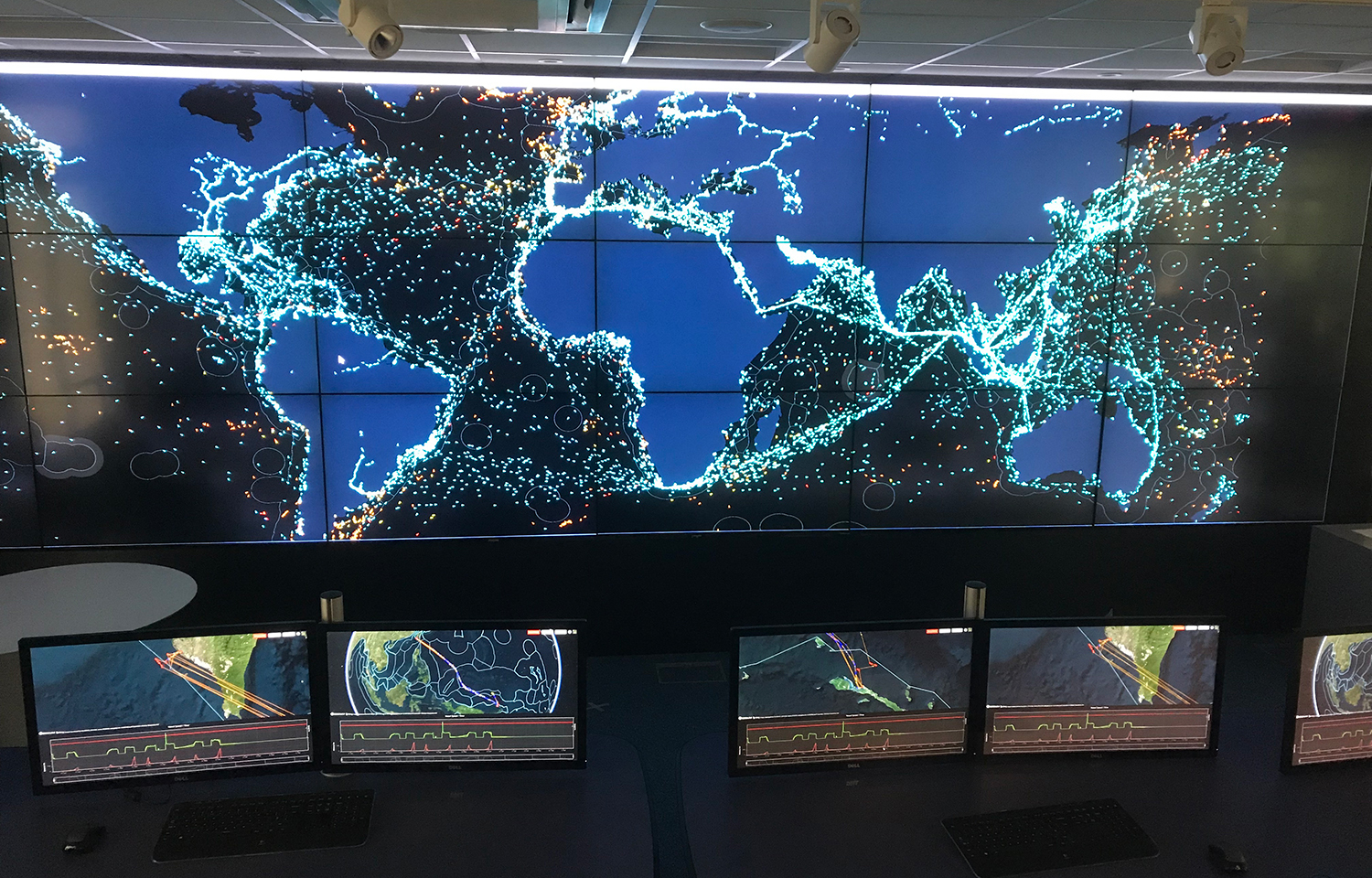
Ocean observation and technology firm OceanMind has released a new iteration of its surveillance technology, Syndra, which integrates data and monitoring from multiple sources to support government enforcement around illegal, unreported, and unregulated (IUU) fishing.
The firm has launched numerous ocean surveillance and technology platforms, but Syndra is the first to focus on Southeast Asia, building off the company’s existing relationships in Thailand, Cambodia, and the Philippines.
OceanMind CEO and Founder Nick Wise launched the product at the Seafood and Fisheries Emerging Technologies (SAFET) conference in Cebu, Philippines, in early September, working directly with the Cambodia General Directorate of Fisheries (GDF), the Philippines Bureau of Fisheries and Aquatic Resources (BFAR), and the Thailand Department of Fisheries (DoF).
"It matters because IUU fishing is still one of the biggest human impacts on the ocean that is helping drive decline," Wise said.
Wise has a background in software but entered the ocean conservancy space 10 years ago; now, he sees his work as blending advancements in technology with the promotion of sustainability and marine conservation. He founded OceanMind originally as a collaboration between charitable trusts and the U.K. government-funded R&D organization Satellite Applications Catapult, utilizing AI and satellites to "help authorities stop people doing bad things."
As the firm has evolved, the technology has gotten better, and Wise said Syndra surpasses just mere detection capabilities.
Once a violation or issue is identified, Syndra helps fisheries managers see what options are available to address the issue. Wise added that Syndra deploys training, capacity building, and intelligence sessions to global governments to help fisheries managers and stakeholders learn about what's happening in surrounding oceans and then teach those same governments how to self-surveil. Additionally, the company helps governments aggregate data from multiple sources and build cases that can be pursued in court.
"On occasion, we've trained prosecutors and judges so that that end-to-end enforcement chain is effective and properly informed," Wise said. "The enforcement side – helping governments do more with what they've got – that's our niche.”
More broadly, Wise explained Syndra can help close regional enforcement gaps, embed AI technology into management workflows, and build assurance for governments to effectively safeguard marine environments and properly mitigate IUU fishing once detected.
A key aspect for OceanMind is partnerships with organizations and companies already conducting IUU and fisheries management-related corrective work, such as Skylight, Global Fishing Watch, and the IMCS Network, "essentially acting as a bridge" to close the gap between governments and organizations.
"Every government's context and their rules and their waters, they're all different," Wise said. "There is no one-size-fits-all, so you have to tailor the whole package of capability to an environment. We help them work out how to do that and then train them so that they can do that for themselves without us in the future."
Past successes, prior to Syndra's launch, include partnerships with Interpol to crack down on IUU fishing in Indonesia. In Thailand, OceanMind aided in the capture of Yutana No. 1, and in Costa Rica, the organization helped detect multiple instances of IUU fishing, resulting in penalties.
According to Wise, Syndra has helped convince relevant stakeholders that a marine protected area in the exclusive economic zone around the Pitcairn Islands in the Central South Pacific Ocean could be enforced effectively.
"That was probably really the key for the technology, demonstrating that you can use satellites and enforce a zone of 800,000 square kilometers in the middle of absolutely nowhere, with just limited resources," Wise said.
Currently, OceanMind is focused on finding new opportunities for Syndra in Southeast Asia.
“We're looking to work with other countries in this specific region. We expect that that will then start to spread through more of Asia in general, particularly Northeast Asia initially,” Wise said. “There's a lot of focus on the island states because they have less resources, so they need to be more effective and efficient with the resources that they have. Eventually, the vision is that Syndra is a global capability and will be able to equally help all states."
He added that the organization is aiming to partner with government agencies, regional fisheries management organizations (RFMOs), philanthropic funders, development banks, public finance institutions, and technical assistance partners to roll out the technology effectively.
