


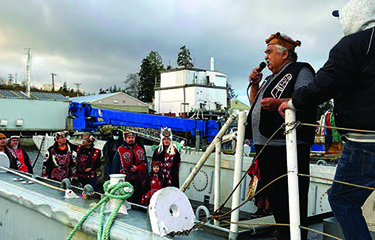
A group of 17 first nations in British Columbia, Canada have formed the Coalition of First Nations for Finfish Stewardship and are calling on the Canadian government to leave decisions on finfish aquaculture in their territory to them.
In a statement, the coalition is asserting its right to make decisions in its lands and waters, specifically stating members of the coalition “will choose if, when, and how the sector operates in our waters.”
The position statement comes as the future of finfish aquaculture in British Columbia remains relatively murky. In late 2020, the Canadian government suddenly announced it planned to phase out all existing salmon farming facilities in the Discovery Islands within 18 months – a period that ended June 2022.
Other salmon farms in B.C. had their licenses renewed for two more years, but Canada’s Department of Fisheries and Oceans continued to assert that it planned to transition away from open-net pen salmon aquaculture in the province. To that end, the province started the transition process in August 2022 with an “engagement towards a plan” on the transition away from net-pen salmon farming.
The Coalition of First Nations for Finfish Stewardship, however, is asserting its members have the sole right to approve commercial fish-farming operations on their lands, “just as it is the right of other Rightsholder Nations to remove fish farms from their territories.”
The coalition also criticized the government’s long delay in delivering a final decision on whether it will continue to permit salmon aquaculture operations in the province.
“The longer decisions are delayed on transition or the decision to renew licenses in what’s known as the ‘Discovery Islands,’ the greater the impact on our rights and the greater the risk to our sector partners and our economic opportunities,” the coalition said.
The coalition said criticisms of salmon net-pen aquaculture, such as its potential impact on wild salmon populations, ring hollow.
“We too rely on wild salmon to feed our people, and many of the salmon we rely on migrate from and to the Fraser River, where various projects and other industrial operations are damaging wild salmon habitat in other First Nations territories,” the coalition said. “If non-Rightsholder Nations want to set a precedent that allows First Nations to impact decisions in other Nations’ territories, what will this start, and where does it end? We ask you to rethink that, and to do as our people always have done: trust other Nations to do what is best for their communities, territories, and future generations.”
Canadian Minister of Fisheries, Oceans, and the Canadian Coast Guard Joyce Murray has not yet issued a final decision on whether salmon farming in the Discovery Islands should be phased out.
“For too long, this conversation about this industry has been taking place between everybody except the Nations impacted the most,” the coalition said. “Activists, eco-colonialists, consultants, governments, and the companies have been at the table guiding the path and narrative of fish farming. Only recently has that begun to change.”
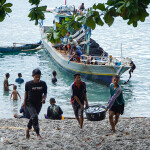
Photo courtesy of the Coalition of First Nations for Finfish Stewardship
