



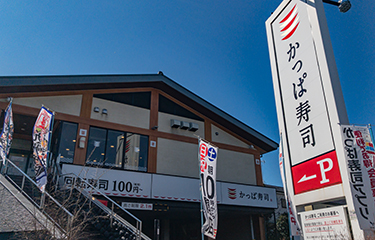
Kappa Create, the Yokohama, Japan-based parent company of the Kappa Sushi conveyor-belt sushi chain, issued a notice to investors this summer that its actual results for fiscal year 2023 would fall below its forecast issued on 8 February – an estimate which had already sharply lowered expectations from the company’s initial 8 November forecast.
In the same July notice, Kappa advised investors it would record an impairment loss due to the drop in performance.
Kappa Sushi – Japan’s fourth-largest sushi chain by sales following Sushiro, Kura Sushi, and Hama-sushi – issued several press releases in early July, notifying investors of the many issues that led to the dip in results.
Throughout fiscal year 2023, the company gradually eased restrictions that it implemented to prevent the spread of Covid-19. As a result, sales initially increased compared to the previous fiscal year, but increased sales were offset by soaring prices for raw materials and energy, which raised logistical costs and negatively affected profits.
In its initial forecast revision in February, the company said that the eighth wave of Covid-19 occurred in Japan during the third-quarter consolidated accounting period. Due to the significant decrease in the number of people dining out and, therefore, demand during the year-end holidays, the company advised that net sales were likely to fall below the previously announced November forecast.
Additionally, the company had begun investing in store renovation, but the war between Russia and Ukraine, and the depreciation of the yen, resulted in sharp increases in raw material costs. In order to secure staff for stores, the company also had to pay higher hourly wages.
In Kappa’s second forecast revision, issued this summer, the company said because profits and ordinary income exceeded the previous fiscal year, it could not receive subsidy income from the government – such as a cooperation grant for eateries that comply with operating hour restrictions during the pandemic – that it received in the previous fiscal year. The government subsidies require a business to show a drop in sales to qualify.
Kappa Create’s sales for the fiscal year ending 31 March were 5.4 percent higher than in the previous year, totaling JPY 70.02 billion (USD 493.8 million, EUR 443.8 million). Sales were, however, 2.4 percent lower than the company’s forecast sent to investors in November and 0.8 percent worse than the revised forecast sent in February.
Losses attributable to the owners of the parent company totaled JPY 3.04 billion (USD 21.4 million, EUR 19.2 million), compared to the company’s November forecast of JPY 535 million (USD 3.7 million, EUR 3.3 million) in profit, which it later revised to a loss of JPY 1.4 billion (USD 10 million, EUR 9 million) in its February forecast. The actual total represents a stark contrast to the previous fiscal year, when the company saw a profit of JPY 736 million (5.1 million, 4.6 million).
The company also declared an impairment loss – an immediate write-down of an asset based on a lowered estimate of its value that in this case was due to lower cash flow – at several of its stores around the country.
“Impairment losses were recorded for 127 stores and two factories during the accounting period, resulting in an impairment loss of JPY 1.6 billion [USD 10.9 million, EUR 9.8 million],” its most recent notice to investors stated.
Japan's economic difficulties as it emerged from the Covid-19 pandemic in Japan also affected other restaurant brands, and Kappa Sushi was not the only chain to record an impairment loss. Osaka-based Akindo Sushiro Co., the parent company of Sushiro, reported a JPY 6.8 billion (USD 48.1 million, EUR 43.4 million) impairment loss in its consolidated financial results for the fiscal year ending September 2022, which it reported on 4 November, 2022. The company raised its prices last year in response to higher raw material costs.
Osaka-based Kura Sushi had a similar pattern of higher sales to previous years but recorded lower profits, as price hikes failed to keep pace with higher costs, according to its Q2 2023 results, issued 9 June, 2023. Sales grew 14 percent over the same period in 2022, but profit attributable to the owners of the parent company swung from JPY 2.2 billion (USD 15.5 million, EUR 14 million) to a loss of JPY 1 billion (USD 7 million, EUR 6.3 million) year over year.
Photo courtesy of Takashi Images/Shutterstock
