





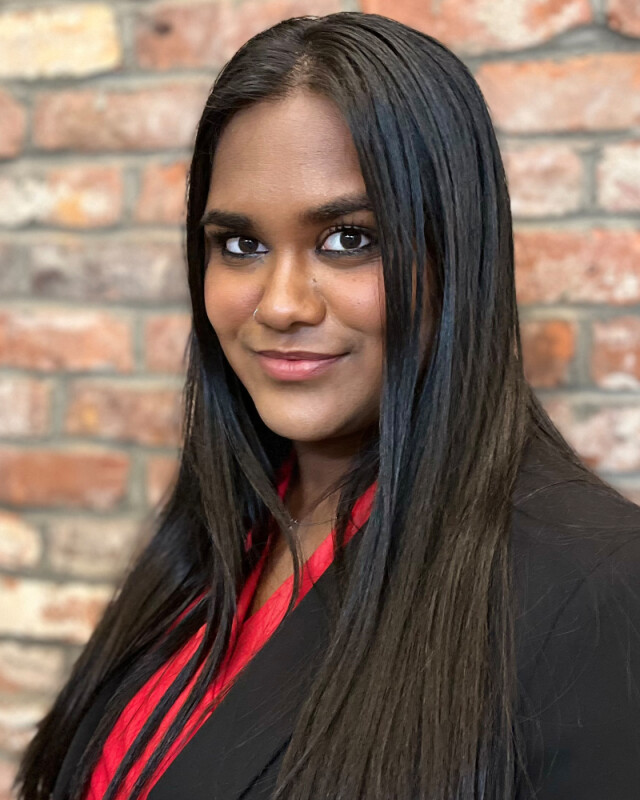
During the Seafood Expo North America/Seafood Processing North America – which ran from 12 to 14 March, 2023 in Boston, Massachusetts – SeafoodSource partnered with Emily De Sousa, the CEO of digital educational platform Seaside with Emily, who joined SeafoodSource as a social media correspondent.
De Sousa promotes sustainable seafood, healthy oceans, culinary adventures, and the rise of pescatourism through her website and via her Instagram and TikTok social media platforms. She travels around the world to speak at seminars, conferences, and forums advocating for ocean protection and seafood sustainability, and has developed a significant following in the seafood space.
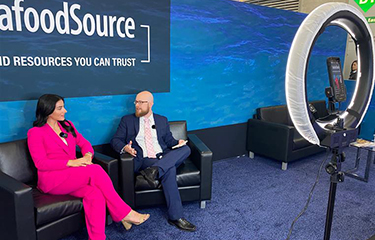
SeafoodSource Editor Chris Chase sat down with De Sousa during the expo for an interview, broadcast live on Instagram, to discuss her growing role as a seafood influencer.
SeafoodSource: I'm SeafoodSource Editor, Chris Chase, I'm here with Emily De Sousa of Seaside with Emily. She is working with us on our social media partnership throughout Seafood Expo North America 2023. If you haven't been following her yet, you should go follow her because she's been running around the show doing all kinds of cool content highlighting stuff, but this is my chance to kind of nerd out about seafood with her, because I know we're both seafood nerds.
We met during our webinar, and I was like, yeah, so we got to talk more.
I'd love to get into your position as a seafood influencer, because I find it really fascinating how you got into that niche because it's a bit of a weird niche, but you've really been successful at cultivating an audience. How do you build an audience as a seafood influencer?
DeSousa: It's definitely been a convoluted journey. I don't think 10 years ago, if you asked me what I wanted to be when I grew up, I don't know if I would have said seafood influencer. I'm not sure that's a job description. But I've always loved seafood and my family is from the Azores Islands, off the coast of Portugal. So, I grew up eating seafood and was always surrounded by it, but always just loved the ocean.
I went to grad school out of a desire to figure out how we can harvest seafood from the ocean in a way that protects the ecosystem and doesn't hurt it. Coming from an island nation, we are very much the stewards of the ocean, recognizing that if we don't protect our marine resources then we all suffer. I really wanted to see how we could translate that on a global scale in something like the seafood industry that is so globalized.
So, what happened was when I was in grad school, I noticed a massive disconnect between what was happening in fishery science and what the average person knew about seafood.
SeafoodSource: I feel like that will resonate with a lot of people.
De Sousa: The knowledge gap is quite wide, and I think there's a lot of different reasons. The ocean is out of sight out of mind for a lot of people. I think people see the ocean as this mysterious unknown thing, which means also they're curious about it, but simply don't know a lot.
Generally, also about where their food comes from, but I think it's like a gap is a bit wider for seafood. So, while I was in school, I had already been doing a lot of work on social media, in the travel space, food space, but I was kind of feeling a bit unfulfilled. Traveling the world and writing and documenting is obviously a phenomenal way to spend your time. But I really wanted to do something that was more impactful and leveraged the knowledge with skills that I had from my fishery science grad school experience. And so right before COVID, I switched everything over.
SeafoodSource: A heck of a time to do it. It's a good time to go from travel to something else because you know, travel shut down.
De Sousa: Obviously Covid's awful, but I think the timing was almost a bit beneficial to what I was doing because people were eating at home more often. And we know that a lot of consumers specifically in North America are primarily eating seafood in restaurants, and Covid really shifted that toward more eating more at home. But they had no idea how to cook it, how to buy it, and what to do with it.
They're also more conscious of where their food is coming from because of supply chain issues, and of course the need for healthier options. And so, it was a bit of a perfect storm and what I found was that there's a real appetite for this type of content. People are genuinely curious. They want to know about the oceans and want to know how the ocean is harvested. People will think they have a fishing vessel ...
SeafoodSource: A guy in a yellow slicker with a pipe.
De Sousa: They don't realize the actual diversity of fishing vessels, and ways to capture seafood. I wanted to bring people a step closer to the ocean and a step closer to seafood. And I think the reason that I've been so successful is because people are genuinely interested and demanding more of this content.
As you know, I think the seafood industry in the past has not always done a very good job of making this information accessible to consumers. So, I'm trying to shake things up and make that content more accessible.
SeafoodSource: When we talked in our webinar, it was about how companies can leverage TikTok and social media. Are you kind of helping pioneer that? Most of Gen Z is getting a lot of their news from TikTok, Instagram and social media. Do you think companies really need to focus on that and leverage that, and realize this isn't just a fad, this is a new way of getting information to people and saying here we are l
De Sousa: Definitely. I get it social media is a beast. It's, it's a lot of work. It's very scary, especially if you don't understand it, I can see why people think it's a bit shallow or they don't really want to engage. But the reality is that this is where the world is going. Especially with these younger generations. Millennials Gen Z currently make up the largest buying power in the market. They are the fastest growing demographic of seafood consumers, and they're on these platforms. They are on TikTok, they’re on Instagram and they're looking for short form video content.
They want a 30 second video that explains to them here's how your salmon is farmed, here’s how your oysters are farmed, and here's where your halibut is coming from. They're curious. This generation is also the most educated generation. So they really want to know where their food is coming from. They want to know the impact of their food choices. And like I said, there's this natural curiosity, and so I think companies will only benefit from being more transparent for making information accessible. I think there is a misconception that revealing too much information will somehow backfire. But this is the information age, the age of transparency young people especially they want this content.
I would love to see more seafood companies on TikTok, that would be so fun. It’s very lonely right now and I want more people to interact with.
SeafoodSource: You want people to hang out with and interact with on social media to build each other up. You'd rather have more people in the space talking about seafood.
De Sousa: The reason I started doing this was to make an impact. I really want to show people seafood is a healthy food choice, sustainable food choice. It helps to support coastal communities and rural areas all around the world, including the ones where my family comes from.
I can only make so much of an impact as one person so I really would love more people to get online. More people to engage in these conversations.
SeafoodSource: There's only so much you can do by yourself. I'd love to go talking about misconception because I have the same sort of feeling as you. People have those misconceptions kind of built into them. And then you see the comment on Facebook of someone who just comes out and kind of says, ‘oh, this is the worst thing’. How do you fight against some of that? Do you think it's just an education problem, where people are just stuck in this idea that we're still fishing like we did in the '80s and destroying the ocean and stuff like that? Do you have a method for a tried and true of way to lay out the facts and they will come?
De Sousa: Yeah, I mean, I think just starting with making the information accessible, I think is the biggest thing, because right now, a lot of people have those misconceptions, because that's the information that's been made accessible to them. And the only thing when they Google "fishing trawler" is a horrific article about how bad this is for the oceans. That's going to be their starting point. That's all that they know. And so, I think empathy also goes a long way in this space, of recognition that the seafood industry is starting a step behind, because like I said, we haven't done a very good job of making this accessible.
It doesn’t mean it’s impossible, it just means that we need to work a little bit harder. We need to find that information to show why those stories from 20 years ago, yes, that might have been the case then but it's not the case today.
Here's all the innovation that's happening now. Here's all the investments we've made in technology and sustainability.
Here in Boston, there's so many examples of it all around this floor. Of how companies have made truly conscious commitment fishing more sustainably, to farming more sustainably, as all with more similar goals. All with a very similar goal of feeding the world and bringing people to sustain that option.
I think for me, I just try to approach those sorts of conversations with them and understand a lot of people, it’s out of sight, out of mind.
They're going off one news article they read, that's all they know, they don't have a master's degree like I do.
SeafoodSource: They haven't been knee-deep in the industry for years.
De Sousa: Exactly, let’s just meet them where they’re at, find out why they feel that way. And what resources you provide and try to have an open dialogue.
SeafoodSource: You mentioned seeing stuff around the show floor today and yesterday. And that's a great segue into my next question: Being here at Seafood Expo North America, is there anything that stood out to you?
De Sousa: I've been super impressed with a lot of regenerative aquaculture products. I've seen a lot of seaweed and kelp stuff. It's very fascinating to me.
Walking around and seeing all these companies do fully value-added things, or chefs getting creative with how they're using seaweed and kelp to create these flavorful dishes. It really changed my mind about seaweed.
SeafoodSource: It’s like the educational aspect of teaching people how to eat fish. The seaweed industry is teaching seaweed can be delicious. It's intriguing to me that you kind of hit this inflection point of travel was ending and you didn't want to be in that anymore, and seafood was more interesting. I think the industry – at a lot of panels throughout 2018-2019 and into as far as 2020 before it shut down – the conversation always has been that people just don't know how to cook it. Do you think you have been part of the movement of people starting to learn how to cook it because they couldn't get it any other way and still wanted fish?
DeSousa: Definitely. I think that aspect of people not knowing how cook it, I also think people know how to cook seafood. There’s this fear barrier.
Like people perceive it as very expensive. They don't want to mess it up. They had that you know, black cod in a restaurant one time and they know that they'll never be able to recreate it at home. So, it's very intimidating, but really seafood is very easy to cook.
It’s a lot easier than a lot of other proteins and there is this fear barrier. Frankly, this aspect of it is funny for me too because I am not a chef by any sense of the imagination. I'm a scientist.
What I have found is people who have been following me for a while, started messaging me saying they know how to buy sustainable seafood and find it at the store, but what do I do with it once I get home? I’ve felt forced in to this home cook tutorial role, which is not my forte.
SeafoodSource: It not being your forte, do you think that's almost a strength because it's like, "I don't know what I'm doing and I'm still doing it and it's great. So if I can do it, you can do it."
De Sousa: That's exactly how I market it. I'm like "guys, I'm not a chef. So, I can figure this out. You can figure it out." Much of what I do cooking wise, is so simple.
SeafoodSource: I'm interested in sort of the social media aspect too, because I know there was sort of like a viral thing with tinned fish for a little while.
De Sousa:
Companies are getting so creative with the packaging, the flavors like it's a cool experience for the consumer. Like you said, creating that Mediterranean experience especially for young people. You get to fish relatively affordably. They can get a cheap bottle of wine they can come home, and they can set up like that's this whole trend on TikTok.
SeafoodSource: Have you been to SENA before, or is this your first show?
De Sousa: Last year was my first show.
SeafoodSource: You were just in Panama, what was that like to be at that conference?
DeSousa: It was cool. Yeah, well, I do a lot of traveling for conferences but also to showcase different fisheries and agriculture innovation around trying to like talking to the diversity of species trying to bring a little closer show that like it's not just salmon and tuna like they are sea cucumbers. They're like there's all this cool stuff happening.
Photo by SeafoodSource
