





The South American nations of Ecuador and Uruguay have signed a five-year memorandum of understanding (MoU) to collaborate on fisheries and aquaculture in an attempt to combat illegal, unreported, and unregulated (IUU) fishing practices.
The new MoU, according to a release from The Pew Charitable Trusts, includes pledges to enhance collaboration to bolster monitoring and enforcement measures against IUU fishing. The two countries have agreed to share data on fishing vessels operating in the respective countries’ waters and information about IUU activity the two countries have detected within their 200-mile exclusive economic zones (EEZs).
"Tens of thousands of Ecuadorians depend on fisheries for their livelihoods and food, and IUU fishing threatens our economic stability,” Ecuador Vice Minister of Fisheries Andres Arens said in a release. “By sharing information with Uruguay on illegal activities we detect – and with their commitment to do the same – we can make sure that the individuals and companies that don’t follow the rules are stopped. Through stronger monitoring and enforcement, we will be able to better deter illegal operators and keep our waters safe.”
The move by the two countries to collaborate comes as South America faces increased incursions from foreign vessels often accused of engaging in IUU practices. Chinese vessels – accused of IUU infractions in the past – have also faced allegations of making increasing incursions into the waters of South America, including Ecuador’s protected Galapagos marine sanctuary.
Argentina, Uruguay’s southern neighbor, has also had its navy keep close watch on hundreds of Chinese vessels, as analysis conducted by NGO Oceana of data collected by Global Fishing Watch found hundreds of Chinese vessels “pillaging” the waters off the coast of Argentina. In 2021, four South American countries – Ecuador, Peru, Chile, and Colombia – issued a joint statement condemning IUU fishing and called out a “large fleet of foreign-flagged vessels,” vowing to closely monitor the fleet.
Uruguay has also dealt with recent labor concerns after a message in a bottle led to a human rights investigation on board a Chinese ship, the Lu Qing Yuan Yu 765 – an investigation that also highlighted some of the struggles the government has faced against policing foreign fishing fleets.
Uruguay National Directorate for Aquatic Resources Director Jaime Coronel said the MoU will help the country keep close tabs on the many vessels that use the port of Montevideo – the country's capital and a “crucial hub for distant-water fishing vessels.”
“Unloading in ports compliant with the Port State Measures Agreement is paramount to maintaining control over catches and to prevent, deter, and eliminate IUU fishing,” Coronel said. “Through this partnership with Ecuador, we are poised to thwart attempts by IUU vessels to offload their catch in our ports, thereby reinforcing the security of invaluable fisheries in the Atlantic and Pacific oceans."
The new partnership, added Tahiana Fajardo Vargas – an officer with The Pew Charitable Trusts' international fisheries project – will send a message about the effectiveness of regional cooperation both in South America and globally.
“By committing to transparent communication about fishing and port activities, both nations hope that they can significantly enhance fisheries governance,” Vargas said. “We are eager to see how these joint endeavors will improve fisheries and combat IUU practices in Ecuador, Uruguay, and across South America in the years to come."
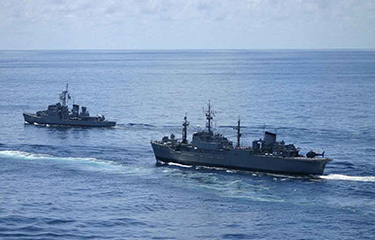
Photo courtesy of the Uruguay Prefectura
