





The growing fishmeal and fish oil industry in West Africa has mainly supported export market growth, leaving domestic seafood markets with dwindling amounts of fish available for human consumption, environmental degradation, and decreased income for fishers and factory workers in Mauritania and Senegal, according to a new human rights impact assessment.
Senegal and Mauritania account for 1.12 percent and 0.22 percent of global fishmeal and fish oil output, respectively. Commissioned by the Global Roundtable on Marine Ingredients, an initiative co-founded by the IFFO, The Marine Ingredients Organisation and the marine conservation organization Sustainable Fisheries Partnership, the assessment studied the small pelagic value chain in the two countries, finding that the price of fish has skyrocketed in the two countries, forcing local consumers to forego seafood in their diets.
In Mauritania, prices of sardinella have risen in recent years from MRO 100 (USD 0.26, EUR 0.25) per kilogram to MRO 600 (USD 1.60, EUR 1.50), representing “a steep increase for the poorer population in Mauritania who are the consumers of this species,” according to the report.
The increase is due to the fact that more catch continues to go toward the fishmeal and fish oil (FMFO) industry and export markets “as they pay higher prices, leaving the local market poorly supplied,” the report said.
Additionally, fishmeal factories in both countries have employed detrimental environmental practices, such as releasing unregulated emissions and dumping wastewater in the sea, placing local communities, fishers, and factory workers at risk, the report found.
The governments of both countries failed to address the issues surrounding local fishmeal and fish oil production, according to the assessment. The Mauritanian government has put plans on hold to audit factories, despite the World Bank offering to finance the process. And a proposal in Mauritania to require the allocation of at least 20 percent of small pelagic fish for human consumption was tabled and has not been revived. For years, the government of Mauritania has been aware of the adverse effects of an uncontrolled FMFO industry of conflicts “around environmental issues and fishing zone usage,” the report found.
As for Senegal, the report references Food and Agriculture Organization (FAO) research that found the FMFO industry has negatively impacted public health due to its air, water, and soil pollution.
“People living near fishmeal and fish oil factories frequently complain about the smoke and very bad odors they generate,” the U.N. agency noted.
To eliminate or, at the very least, mitigate these issues, the Global Roundtable recommended both countries’ governments “implement, monitor, and enforce regulations on limiting the number and capacity of FMFO factories and commercial vessels, as well as the production of FMFO, and on environmental practices.”
It encouraged them to take additional action to safeguard the human rights of those impacted directly and indirectly by the FMFO sector, in particular the artisanal value chain within both countries. It also called for both governments to actively promote the sale of fish for human consumption. And it encouraged FMFO producers to use alternative feedstock, such as fish waste, instead of using fresh edible fish, to improve local food security.
These two countries are not unique when it comes to the need to limit commercial vessels, according to the report. It recommended all countries with FMFO fisheries to limit the number of commercial licenses and better regulate fishing effort and impact.
The responsible use of marine ingredients has been previously studied in depth by the roundtable, and was a topic of interest during this year’s Marine Ingredients Organization (IFFO) conference, held in Cape Town, South Africa, from 23 to 25 October, where members of the marine ingredient and related industries discussed market trends and wider opportunities and challenges.
“Marine ingredients are now seen as both premium and strategic and their role in the global food system is fast gaining recognition,” IFFO President Gonzalo de Romaña said at the conference.
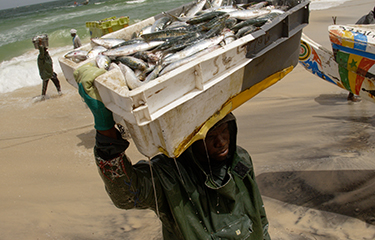
Photo courtesy of Senderistas/Shutterstock
