






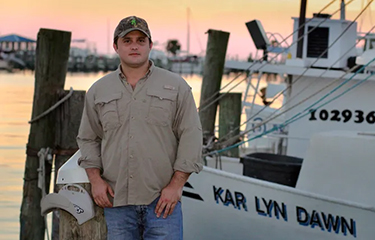
A pair of U.S.commercial fishermen who work in the Gulf of Mexico are suing the federal government and the Gulf of Mexico Fishery Management Council, claiming that the regulatory system overseen by NOAA Fisheries and the regional fishery management councils represents an “unconstitutional regime.”
George Arnesen and Ryan Bradley claim that by delegating fisheries regulation to those councils, the federal government is violating “the Constitution’s structural protections,” removing democratic control and placing commercial fishermen “at the mercy of unaccountable bureaucrats.”
“A well-intentioned attempt at rule by enlightened experts has devolved, as usual, into a bureaucratic morass captured by narrow interests,” the pair argue in the suit, which was first reported by Fox News.
In response to these concerns, which Arnesen and Bradley raised previously in the public comment process, eliciting a mandatory response from NOAA Fisheries, the organization said the management councils are advisory bodies only, not actual regulators.
“Federal courts have held that fishery management councils are not considered federal agencies for the purposes of the Administrative Procedure Act and that council members are not federal ‘officers’ under the U.S. Constitution as suggested by the commenters,” the agency said.
The lawsuit also targets the catch-share system used to regulate many fisheries, which Arnesen and Bradley said favors “mega-corporations” over local fishermen. Bradley serves as the executive director of Mississippi Commercial Fisheries United, an industry advocacy group.
While the case is an attack on the legal foundation underpinning U.S. fisheries regulation, it’s also a direct response to the Gulf of Mexico Fishery Management Council giving recreational fishermen an even greater share of the annual amberjack catch limit.
Commercial and recreational fishermen have been in a pitched battle over who should be allotted more of the annual catch limit, with the council splitting the stock 73 percent to 27 percent in favor of recreational fishing – a decision that angered commercial fishermen. Concerned that the stock was not recovering as quickly as desired, the council began work on Amendment 54 to update the rebuilding plan for the stock.
Under Amendment 54, which partially went into effect 15 June, the commercial share of the catch shrinks from 27 percent to 20 percent and the commercial annual catch limit is reduced from 484,380 lbs to 101,000 pounds – a 79 percent decrease.
“For fishermen like the plaintiffs, Amendment 54 threatens to end a generations-long history of amberjack fishing in the Gulf of Mexico,” the lawsuit states.
A lawsuit by Gulf of Mexico commercial fisherman challenging similar catch share reallocations to the recreational sector in the red grouper fishery lost in court earlier this year.
Arnesen and Bradley blame agency capture by environmentalists and recreational fishermen for the “increasingly draconian restrictions,” which they said benefit wealthy hobbyists over the commercial industry.
“Councils have been captured by special interests, from foreign-funded seafood titans to well-connected recreational fishermen,” the two continue. “The immediate casualties are working-class commercial fishermen like plaintiffs, who face a campaign of exclusionary restrictions. Without the deep pockets or personal connections necessary to penetrate and persuade an insulated council, these small businessmen face economic extinction.”
Arnesen and Bradley filed their suit asking the court to vacate Amendment 54 just days after the new rule partially went into effect.
On 18 June, NOAA Fisheries closed the 2023 commercial amberjack season.
Arnesen and Bradley’s lawsuit is just the latest of several challenges to NOAA Fisheries’ regulatory authority.
The U.S. Supreme Court is set to consider a lawsuit filed by Atlantic herring fishermen, who claim that NOAA Fisheries did not have the authority to require them to pay for at-sea monitors. The court is using the case to reconsider the “Chevron deference,” a legal precedent wherein courts give regulatory agencies wide latitude in exercising lawmaking authority on behalf of legislators. If the court rules in the fishermen’s favor, it could have massive implications for how NOAA Fisheries and the regional fishery management councils are able to regulate U.S. fisheries.
“The Supreme Court has an opportunity to correct one of the most-consequential judicial errors in a generation. Chevron deference has proven corrosive to the American system of checks and balances and directly contributed to an unaccountable executive branch, overbearing bureaucracy, and runaway regulation,” Cause of Action Institute Counsel Ryan Mulvey said.
Photo courtesy of Mississippi Commercial Fisheries United
