



Mauritius recently teamed up with fellow Indian Ocean Tuna Commission (IOTC) members to successfully oppose a periodic ban on drifting fish aggregating devices (dFADs) the country said threatened the East African country’s tuna-processing output.
The resolution, adopted during the Sixth Special Session of the IOTC in February, proposed a ban on dFAD use for 72 days each year between 1 July and 11 September. THe resolution aimed to support ongoing efforts to rebuild overfished bigeye and yellowfin tuna stocks within the IOTC’s jurisdiction.
Mauritius joined at least 10 other IOTC members to oppose the resolution. The country, among other nations, stated that the resolution was flawed, as no scientific data specifically supported the period and duration of closures outlined in the resolution.
The IOTC confirmed on 8 August that the proposal will no longer be binding after at least one-third of the Commission’s membership opposed it.
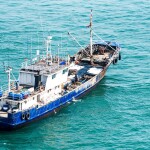
Mauritius especially said it was dreading the possibility of banning the equipment that E.U. fishing vessels, which supply Mauritius’s tuna-processing factories, rely on.
Veer Singh Boodhna, the permanent secretary in Mauritius’s Ministry of Blue Economy, Marine Resources, Fisheries, and Shipping, said on 22 July that limiting the use of dFADs would “hinder the smooth and continuous supply of raw materials to local canneries and result in severe losses in revenue to developing coastal states, including small islands … [that] rely heavily on the purse seine fishery.”
The E.U. – another IOTC member that argued against the provisions in the resolution – echoed Boodhna, stating that the proposals were “either practically not implementable or, if implemented, would result in a disproportionate burden on the purse seine fleets operating in the area without any specific scientific advice to support them.”
The IOTC, in pushing for a review on the rejected proposal, is likely to consider the E.U.’s concerns that there is a worrying precedent emerging in which “crucial management decision[s] [are] taken without exhausting all efforts to reach a consensus and with expressed opposition of all the IOTC members fishing on dFADs.”
The E.U. has also questioned the motive for some IOTC members to embrace the compulsory closure of dFADs, but exclude anchored FADs (aFADs) – the function and impact of which are very similar to dFADs.
“We are discouraged by the fact that the IOTC seemed to lack the same level of ambition to address anchored FADs,” the E.U.’s statement added.
The collapse of the proposed ban on dFADs most likely secures Mauritius’s ambition to attain unfettered access to tuna feedstock from E.U. vessels for its tuna-processing plants.
Government statistics estimate Mauritius’s fish production totaled more than 75,000 metric tons (MT) annually as recently as 2021. Fish production since then has continued to increase, with the Food and Agriculture Organization (FAO) attributing the spike to the “increased use of FADs that elsewhere has been blamed for the waning yellowfin tuna numbers in the Indian Ocean.”
However, Mauritian companies and representatives said they still recognize the concerns FADs pose, and said they’re working on ways to ensure stock sustainability.
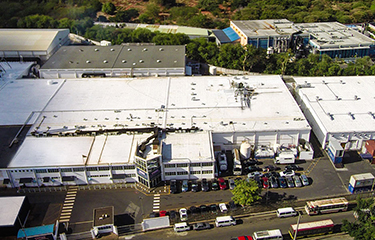
For example, the leading tuna processor in Mauritius, – Prince Tuna Mauritius (PTM) – acknowledged the concerns regarding falling yellowfin tuna numbers within the IOTC’s jurisdiction and expressed a commitment to support rebuilding efforts.
The company, a joint venture with long-term partners Ireland Blyth Limited (IBL) and the Mauritian State Investment Corporation (SIC), says one of the biggest business risks in its Mauritius operations is the sustainability of tuna stocks.
Previously, PTM unveiled plans to reduce its sourcing of Indian Ocean yellowfin tuna by 50 percent – an equivalent of 16,000 MT – between 2017 and 2022.
“This is a bold move that goes beyond the commitments of other brands and processors, demonstrating our commitment to fish sustainability,” the company said at the time, though the company has yet to confirm whether it achieved that target.
The E.U. is also considering ways to satisfy all parties by proposing a review of the resolution to address identified loopholes, with the ultimate goal of reaching a consensus on an implementable and science-based resolution.
The close ties between Mauritius and the E.U. go back a long ways, specifically with France, which claims ownership of the entire Chagos Archipelago in the Indian Ocean, as well as the French-administered Tromelin Island, both of which are near Mauritius.
A sustainable fisheries partnership agreement (SFPA) between the two IOTC members has further strengthened the relationship between the country and E.U.. The current SFPA – signed in December 2022 – runs for four years through the end of 2026.
A total of 40 tuna seiners and 45 surface long liners have received permission to catch at least 5,500 MT of tuna annually, with shipowners paying EUR 80 (USD 85) for every MT caught and landed.
Mauritius expects to receive around EUR 725,000 (USD 778,000) annually, as vessels from Spain, France, Portugal, and Italy fish tuna within the country’s exclusive economic zone.
Photo courtesy of Prince Tuna Mauritius
