






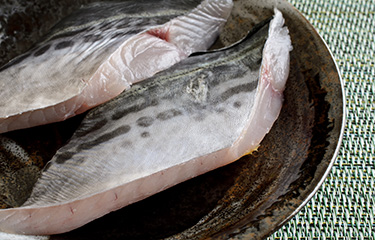
Conservation measures on Spanish mackerel introduced by an Australian state strike the right balance between conservation and economics, according to Victoria, Australia-based fisheries consultant Anthony Ciconte.
The new rules, introduced by Queensland Agricultural Industry Development and Fisheries Department for Queensland’s East Coast fishery, will come into effect October 2022 and will result in commercial catches being limited to 165 metric tons for the 2023 fishing season, down from 300 metric tons in 2022, the same level of fishing effort that has been allocated since 2004. There will also be several closed periods during the season, each three weeks in length.
The new rules follow a year-long consultation process and were prompted by an extended period of low catch rates, according to Ciconte, managing partner of Atlantis Fisheries Consultancy Group. The most-recent stock assessment for the fishery suggests Spanish mackerel stocks are down to 17 percent.
Science shows the fishery can recover relatively quickly – taking as little as four to six years to return to healthy levels, Ciconte said. He castigated what he termed “alarmist, short-sighted comments” from environmental NGOs, which he said want “all Australian fisheries closed.”
“[If they succeed], we would be eating imported fish with no evidence of provenance and standards,” he said.
Ciconte said the new controls will give certainty to the fishery and help attract capital.
A 2020 report by the Fisheries Research and Development Corporation found four of the five Spanish mackerel fisheries in Australia – in Western Australia, the Northern Territory, Queensland's east coast, and the Torres Strait, to be fished at sustainable levels, while the Spanish mackerel fishery in the Gulf of Carpentaria fishery was "depleting.”
A statement from the Australian Marine Conservation Society said the government’s decision is “disastrous” and “half-baked.”
“We’re dismayed by this decision.The Queensland government has thrown their own policies in the bin and gone with what the commercial and recreational fishing sectors have pushed for. We’re still going to see more than 300 tonnes of this iconic species pulled out of Queensland east coast waters each year, including during the critical spawning season,” AMCS Queensland Fisheries Expert Simon Miller said. “For Spanish mackerel to recover to resilient and healthy levels, the Queensland government must close the fishery for two years and then completely protect the spawning aggregations by banning fishing altogether. But they’ve chosen not to take this option. If this is how the government thinks they will get a sustainable fishery, they are in dreamland. We have serious concerns for the future of Spanish mackerel under this ill-conceived approach.”
But in a rebuttal, Cairns Professional Game Fishing Spokesperson Daniel McCarthy said any cuts to Australian fishing quotas will have a negative impact.
“Every time these decisions are made, the people that make the decision are never affected by the decision,” McCarthy told Sky News Australia. “But small businesses, hardworking Queenslanders, hardworking Australians just get flogged with a stick all the time to appease the greenies. Particularly in regional Australia, it costs us a lot of money, a lot of jobs, a lot of futures – all just to please a few greenies that, incidentally, don’t even go out on the water.”
Photo courtesy of Nutria3000/Shutterstock
