






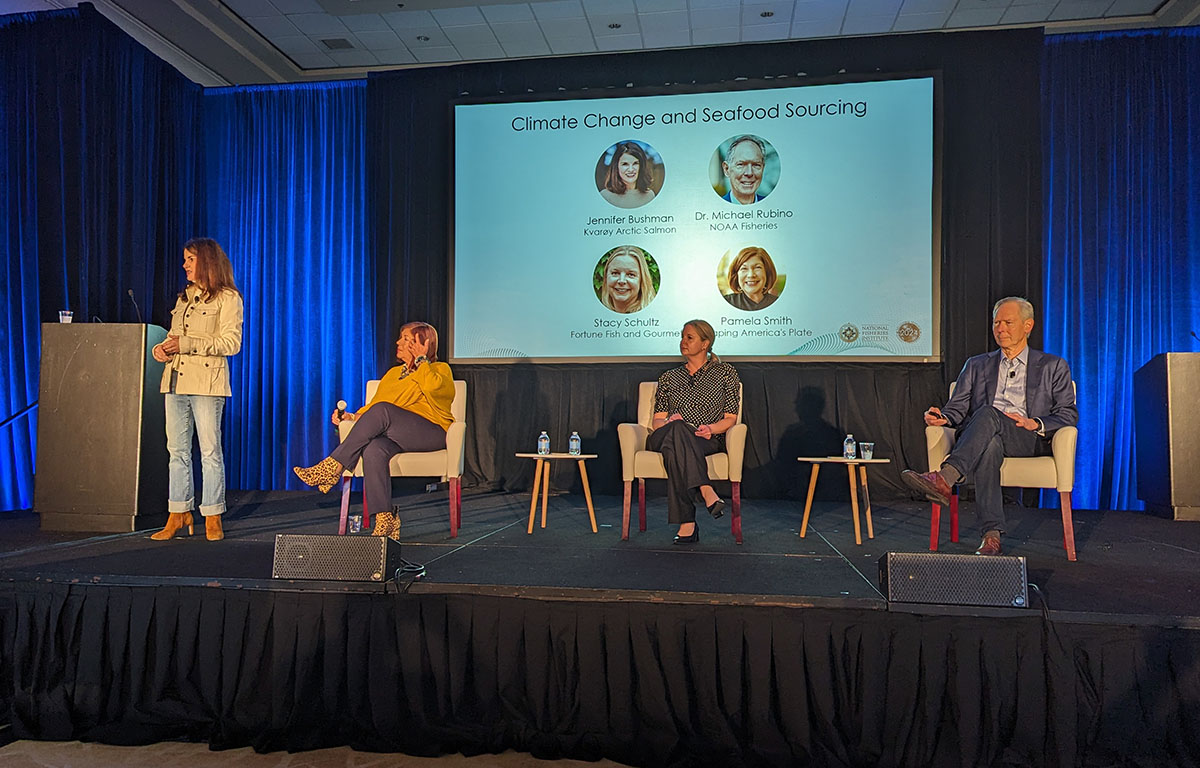
Climate change is undeniably having an impact on where certain seafood species are located, and its exact effects are still being researched.
Research being done in how stocks are shifting varies. Some NOAA studies have predicted high-value groundfish species will migrate toward deeper offshore waters on the west coast of the U.S., while others are pointing out the risks it poses to global blue food production. Despite those risks, a panel covering seafood sourcing amid climate change at the Global Seafood Market Conference – which ran from 23 to 25 January in Orlando, Florida, U.S.A. – said the seafood industry can meet the challenges and even weather them better than other protein industries.
According to NOAA Fisheries Senior Advisor for Seafood Strategy Michael Rubino, as climate change continues to have an impact, the seafood industry can expect to see a few different types of changes. Some, he said, will be gradual, while some will be abrupt changes caused by major weather events occurring with greater intensity and frequency.
NOAA, Rubino said, is working to make sense of what is happening in the water and develop plans so that it can address those changes.
“This has been really studied over the past few years as a sort of precursor of what may happen in the future, along with the types of management changes that need to be made as we go along,” Rubino said.
The next step for NOAA is to build a national seafood strategy and assemble data resources for the seafood industry so that they can make decisions and predictions of their own going forward, Rubino said. The goal is that industry and the government will have a plan to react to a negative event – like the sudden collapse of the snow crab fishery in Alaska.
“When the crab collapsed in Alaska a couple years ago, there was no real plan in place of how to mitigate for this. How were fishermen going to make their boat payments in the face of not being able to go catch crab?” Rubino said. NOAA’s goal is to establish strategies that will allow the industry and government to adapt to those events.
The good news for the seafood industry is there are opportunities out there. Rubino pointed out that as various seafood species shift their habitats, some are seeing surges in population, which the industry can capitalize on as the world works on tackling climate change.
Some of seafood’s existing ability to thrive in a chaotic supply chain environment will come in handy when things start to change, Fortune Fish and Gourmet Director of Supply Chain Stewardship Stacy Schultz said. Much of the seafood industry has already developed strategies for how to handle a shifting supply chain because biological events or supply issues have already been a part of most businesses' yearly operations.
The communication channels that the industry has developed as a result of that chaos will continue to be important going forward, Schultz said.
“Communication is definitely going to be the key component to making sure that our sales teams are happy and our customers are happy. We have an extensive supply chain, so we’re going to need to be in talks with our suppliers all the time,” Schultz said.
Communicating the reason behind those disruptions and what it means for customers and end users of the supply chain will be an essential part of helping the entire industry deal with the consequences of climate change.
Another piece of good news is that the industry has already experienced changes before and has the tools to respond to more changes, Shaping America’s Plate Founding Principal and CEO Pamela Smith said.
"The restaurant industry has become very familiar with the term 'supply chain disruption,'" Smith said.
Being familiar with it and leveraging the natural flexibility of the seafood industry could be a boon as the sector navigates shifting supply chains.
“Thankfully, we have a lot of species and availability in our industry,” Schultz said. Tapping into those species and finding creative solutions are options that the seafood industry has on the table when other industries may not.
Smith pointed out that even with the advantages, the industry still needs to do some legwork. Consumers need to be educated on what sort of changes could be happening and what those changes mean.
“There’s nothing to despair about. The antidote to despair is action,” Smith said. “We have an exciting opportunity ahead of us, particularly if we can take our guests at our restaurants along on the journey.”
Photo by Chris Chase/SeafoodSource
