






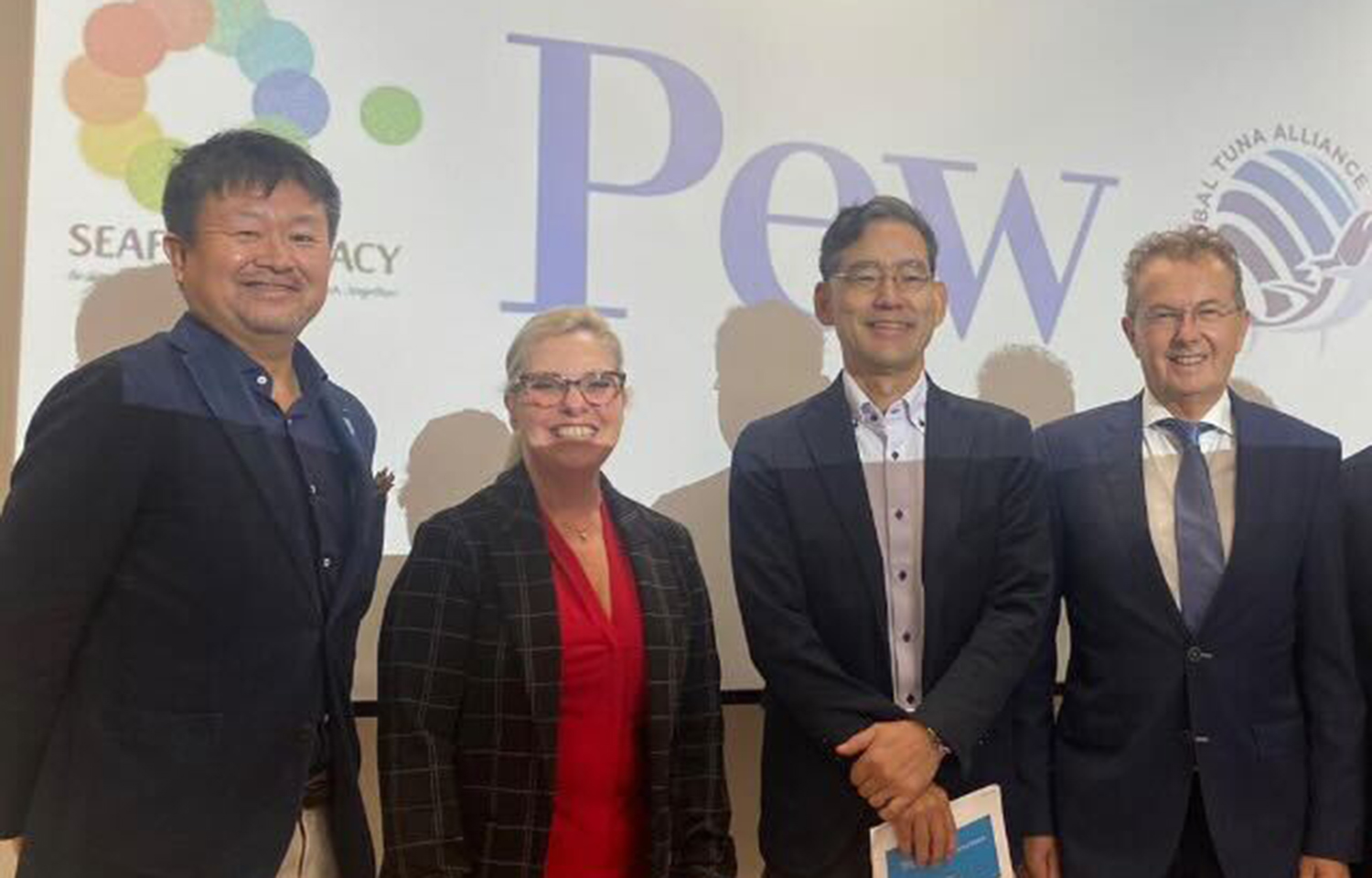
In an attempt to further the discussions held at 2023’s Tokyo Sustainable Seafood Summit (TSSS), an industry workshop took place after the event that aimed to get sweeping opinions on the merit of using electronic monitoring (EM) on vessels operating within the waters overseen by regional fisheries management organizations (RFMOs).
The latest edition of TSSS, which took place in October 2023, included talks on preventing labor abuse in the seafood supply chain, blue finance strategies, and actions the industry could take to limit illegal, unreported, and unregulated (IUU) fishing.
Seeking to take advantage of the momentum TSSS generated through such discussions, The Pew Charitable Trusts, Seafood Legacy, and the Global Tuna Alliance – represented in Japan by Gunther Errhalt, a fisheries and maritime security consultant at Errhalt Consulting who also works closely with the Global Tuna Alliance (GTA) in Japan – gathered industry leaders to discuss EM in detail.
EM entails the use of cameras, sensors, and computers to collect accurate and timely information regarding fishing catch and vessel activity. Implementing EM devices is useful not only for verifying the amount of target species caught but also for observing bycatch and such activities as high-grading and illegal transshipments, several NGOs have argued.
Though 66 percent of all global tuna landings are caught in the Pacific Ocean, many longliner fishing vessels in the region are only required to have observers on 5 percent of their vessels. Additionally, high-seas fisheries monitoring programs typically rely on human observers, who work mainly on purse-seine boats in potentially dangerous situations.
Fishing companies have argued there several reasons for lower coverage requirements, including the fact that smaller vessels cannot accommodate an observer without losing a worker due to capacity issues. Tight working spaces and a limited number of professional observers are also limiting factors; however, EM can eliminate the need for such restrictions.
Errhalt is specifically pushing Japan to take a leading role among Asian countries in pressing for the adoption of EM, arguing that since Japan has generally implemented progressive fishing practices in the past and is a major player in the global seafood trade, it would benefit from becoming a global example that other countries could follow.
At the meeting, representatives from the fishing industry, global retailers, and conservation groups shared information on their experiences with EM and explored paths to increase its use.
As a result of the workshop, four participating companies – Seafood Legacy, Thai Fishing Venture, TNS Industries, and the Global Tuna Alliance – added their names to a joint statement calling upon international fisheries managers to prioritize EM at upcoming RFMO meetings while also calling on member states to support and prioritize the development and implementation of EM programs.
“Recognizing that the adoption of EM standards is key to providing clear guidance on how to collect, analyze, and share information on fishing activity, increase transparency, and improve sustainability, we urge fishery managers and members of the RFMOs from which we source to adopt EM program standards without delay,” the companies said.
The workshop’s concluding reception featured seafood prepared by Ippei Matsumoto, a founding member of Chefs for the Blue – an organization of Japanese chefs committed to a sustainable seafood supply chain – who highlighted the necessity of events like TSSS and the workshop in enhancing traceability up and down the supply chain, including in the restaurants where Matsumoto operates.
“Even if you want to know where, by whom, and how the fish was caught in Japan, you often can’t,” Matsumoto said. “We hope that through electronic monitoring, we can bring transparency to traceability, enabling chefs to support fishermen engaged in sustainable fishing practices.”
Jamie Gibbon, international fisheries program manager for The Pew Charitable Trusts, added at the reception that the onus was on everyone within the supply chain to play their part – from catching, to processing, to distributing, and finally to selling products.
“By advocating for regional electronic monitoring programs, seafood companies can ensure that fishers have the tools they need to easily collect and share information on their catch and operations and to help contribute to responsible management,” Gibbon said.
Pew has previously urged retailers to get involved in influencing RFMO decision-making processes, especially on the topics of harvest strategies, preventing IUU fishing, and EM.
In addition to cameras to record fishing activity, Pew encourages adoption of other technologies, such as the use of real-time vessel monitoring systems (VMS) data with a unique identifier for each vessel and a traceability system that the entire supply chain can access to verify information.
Photo courtesy of Errhalt Consulting
