


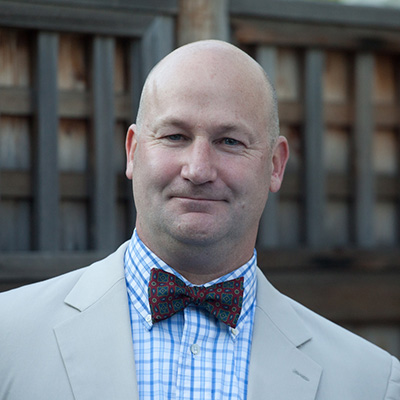
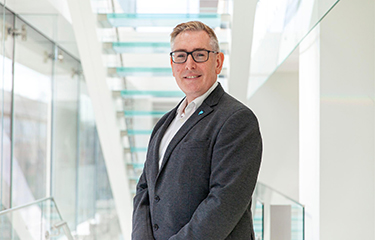
Tom Pickerell was recently named the director of the international fisheries program at The Pew Charitable Trusts. Pickerell previously worked in as executive director of the Global Tuna Alliance and global tuna director for the Sustainable Fisheries Partnership. He is also the founder of Tomalamola Consulting, a seafood sustainability consultancy.
SeafoodSource: Why did you want to join The Pew Charitable Trusts?
Pickerell: Pew is an international, nonpartisan, policy-focused organization, and that was one of the huge attractions for me wanting to join Pew. We work on challenging issues but focus on raising awareness. One of Pew’s strengths is the ability to provide not only the data and the evidence to justify the need for action but also laying out the pathway that can be taken and how you can end up with the appropriate result. Pew is well-respected both within the NGO community and in the policy world. Policymakers often request information from Pew because they know that we are nonpartisan and it will be evidence-based.
An example of this work in fisheries is The Pew Charitable Trust’s review of compliance with the 20-year-old United Nations Fish Stocks Agreement (UNFSA). The agreement is intended to govern worldwide long-term conservation and sustainable use of shared fish stocks – those that bridge the legal boundaries separating the waters of nations, mainly tunas and sharks. Pew has found that, despite some notable progress, countries still are not meeting important legal obligations under the agreement, even as advances in scientific knowledge present critical opportunities to update UNFSA’s decades-old provisions.
SeafoodSource: What will you be doing in your new role?
Pickerell: The role is to lead the international fisheries work within Pew. That includes the management of three programs focused on ending illegal fishing, regional fishery management organizations (RMFOs) with a focus on harvest strategies, and ecosystem conservation and fisheries, which includes looking at a range of issues from electronic monitoring to ecosystem-based fisheries management. There is also a markets team focused on how markets can support the activities of the other teams.
Pew is engaging with many of the RFMOs, not just the tuna RFMOs – other ones like the Northern Pacific Fisheries Commission that most organizations don’t engage with. We have very similar aims for all RFMOs: improving precautionary fisheries management, including the implementation and adoption of harvest strategies.
SeafoodSource: Why is Pew pushing harvest strategies?
Pickerell: The harvest strategy is essentially the framework for management decisions. There are a number of benefits that come from the adoption of harvest strategies. Most importantly, it moves us away from the annual “horse trading” over what amounts fish nations can catch and develops a very structured, science-based mechanism so stakeholders have stability and know what's coming.
They can see the science and how the catch levels reflect the science. It's just a better way to manage fisheries, but it is a change from the old way of doing things. It's taking people on a journey, and there's lots of different steps to get there. Pew works very closely to provide information, evidence, and data to support the decision-making.
SeafoodSource: What are some of Pew’s other goals you’ll be working on?
Pickerell: Pew’s ecosystem conservation and fisheries team is focused on compliance, looking at improving onboard monitoring on fishing vessels. That's a big gap in some fisheries around the world; not having monitoring can increase risks of illegal fishing. It also allows you to determine compliance with the regulations that are in place.
The ecosystem-based work is looking at ensuring fisheries management recognizes wider ecosystem impacts. For example, it includes not just looking at managing the target stock but managing other impacts of fishing activities on the wider ecosystem. This work is currently focused around the Northeast Atlantic, so working with the Northeast Atlantic Fisheries Commission ensures that this ecosystem approach is being reflected in the management decisions at the RFMO level.
There's also a maritime security component that looks at fishing not just as an environmental issue but as a national security issue where IUU [illegal, unreported, unregulated fishing] is treated like other illegal activity.
Pew is also working on the ratification of the Cape Town Agreement on fishing vessel safety. Pulling together these strands is our regional cooperation work which involves working with countries that have an investment in their fisheries to communicate about activities going on in their waters.
SeafoodSource: How or where does collaboration with the seafood industry fit into your work?
Pickerell: The work Pew is doing to get the structures and processes in place to support better management helps the industry, and we want the supply chain beyond the producers to support and engage in this work. We recognize it is hard for people in the supply chain to prioritize this work – processors, retailers, foodservice – but we see them very much as key constituents that are often being left out of the discussions or just not participating.
The Global Tuna Alliance is an example of a partner Pew has worked with to support the industry and increase their voice in policy decisions. The Cape Town Agreement is a priority for both of us, and we can provide information, background, and opportunities for engagement for companies in the supply chain to speak up and support calls to action for [its] implementation. A key part of the work is providing opportunities for engagement and advocacy from companies that share our goals.
Also, the Inter-American Tropical Tuna Commission is taking place in July, and we are really keen to bring along one or two members of the North American seafood sector. It's in Seattle, so it's local for them. The decisions made at the RFMO level will have short-term and long-term business implications for seafood companies, so it is helpful for companies to understand how the decisions are made and to have their voice included.
Photo courtesy of The Pew Charitable Trusts
