




Emeryville, California, U.S.A.-based Finless Foods sees a harmonious path forward in creating both
The company closed a USD 34 million (EUR 32 million) Series B fundraising round in March 2022, with the proceeds going toward a pilot plant for producing cell-cultured bluefin tuna. Soon after the funding round, the company launched a plant-based poke-style tuna analog at the National Restaurant Association trade show, an event Finless Foods Chief Strategy Officer Shannon Consentino-Roush told SeafoodSource was a big milestone for the company.
“That’s when we really started selling,” Consentino-Roush said. “We had been talking with folks loosely about the product, but not full-on sales.”
Since that launch, she said, Finless Foods has undergone “rapid expansion” as distributors have begun to pick up the product for sale.
“Everything from expanding distribution in specialty or regional distributors to having more conversations with other larger distributors to having products actually being taken in by operators,” Consentino-Roush said.
Numerous U.S. colleges have welcomed the company’s plant-based tuna analog and students have reacted positively to their campuses carrying the products, she said.
“I think students want there to be healthier options and not just the burger, the fries, and the chicken nuggets that we all grew up with,” Consentino-Roush said. “Stanford and Notre Dame have taken in our product, and it’s been great to see the really positive feedback from students. Something like 95 percent of the students are saying they want to see this in their campus dining hall.”
Consentino-Roush said Finless Foods launched its plant-based tuna analog through broadline food-distribution company Gordon Food Service with the foodservice industry in mind – and the product has been getting attention quickly.
“We’ve been making a lot of progress in that from sampling to pricing conversations, and that’s been exciting to see,” she said. “Especially already having conversations with national accounts … which as I’m told doesn’t normally happen as early in the process as we’re seeing.”
Finless Foods plans to continue expanding in the plant-based seafood analog space with new innovations, Consentino-Roush said.
“We are expanding on the back end,” she said. “We are expanding out our plant-based innovation pipeline, so there’ll be more products to come. We’re excited for another big presence at the National Restaurant Association this year.”
Consentino-Roush said her company plans to attend the South by Southwest festival this year, an event that has previously explored issues such as aquaculture and sustainability in seafood. Finless Foods will have product placements at the event and others like it investigating the future of food.
“We’re going to be doing some activations there and be involved in some thought leadership events,” she said.
Consentino-Roush said Finless Foods feels plant-based is “here to stay” despite media reports that interest in the products is waning.
“I don’t question that plant-based items and plant-based eating is here to stay. The questions in terms of the 2021 versus the 2022 stats, to me, it’s hard to sift through because we had supply shortages that might have affected what folks were consuming,” she said.
Consentino-Roush said plant-based products will play a significant part in the company's future, but that Finless Foods will always be a cell-cultured seafood company first.
“Finless was founded as a cell-cultured seafood company. Full stop. Finless still has cell-cultured at the very heart of its mission and its business strategy,” she said. “We still have an entire team solely dedicated to everything cell-cultured, and its very specific subsets of technical expertise, tissue engineering, cell biology, bioprocesses.”
That said, launching a plant-based product will help establish Finless Foods in food market channels and evolve it beyond a biotech operation into a food company, Consentino-Roush said.
“Oftentimes you see the companies in the space and are looked at as biotech companies,” she said. “We definitely knew that we needed to transition to being a food company, and that the time to do so probably isn’t when we got regulatory approval.”
Having an established plant-based product and creating retail channels has also helped the company scale up, which will serve it well when it comes time to begin debuting its cell-cultured products, she said.
“One, we have a sales team. Two, we have a marketing team. Three, we have a communications team, four, we have distribution relationships and we’re learning about distribution,” Consentino-Roush said. “This is not to be undersold or underestimated. We’re learning about what operators want from alternatives, what things are important to them like thaw and serve or smaller case packs so there’s less loss of product.”
Finless Foods is still firmly committed to developing its cell-cultured tuna, and to that end it has established and moved into its pilot facility, Consentino-Rousch said.
“I always say to folks, it’s not like there’s a binary – not-done to done – in that we’re constantly installing equipment,” Consentino-Roush said. “There’s been supply chain delays, and so sometimes we get a piece of equipment that we will wait for months later than we expected, but we’ve been building out our sensory lab – every day, our pilot facility is looking more and more state of the art, to be honest.”
The new facility will serve as a lab space for research and development on the company’s products, she said.
“We have an entire food science lab there as well,” Consentino-Roush said.
Throughout the development of the pilot facility, she added, the company has maintained its work on navigating the regulatory pathways it needs to tread to gain U.S. Food and Drug Administration approval for its cell-cultured products.
“We’ve been having really good meetings [with the FDA] and have been meeting our milestones on that front, and we’re still looking to hit all of our cell-cultured milestones – we’re not seeing any delays, which is really fantastic,” Consentino-Roush said.
She said the FDA's approval of Upside Foods’ cell-cultured products in November 2022 was something Finless Foods had been watching closely.
“It’s phenomenal for the industry, I think it was phenomenal on all fronts,” Consentino-Roush said. “Not just in terms of demonstrating the FDA will approve something – I think we had faith that was the case – as much as I think creating a proof of concept for investors, for the rest of the world industry, and for the key stakeholders.”
FDA approval of a cell-cultured product, she said, is a “global signal” that will be great for the expanding industry.
“I think upside getting that safety approval was like ‘Oh, this is achievable in timelines that seem short-term for us,’” Consentino-Roush said. “I think it was a great signal to the growth of the industry, even in terms of attracting capital.”
Finless Foods being involved with both plant-based seafood analogs and cell-cultured seafood puts it in a unique position when it comes to the wider seafood industry, which has pushed back against some aspects of plant-based products, though it has – for now at least – been less concerned with cell-cultured.
Consentino-Roush said the company understands some of the opposition, but believes there is space for both product types in the wider marketplace.
“The NFI [National Fisheries Institute] is a very diverse group, and I think you see that in the perspectives on these two categories,” she said. “I will say that this year has been an evolution, and I think that the interest [in cell-based products] has only grown. So maybe the early adopters were interested last year, now there’s a broader swathe of folks that are really interested.”
Some companies have embraced the alternative proteins, while others have avoided them, a sign of that diversity of opinions, Consentino-Roush said.
“Some companies have already leaned into it,” she said. “Then there’s the camp who are like ‘I’m not going to do it,’ but say, ‘I get it, it’s a diversification.’”
A growing number of companies view plant-based seafood analogs as an opportunity to pull consumers into eating more seafood products, Consentino-Roush said.
She said Finless Foods is aligned with the seafood industry when it comes to the labeling of any plant-based seafood analog or cell-cultured seafood as such, and that the company plans to continue to work with NFI. Finless Foods joined NFI in a submission to the FDA Request for Information on labeling supporting non-deceptive product labeling on cell-cultured products.
“The principles that we put in there for labeling apply for what we would say for plant based – differentiated, not misleading, transparent, clear labeling,” Consentino-Roush said. “I don’t think we’ve ever disagreed with that.”
As the company continues to learn and grow, Consentino-Roush said it also plans to have another fundraising round to help it take the next step on its commercial journey.
“A big part of that fundraising round will be around building out commercial scale production capacity. There’s already a lot of internal work being done on everything from the planning and blueprinting to planning what kind of staff requirements we’ll need to looking at geographies,” she said. “FDA approval is step one, demonstrating proof of concept and being able to sell product – even if it’s locally or in a selected location – is step two, and step three is really upping that production capacity.”
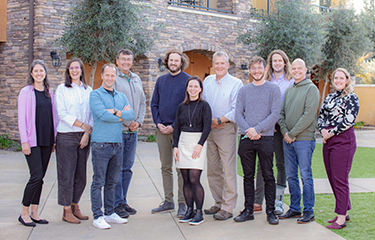
Photo courtesy of Finless Foods
