






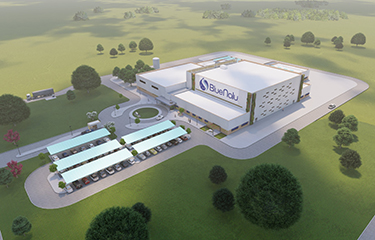
San Diego, California, U.S.A.-based BlueNalu is planning to build a large-scale facility to scale up its cell-cultured seafood production.
The company has “cracked the code to significant profitability” and that the new facility will be critical to its projection of 75 percent gross margins once it is completed and online. That estimate is based on the company’s premium product and market focus and new technologies it has developed that reduce operating and capital costs, according to BlueNalu Co-Founder, President, and CEO Lou Cooperhouse.
The planned 140,000-square-foot facility, scheduled to begin production in 2027, will enable BlueNalu to proceed with its development of cell-based products derived from several different seafood species. The company projects the plant will allow it to grow up to six million pounds of seafood products annually, using eight 100,000-liter bioreactors.
The challenges facing the industry include achieving scalable production of cell-based seafood products, creating a process that produces volumes continuously, developing food-grade raw materials, and developing production methods that gain both regulatory approval and consumer acceptance and adoption. Cooperhouse said the company now has the capacity to overcome each of those challenges.
“We believe that BlueNalu is the only company in the cell-cultured seafood industry [with the ability] to overcome each of these technology and market challenges, which will result in a scalable and highly profitable solution with demonstrable consumer benefits,” Cooperhouse said. “We are pleased to announce today that we have ‘cracked the code’ for creating significant profitability with our cell-cultured bluefin tuna toro and a series of other higher-value products that will follow.”
BlueNalu has developed a non-GMO cell line with high growth rates and a “revolutionary lipid-loading technique” that will “result in a significant reduction in capital expenditures” while also allowing the company to make products with higher fat content, Cooperhouse said. The higher fat profiles are especially key to BlueNalu’s plans to target premium pieces of bluefin tuna, especially the toro portion, he said.
The company also said it has created downstream processes that allow it to continuously produce product without using “plant-based scaffolds,” which had the potential to negatively affect the quality of the product.
“Over the past four years, our team has achieved remarkable scientific milestones which enable us to overcome the fundamental technology barriers required for success,” BlueNalu Chief Technology Officer Lauran Madden said. “In tandem with the plans for commercialization of our bluefin tuna, our team has continued to explore additional species using our platform technology. So far, we have developed hundreds of cell lines for eight different finfish species, and we have initiated projects to expand into other premium seafood categories.”
According to BlueNalu, an independent analysis it commissioned from a leading engineering procurement and construction firm found that using its technologies could result in five times lower costs over other processes.
Earlier this year, the company expanded into a 38,000-square-foot pilot production facility in San Diego. The facility is initially focused on pilot production of BlueNalu's bluefin tuna products.
BlueNalu has also signed memorandums of understanding with the Mitsubishi Corporation, Thai Union, Pulmuone, and Food & Life Companies.
Image courtesy of BlueNalu
