




The epicenter of England’s seafood industry is enjoying a rare luxury – a wealth of skilled and ambitious new recruits available to meet the sector’s growth plans.
While the U.K. processing sector has historically struggled to optimize staffing levels amid negative perceptions about the tasks involved with the industry, recruitment challenges that increased further in the wake of Brexit and significant contraction of the E.U. worker pool, Grimsby and Humber has been bucking the trend.
Grimsby, a port town on the east coast of northern England, and the Humber, a tidal estuary in the same region, are the beating heart of the country’s seafood-processing industry. From a skills standpoint, the region has “a lot of good things going on,” said Simon Dwyer, who represents the 110-year-old Fish Merchants Association in Grimsby.
Grimsby Institute and the University of Lincoln and the National Centre for Food Manufacturing have been closely involved with the workerforce initiatives. Work with the latter has been ongoing for the past 18 months, which will soon establish a campus in Grimsby dedicated to seafood processing training. The long-term vision is that this will form the basis of a National Centre for Seafood Processing that extends beyond Grimsby and Humber.
“They’ve got a strong track record for national centers for food manufacturing with agrifood, working with some very large organizations, so they know what they are doing in terms of delivery,” Dwyer told SeafoodSource. “We’re handholding them to make sure that when it comes to the seafood agenda, they’re doing the right thing.”
The center recently won money from the U.K. Department for Environment, Food ,and Rural Affairs (Defra) skills fund to offer a variety of activities, including bootcamps to upskill people working in the industry at companies of all sizes.
“It might be we talk about traditional skills like filleting, but also, we talk about inspiring leaders, engineering, IT, logistics, etcetera – all the things that go on in the business,” Dwyer said. “We’re really delighted that [Defra] has bought into what we are doing.”
Around GBP 1.25 million (USD 1.6 million, EUR 1.5 million) from local enterprise partnerships and the North East Lincolnshire Council will go toward supporting business improvements, with a focus on smaller enterprises, while Defra has awarded almost GBP 8 million (USD 9.9 million, EUR 9.3 million) in infrastructure funding.
A three-day program has also undergone development with the U.K. Department of Work and Pensions, funded by Fishmongers Company City and Guilds, that gives potential new talent hands-on experiences of working within the seafood sector.
“We work very well with employers and organizations like DWP to create awareness of what the opportunities are,” Dwyer said. “We’ve got good cohesiveness.”
Pre-Brexit, the region’s seafood industry relied on overseas labor for about 30 percent of its workforce, which is a much lower level than the U.K.’s other major seafood-processing hub in northeast Scotland. However, unlike in northeast Scotland, Grimsby and Humber’s seafood businesses aren’t directly competing against large energy-producing companies in relation to offering local employment. Furthermore, in advance of new immigration rules, many seafood businesses took necessary actions so that most overseas employees who wanted to stay could do so, Dwyer said.
“We got the paperwork done. So, overall, while some days or some weeks we might be short of this or that, these are more exceptions rather than trends. We’re in a good place, and we continue to work on various initiatives to support that,” he said.
Another big advantage Grimsby and Humber seafood has above any other cluster in the U.K., regardless of sector, is that the entire industry lies within a 15-minute radius, Dwyer said.
“There’s 5,000 people working within a 15-minute drive of each other. That’s really powerful. We might have occasions when contracts to supply seafood are won and lost, but most of the time, if ‘Company A’ has to lay off X amount of people because of a lost contract, ‘Company B’ will take them on. So, when you see a 200-job-losses headline, two months later, you will see another for 200 job gains.”
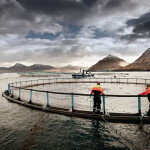
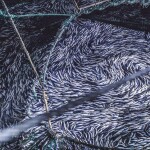
Dwyer said the region’s processing strength is likely to be a key reason that start-up Aquacultured Seafood is planning to build a new 5,000-metric-ton (MT) recirculating aquaculture system (RAS) salmon farm there.
“We process more salmon here than anywhere else in the U.K., with fish coming in from Norway, Iceland, and the Faroes. The major retailers here are buying salmon along with their whitefish and other products so we have the experience. Overall, our businesses are in great shape, with more to come. The future is very much in our hands,” he said.
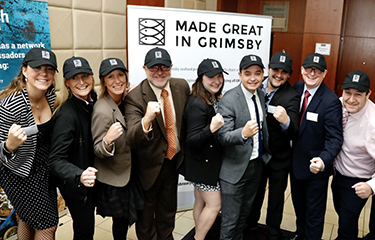
Photo courtesy of Greater Lincolnshire Local Enterprise Partnership
