


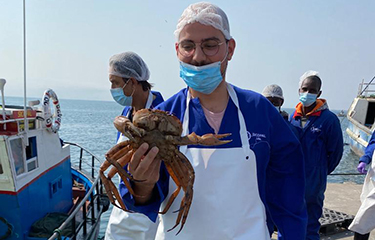
The stark population decline of the U.S. crab resource could be an opportunity to develop the species in the untapped African market.
U.S. President Joe Biden recently hosted the U.S.-Africa Leaders’ Summit, which some in the seafood industry saw as a conducive forum for U.S.-based seafood companies to present a case in favor of investing in Africa’s crab industry to plug the gap created by falling outputs in the U.S.
SeafoodSource talked with Amir Ben Ameur, the director of international operations at U.S.-based Carthage Crabs, which in September 2020 struck a partnership deal with Azzure Mar Seafood Products, another U.S. seafood firm, to promote African crab in the North American market.
SeafoodSource: What are some of the factors driving the global crab market growth, including that in Africa?
Ameur: Supply chain bottlenecks and Covid-outbreak-related explosive demand drove more companies to look for new and alternative sources of crab, usually sourced from Asia. This past year saw extensive and expensive port and freight delays and skyrocketing shipping costs. Much of this logjam was from products from Asia. These challenges opened an opportunity for Carthage Crabs to source seafood for American buyers from Africa. We consider Africa as an untapped market for sourcing seafood as the logistics for shipping and freight are more favorable compared to Asia. Other market driving forces for crab market growth in Africa include cheap labor and the little to nonexistent demand for crab as as a result of different dietary habits in domestic markets in Africa.
SeafoodSource: What is the potential of Africa’s crab market currently?
Ameur: Africa has about 19,000 miles of coast and supplies of crabs and lobster are still untapped in the continent. The potential to supply the global market in Africa is huge, but it requires some patience and dedication to develop these fisheries.
SeafoodSource: How is the behavior of crab meat consumers in the U.S. shaping the African market trends?
Ameur: Crabs and crab products are among the top-10 seafood[products] consumed in the U.S.A. and demand is steadily increasing, especially among Asian groups in the country, with their food-purchasing expenditure set to double to more than USD 8 trillion (EUR 7.5 trillion) by 2030. Crabs are typically more in demand,especially at beach and coastal restaurants, during holidays and summertime.
SeafoodSource: What are some of the factors likely to influence the growth of Africa’s crab market in the long-term?
Ameur: This year we saw lower demand for African raw material because global markets slowed down, and this made us realize that sooner or later, Africa must develop more processing capacity and get into delivering finish product to end markets in order to build resiliency when demand slows down. When demand for Asian products slows down, Asian processors will focus primarily on their own raw material that can satisfy the low market demand.
SeafoodSource: Can you discuss Carthage Crabs’ entry into the Africa market and some of the main crab source markets in the continent?
Ameur: Our flagship product, Portunus pelagicus, known as blue swimming crab, is sourced from the Mediterranean waters of Tunisia and the company has become the gateway for seafood sales between the U.S. and Tunisia. Over time, Carthage Crabs has established a reputation of quality, performance, and reliability for its U.S. clients, with the company sourcing crab species similar to snow crab and king crab, which is deep sea red crab (Chaceon maritae), currently caught in Angola and Namibia. The deep-sea red crab has different usage worldwide, and is more acceptable as an alternative to snow crab meat, especially in Asia and the U.S..
SeafoodSource: Carthage Crabs shipped over 2,000 metric tons of crabs in 2021. How does this compare with the continent’s total crab production?
Ameur: One challenge we see in Africa is the lack of accurate data about biomass of crabs and how much crab is being shipped out. Currently, Carthage Crabs is focused more on creating a sustainable environment where both the crabs and the local industry grow, and hence [we] support building up of the crab population.
SeafoodSource: What programs is the U.S. government and partners involved in that could support growth of Africa’s crab industry?
Ameur: There are many programs in the continent that are helping both U.S. and African businesses increase trade and promote sustainability and traceability. For example, recently the U.S. committed USD 55 billion (EUR 51.4 billion) to help increase two-way trade during the U.S.-Africa summit. Some of that funding is dedicated for agribusiness and supporting the adaptation to climate change. The global community has common oceans and sea and marine species, and that’s why global problems require global solutions.
SeafoodSource: How can trade in seafood between Africa and U.S. be expanded, and what are some of the challenges that have hampered growth of this trade?
Ameur: Africa is the last frontier for business and much of it is still untapped. Unfortunately, some African countries are giving their fishing rights to foreign vessels for a very low price-tag, making Africa a hub for illegal, unreported, and unregulated (IUU) fishing, resulting in devastation of the [continent's] marine resources. Our goal is to work and develop fisheries where the communities are safe, stable, and get supported by their governments.
The Carthage Crabs model is based on local ownership, where we invest in communities and fishermen. We try to make crab sustainability attractive to them by ensuring they understand its economic value as well as supporting them regularly.
All products sold under our Quality Catch brand will have a traceability QR code that will allow consumers to trace the product from the point of catch. Our initiative is supported by retailers who appreciate that our majority of products from Africa are traceable in effort to push against IUU and overfishing in the virgin continent.
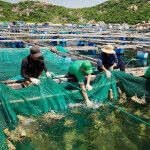
Photo courtesy of Carthage Crabs
