






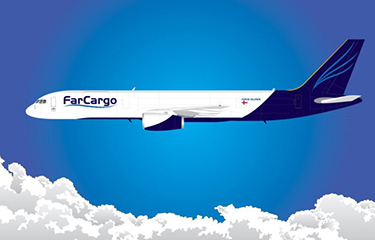
Glyvrar, Faroe Islands-based Atlantic salmon farming firm Bakkafrost Group has confirmed its subsidiary FarCargo P/F has closed a deal to purchase a Boeing 757-200 aircraft that will fly its salmon to the United States.
The company plans to have the 47-meter-long plane – capable of carrying 35 metric tons (MT) of cargo – take its first trip in two- or three-months’ time. Initially, the plane will fly between Vágar in the Faroe Islands and New York.
“This is a great day for us. We’re pleased to have reached this point and are now looking forward to commencing actual operations. This is also an old dream that is now coming true, in particular for initiators Heðin Krett, Hans Meinhard á Høgabóli, and Andrew Djurhuus,” FarCargo CEO Birgir Nielsen said.
For the last 12 months, preparations have been made for the launch of the airline. According to Bakkafrost, finding the right aircraft has been challenging, as has getting all the necessary permits and generally sorting out practicalities.
FarCargo has partnered with Sweden-based company West Atlantic to administrate all flight permits, but has plans to take over the administration of permits and flight services in coming years. Initially, 10 crew members have been recruited and employed on a permanent basis by the company.
“This is a new chapter in Faroese trade history,” Bakkafrost CEO Regin Jacobsen said. “The aim is to deliver fresh, high-quality salmon both in the U.S., Israel, and other remote markets a mere day after the fish swims in Faroese fjords. We believe this will significantly strengthen our competitiveness. Customers, both in Israel and the American sushi market, demand fresh products and with this much shorter route, we will provide our customers with the freshest product on the market.”
The new plane will allow the company to provide a better product, while also increasing cold-chain efficiency and reducing greenhouse gas emissions.
“For many years, we have aimed to make progress in the American market, and along with our U.S. processing plant in New Jersey, this initiative will provide us with the opportunity to provide the customers with the best service possible,” Jacobsen said. “Compared to the current transportation routes through various airfields in Europe, the new route will ensure prolonged shelf-life due to shortened transportation, an unbroken cooling chain and reduction in greenhouse gas emissions.”
FarCargo will also offer Faroese and international businesses space to buy cargo on the plane.
Bakkafrost's move comes as fellow Faroese salmon farmer Hiddenfjord moves away from using air cargo for the transportation of its products. Hiddenfjord ceased its use of airfreight in favor of ocean-going ships in October 2020 as a means to reduce its carbon footprint.
Meanwhile, Bakkafrost has signed contracts with Faroese companies Malltek, RV-tøkni, and Nomatek expand its Viðareiði hatchery. The project, which is expected to be completed in mid-2023, is part of Bakkafrost’s strategy to extend the on-land farming period for its smolt.
Bakkafrost’s expected total harvest volume for 2022 is 103,000 MT gutted-weight, with 68,000 MT from the Faroe Islands and 35,000 MT from Scotland.
Photo courtesy of Bakkafrost Group
