






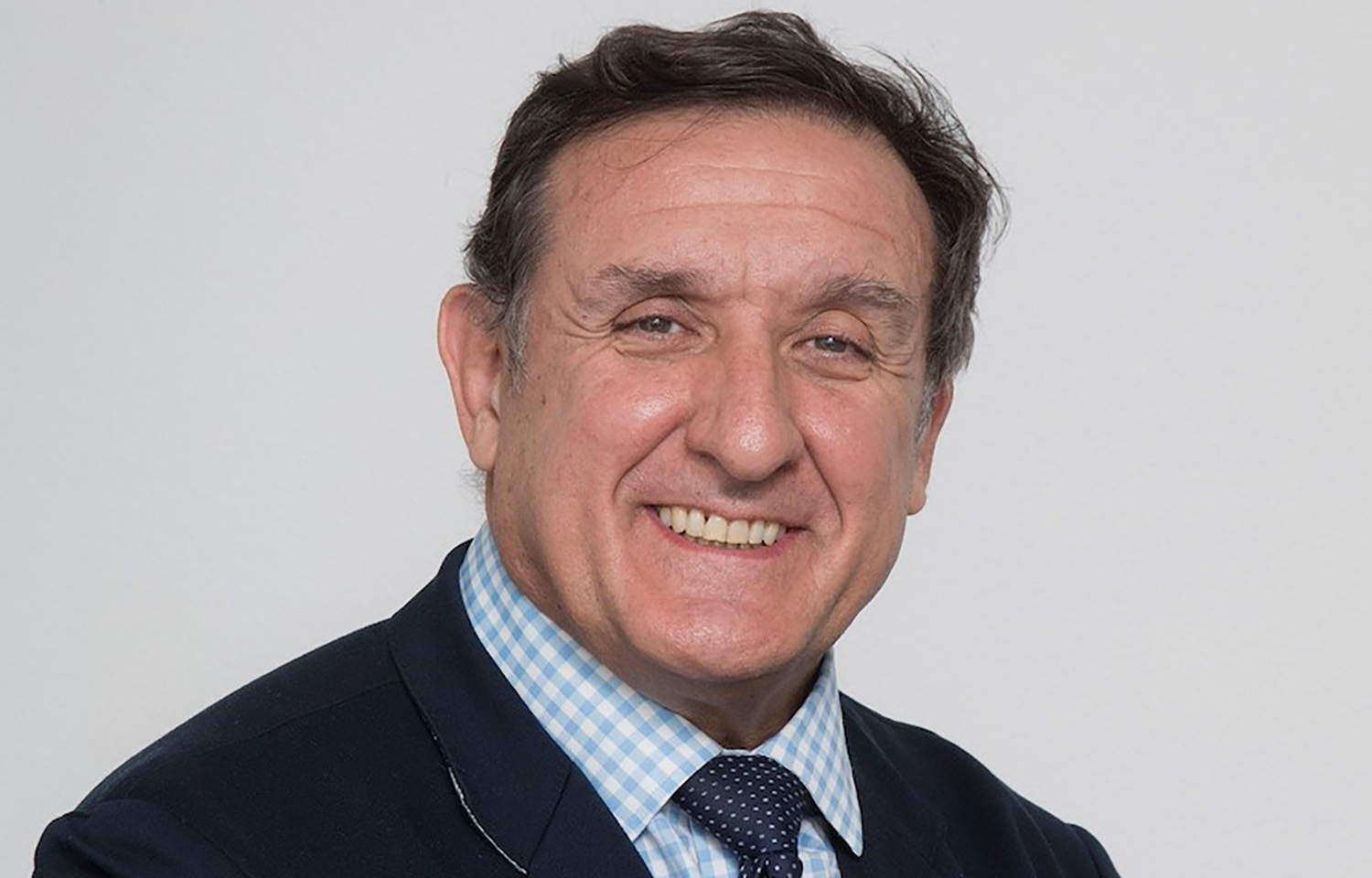
At the end of 2023, Julio Morón Ayala was named the chair of the Spanish Fisheries Confederation (CEPESCA) by its board of directors, replacing Juan Manuel Liria Franch, who retired after holding the position since 2020.
Morón has significant experience in fisheries work and has served in many capacities for several leading organizations, including as managing director of the Organization of Associated Producers of Large Freezer Tuna Freezers (OPAGAC). Immediately prior to this latest appointment, he served CEPESCA as vice president. He’s also a corresponding member of the Royal Academy of the Sea and is president of Working Group 4 of the Long Distance Advisory Council of the European Union (LDAC). In an interview with SeafoodSource, Morón outlined some of the main challenges and opportunities facing Spain’s fishing industry and also areas where he believes CEPESCA can bring about positive change.
SeafoodSource: What attracted you to this new role and what will you be looking to achieve in the position?
Morón: My hope is that CEPESCA further defends the Spanish fishing sector, which is facing many challenges and needs to capitalize on the successful management of many different fisheries. CEPESCA also needs to better inform the public about the benefits of consuming fish, as [it is] the most healthy source of wild protein with the lowest carbon footprint.
SeafoodSource: What are the immediate priorities for CEPESCA moving forward?
Morón: A paramount objective for CEPESCA in the coming months is the European Parliament elections [taking place 6 to 9 June 2024]. With the Common Fisheries Policy (CFP) being an exclusive competence for the E.U. fleet, we need the commissioner in charge of fishing to face up to the priority challenge of food sovereignty.
The E.U. food system is highly dependent on fish imports, [which amount to] EUR 30 billion [USD 32.5 billion] a year, while E.U. fish production is constantly decreasing. Some EUR 4.2 billion [USD 4.5 billion] is spent importing fish from countries with a high risk of human rights abuses, forced labor, and poor fisheries management systems. We also need the E.U. Commission to stop a suicidal policy that depicts [our] fishermen as [something] close to [criminal] suspects and which does not encourage new generations to replace the aging fisher population.
But, after so many years [prioritizing] environmental sustainability, we now see hope, with the E.U. Court of Justice ruling against that prevalence and some of the [environmental] NGOs’ demands. This validates the socioeconomic sustainability claims that member states are making at the E.U. Council. [We] hope that it could mark the future for the CFP.
SeafoodSource: In the longer term, what are the main challenges and opportunities facing Spain’s fishing industry?
Morón: The decrease in fish consumption and being able to replace fishermen are challenges that we need to address immediately because these will [direct] the future 10 years of the fishing industry in Spain.
The main opportunity the Spanish fishing sector is we have been adapting our fishing modes to follow the objectives of the CFP (i.e., through sustainable fishing), and now we need to [show] that value to the market, promoting it ahead of the imports that are coming from suspicious sources. Another problem that has arisen during these inflationary times is the rising price of fish and that it doesn’t benefit from VAT [value-added tax] reduction as a fundamental food for a healthy population.
SeafoodSource: How can the industry overcome these challenges so it becomes more competitive?
Morón: First, by getting united as a sector, avoiding the local competitive spirit that has always characterized fishermen. CEPESCA has been trying for a long time to become a reference for the fishing industry, and we hope to attract more members to work together stronger. We also need a legal framework that champions fair competition and opposes cheap, imported fish from fisheries where lower standards are applied compared with E.U. standards.
SeafoodSource: To help achieve these aims, what changes are necessary at national and international levels?
Morón: We need better control of imports in all member states of the E.U. because we know that despite the fact Spain is doing a great job in controlling fish imports and that Spanish borders are strict, imports still get into the E.U. market through other ports, passing through relaxed control systems. This is something that was denounced by the E.U. Court of Auditors last year.
The E.U. is promoting sustainable fisheries management at the international level, but in many cases, the E.U. fleet is the only one properly compliant with the measures agreed, while many other countries are more relaxed in their compliance. How can anyone believe that a vessel that spends more than two years at sea, transshipping on the high seas, without observers onboard or facing any port inspection offers fair labor conditions and legal fishing? That’s constantly happening nowadays despite the requests every year from the E.U. that every RFMO to increase observer coverage.
SeafoodSource: Is there any further support the industry needs to survive and thrive?
Morón: The Spanish fishing industry has been adapting its fishing practices for the sustainable exploitation of the resource that we live upon. Fishermen, as stewards of the sea, are the first ones interested in making this possible. But if market policies are not commensurate with the standards and regulations that the E.U. is imposing on the Spanish fleet, all of the sector is at a high risk of disappearing.
SeafoodSource: We’ve seen unprecedented industry and market turbulence over the past five years. How has this changed the landscape for CEPESCA and the fishing industry in general?
Morón: All turbulence affects the economic viability of the primary production sector in the E.U. We have more things in common with farmers than anyone. If the E.U. policy does not learn from the crises suffered after Covid-19, the Russian invasion of Ukraine, and the war of Israel against Palestine, turns a blind eye to the E.U. food production system, and dictates policies that incentivize the reduction of E.U. primary production – not valuing what is done by E.U. fishermen and farmers – we have little future.
SeafoodSource: Are there any other key strategies that you will be advancing at CEPESCA?
Morón: We also see a big threat from new trends in protein production: plant-based and cell-cultivated. These are threats that are trying to criminalize the traditional food production system for being based on the death of animals.
They pretend to be from a “good” food system because they don’t kill animals. That’s a very dangerous trend that we sincerely hope consumers will reject – [perhaps] for the implications of eating artificial food compared to naturally produced food. The fish diet was the basis for the homo species to evolve because the fats provided by fish helped develop our intelligence.
I hope humans don’t turn their backs on that evolution. Also, the “secret” to the high life expectancy of the Spanish is based on the pesco-Mediterranean diet; ask your doctors about it!
Photo courtesy of CEPESCA
