


Chinese companies and multinational krill exporters alike are extolling the health benefits of krill oil, heavily marketing the product to China’s aging population as a cure to many of the demographic’s ailments.
This advertising push comes amid an outcry from environmentalists, stating that geopolitical tensions have prevented the further protection of already fragile Antarctic marine ecosystems where trawlers harvest the tiny crustaceans.
Nevertheless, companies have continued to boast about the product’s health benefits at summer conferences around China while more quietly labeling processed Antarctic krill as a potential “gold mine” for the domestic seafood economy, with local governments promoting krill processing as a high-value industry. The municipal government of Qingdao, for instance, has set ambitious targets to develop marine industries, such as krill production, and related biotechnology industries in the region.
Stressing the potential of krill-based products as a solution to China’s diabetes problem, among other benefits, Qingdao-based Function Marine Technology Co. stated at a recent conference that the medicinal properties of krill could help the body properly adjust blood sugar levels.
The company, which earlier this year won the China Antarctic Krill Oil Leader Award at the 2023 China International Health and Nutrition Trade Fair, is a major buyer of krill oil from Oslo, Norway-based Aker Biomarine.
Multinational krill firms like Aker – which also supplies krill oil and meat to Chinese pet food makers – see China as a market with massive potential for growth.
Speaking at the Summer Davos Forum in Tianjin, Matts Johansen, the head of Aker, said in a similar vein to Function that his company wanted to push more krill oil products in China because higher consumption of omega-3 fatty acids through products like krill oil would, he said, help mitigate complications like heart failure in an older populace.
The Norwegian company recently announced that sales of its Superba brand of krill oil increased by 42 percent in the first three months of 2023 compared to the same quarter last year, and would only continue to grow as krill oil is becoming a profitable replacement for increasingly scarce and expensive fish oil and fishmeal.
This will “create opportunities” for the company, Aker said in a statement to investors. “Moreover, higher fish oil prices also increase the value of the omega-3 content in our Qrill Aqua product, which might positively impact demand and prices.”
The increased exploitation of Antarctic krill stocks, mainly from Chinese companies, has worried conservationists who are frustrated that Chinese and Russian intransigence has prevented the establishment of new marine protected areas (MPAs) off the Antarctic coast. Many of these environmentalists raised such concerns at the most recent meeting of the Commission for the Conservation of Antarctic Marine Living Resources (CCAMLR).
The meeting, held in Santiago, Chile, marked the sixth unsuccessful attempt at CCAMLR annual meetings to agree upon a network of Southern Ocean MPAs. China and Russia have blocked 25 other members’ wishes to proceed by continually demanding new data, explained Andrea Kavanagh, director of Southern Ocean work at the Pew Bertarelli Ocean Legacy project.
Krill industry players have fought back on this notion, with some, like Chilean krill industry adviser Dmitri Sclabos, believing NGOs have painted an “apocalyptic” misrepresentation of the Antarctic krill fishery. Sclabos said he believes there is “strong commercial and political interference” in the CCAMLR and foresees a potential change to the body’s voting systems.
“I have not seen any other fishing policy guided by such an amount of top world-class universities, research institutes, and governments, all in conversation [with] the industry,” Sclabos said.
Sclabos said China is central to the fishery’s future and that its involvement in the krill industry is both profitable and a strategic play toward increasing its presence in global supply chains.
“China is known for its strong geopolitical interest to increase its foothold in the water passage around Cape Horn and the land territory that surrounds it; the krill fishery is one step [toward achieving] that,” he told SeafoodSource.
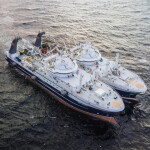
Although China has expressed much interest in the krill industry, the rising costs of building the special trawlers required to withstand Antarctic climes have made some investors wary. Tighter corporate debt and a sluggish economy have also reduced the borrowing appetite of some of the country’s corporations.
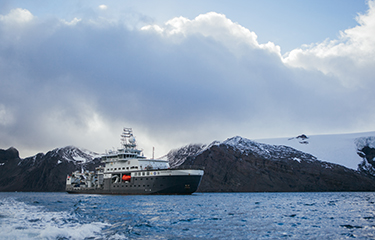
Photo courtesy of Oda Linnea Brekke Iden/HI
