



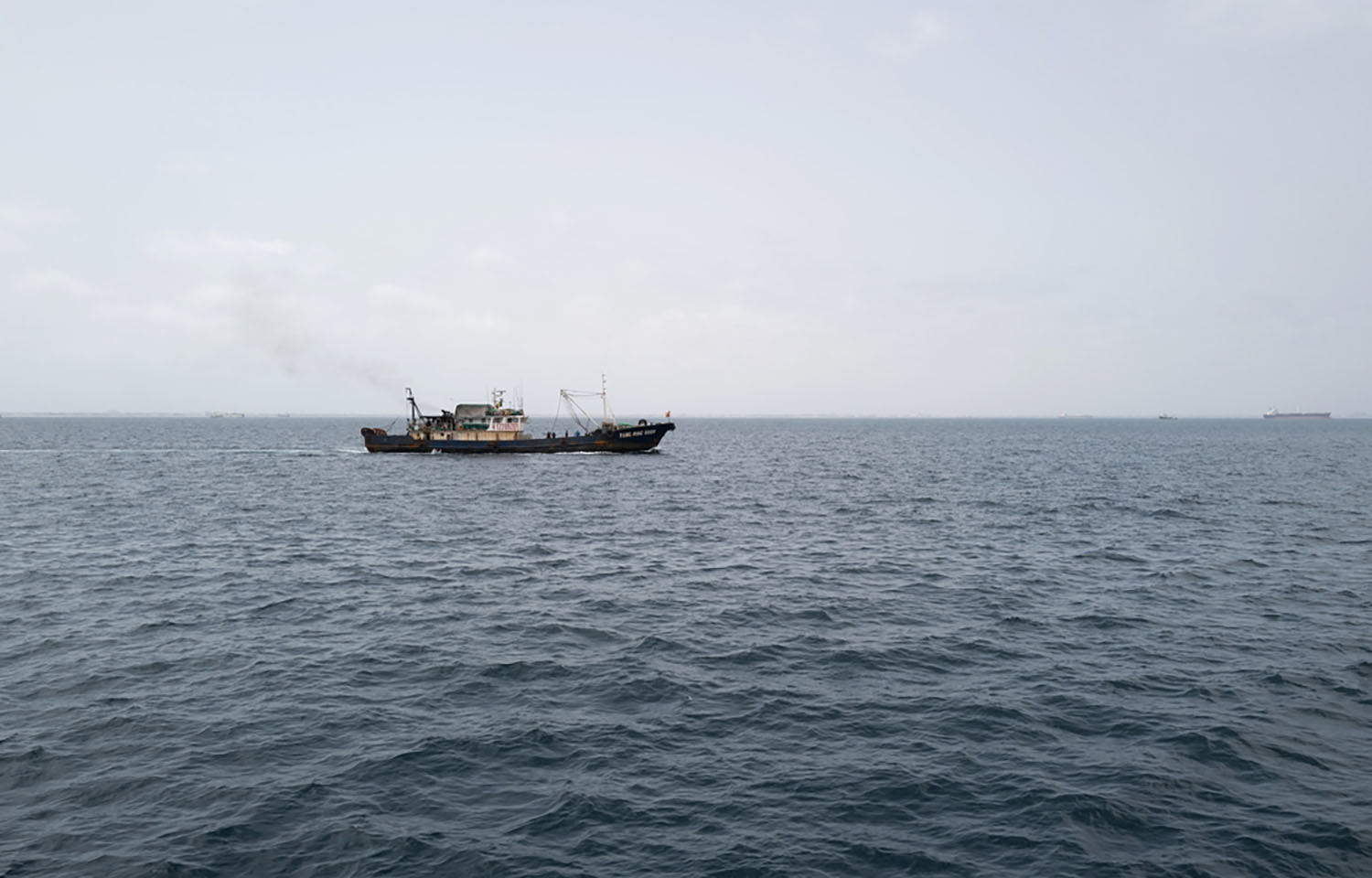
State-owned tuna-fishing firm Shandong Zhonglu Oceanic Fisheries recently claimed that its operations off the coast of Ghana shipped 17,000 metric tons (MT) of the pelagic fish back to mainland China in 2023.
The company said its subsidiary-operated African Star vessel wrapped up a very successful year off of West Africa, which included one expedition in which the company landed 150 MT of tuna – a company record. It said its operations in the region aligned with the company’s goals of increasing domestic sales while simultaneously lessening its dependence on foreign markets.
Zhonglu has been trying to wean its dependency on foreign markets, specifically Japan, for several years now, blaming oversaturation in external markets and the subsequent lower prices brought about by that oversaturation for sluggish profits. To spark growth, the company has actively promoted Chinese consumption of tuna and, in 2020, launched an app aimed at driving direct sales among domestic buyers.
Besides marketing campaigns and app creation, Zhonglu told investors it was keen to expand its ready-to-eat meal options, cold chain logistics, and cross-border commerce. To accomplish this slew of initiatives, Qingdao-based Zhonglu announced in 2021 it would invest CNY 960 million (USD 153 million, EUR 134 million) to build processing, cold storage, and distribution facilities in the outskirts of Qingdao.
The company has also teamed up with another Chinese state-owned entity to grow tuna sales, signing an agreement with retail group Yinzuo, which operates malls and convenience stores across the country.
Despite these efforts, Chinese fishing companies operating in Ghana have drawn heavy scrutiny from local governments and NGOs. The Environmental Justice Foundation called on Ghana in 2021 to change its licensing structure in order to both reduce the number of foreign vessels – principally of Chinese origin – in its waters and increase the earnings the West African country makes off of these deals.
China and its state-owned companies have pushed back on this criticism, with Zhonglu pointing toward the “social contributions” made by the company concerning employment in Ghana and predicting its there will prompt more Chinese fishery firms to “go out” and develop international projects.
Speaking to SeafoodSource, Francis Nunoo, a professor of fisheries science at the University of Ghana, said he welcomed foreign investment in the West African country’s fisheries sector, saying that the country’s waters are “very rich” in tuna and ideal for investment – whether domestic or international.
Nunoo said Ghana requires foreign companies to enter stringent joint ventures, with requirements under the country’s fishery law enforced “to the letter.” Management of Ghanaian tuna resources remains sustainable, as the country is a member of The International Commission for the Conservation of Atlantic Tunas (ICAAT), which sets “very strict” rules to ensure stocks are fished sustainably, Nunoo said.
Several international NGOs believe there is still plenty of work to be done before declaring that tuna in the Atlantic are fished at sustainable levels. Regardless, China is showing no signs of slowing down on exerting its influence on global fisheries sectors.
In addition to its West African ventures, China has targeted increased cooperation in the seas off East Africa and the South Pacific, while also looking closely at establishing relationships in Latin America, West Asia, and Southeast Asia under a five-year plan pushed forward by the national government, the goal of which is to increase the annual catch of the country’s distant-water fleet to 2.3 million MT annually.
Zhonglu alone operates seven tuna purse-seiners and two bottom-trawlers from its base in the Ghanaian city of Tema, which it established in 2007.
Photo courtesy of Pierre Laborde/Shutterstock
