




Europêche, the representative body for European fishers, has accused the authors of a recent report on forced labor in global fleets of displaying bias against Europe – a charge the report’s authors have strongly rebutted.
In a statement to SeafoodSource, Europêche CEO Daniel Voces said the authors of “Dark webs: Uncovering those behind forced labour on fishing fleets” – published by the Financial Transparency Coalition and claiming to be the most extensive analysis of forced labor abuses occurring on commercial fishing vessels to date – used data from “unofficial sources” and focused their data-collection efforts mostly on the E.U. “while gathering only a limited amount of data for other regions.”
Voces said the E.U. has much more publicly available data to sift through than other countries, such as China, that lack transparency in their fleets and believes the way in which the authors extrapolated that data was faulty.
“While the authors acknowledge the difficulty in getting accurate data on the Chinese distant-water fleet, they are, nonetheless, able to assert that E.U. companies own 22.5 percent of vessels engaged in forced labor when the entire E.U. fleet represents only 1.7 percent of the world total [number of vessels],” he said. “The manipulative use of statistics without considering the real lack of data and poor human rights defense system in [certain] countries casts doubt on the report’s credibility.”
Labor abuses in the Chinese fishing fleet have been a prime topic of interest in the E.U. as the European Parliament debates a law that would tighten regluations governing Chinese imports, banning products connected to illegal, unreported, or unregulated (IUU) fishing activities or forced labor. Drafting a report in October 2023 on the Chinese fishing industry, the European Parliament called for greater cooperation with Beijing to increase transparency and for an alignment in standards between the two sides on fisheries governance standards.
China shipped USD 2.2 billion (EUR 2.1 billion) worth of seafood to the E.U. in 2022, making it one of Europe's top seafood suppliers.
In a rebuttal to Voces's statement, Alfonso Daniels, an investigative journalist and an author of the study, said the report used “robust sources,” including both official government data, as well as reports from credible NGOs and media outlets. The methodology employed in the research remained the same for all geographies, Daniels noted. He said the report emphasized the fact that Chinese-owned and -flagged vessels have the highest number of forced labor incidents globally.
Daniels said the study was nowhere near the first to shine a light on the prevalence of forced labor “at a significant scale” on European vessels, with reports published by the University of Nottingham in England and Maynooth University in Ireland, among many others, having come before it.
Nevertheless, Voces said that the E.U. fleet actively advocates for the worldwide ratification of frameworks that promote transparent fishing operations, such as the International Labor Organization’s Work in Fishing Convention – agreed upon in 2007 – while other fleets, such as Thailand's, are lobbying their governments to backtrack on crucial fisheries labor regulations. Voces said there is “scant” attention paid toward a lack of action from the U.S. government, “which ha[s] not ratified relevant fishing or labor regulations.”
Daniels said the many of the frameworks referenced by Voces have either just recently been enacted or have yet to come into effect. He pointed to the recenty of Spain’s own ratification of the Work in Fishing Convention, though Spain is just the ninth of 27 E.U. member nations to complete the ratification process. The convention will come into force for the Spanish fleet on 29 February 2024.
“Europêche, instead of trying to disqualify these findings, should engage with us and the organizations working in the field to address these widespread concerns, ensure that forced labor violations on E.U. vessels are investigated, and ensure that it’s possible to find out the legal and beneficial owners of European commercial fishing vessels through ownership registries and specific registries like the E.U.’s fishing authorization database,” Daniels said. “We would really welcome this engagement.”
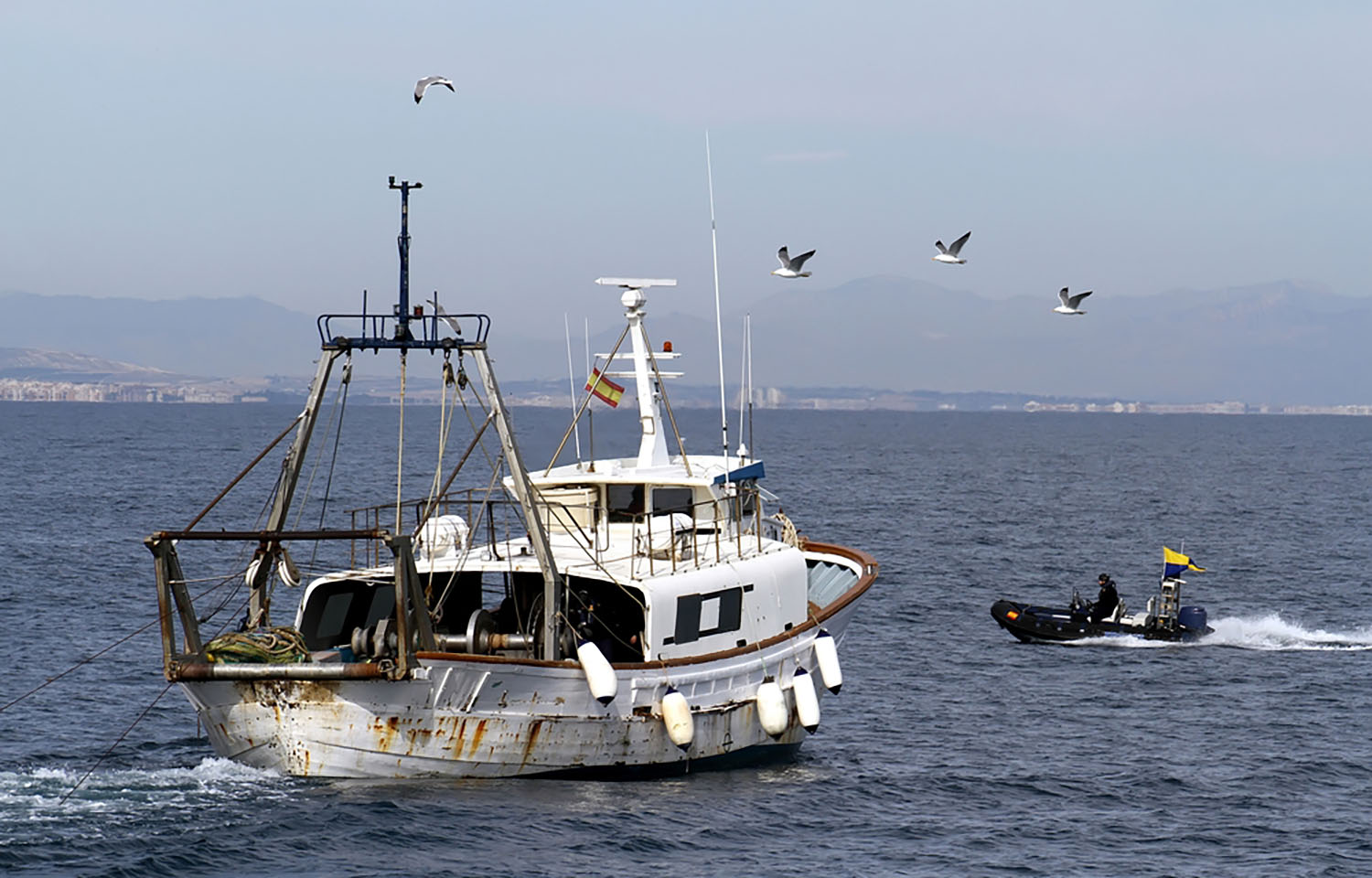
Photo courtesy of Photomarine/Shutterstock
