




The European Union’s Fisheries Council has reached an agreement on next year’s fishing opportunities in the Baltic Sea.
Confirming the package decided at the Council’s latest meeting in Luxemburg, the European Commission said the Baltic Sea continues to struggle with severe environmental pressures and challenges to its ecosystems, with its fish stocks in mostly poor condition.
Under the new agreement, existing fishing opportunities for several stocks will be carried over through 2023, including western and eastern cod (489 MT and 595 MT, respectively), western herring (788 MT), main basin salmon (63,811 MT), and Gulf of Finland salmon (9,455 MT).
The council also agreed to continue additional recovery management measures, such as limiting fishing to unavoidable bycatches for the two cod stocks, main basin salmon, and western herring, and maintaining spawning closures and limitations on recreational fisheries for Baltic cod and salmon in some areas.
Increases were agreed for central herring (up 32 percent to 70,822 MT), and there were total allowable catch (TAC) reductions for sprats (224,114 MT, down 11 percent), Bothnian herring (80,047 MT, down 28 percent), and Riga herring (45,643 MT, down 4 percent).
There is also an in-year amendment of the fishing opportunities in the Atlantic for southern hake. In line with revised scientific advice and as proposed by the commission, the E.U. quota has been increased to 14,096 MT to allow fishers to profit this year from an improved stock situation.
E.U. Commissioner for the Environment, Oceans, and Fisheries Virginijus Sinkevičius said he was happy the council had followed the commission’s proposal for most stocks.
“The very responsible decisions reached today, built on the sustainable compromise reached by the member-states in the Baltic Sea region, will help bring the Baltic to a better environmental status, so that it can once again become a source of living and livelihood for our fishermen and women,” he said.
In response to the agreement, several ocean campaign organizations bemoaned the lack of protection for Baltic herring and cod stocks. The Fisheries Secretariat, Seas at Risk, Our Fish, Oceana, Coalition Clean Baltic, WWF Baltic Ecoregion Program, and the Danish Society for Nature Conservation said in a joint statement that while member-states chose to follow the commission's proposal for plaice, which is a fishery with substantial cod bycatch, they still set quotas for sprats and central Baltic herring higher than the commission had proposed.
“Sprat and herring are an essential foodsource for eastern Baltic cod, and we know cod struggle to find food now. It was great to see the commission acknowledge this in the proposal,” Fisheries Secretariat Director Jan Isakson said. “It is very disappointing that member-states again chose short-term gains instead of helping the recovery of cod in the Baltic.”
Oceana Europe Fisheries Campaign Director Javier López said there is evidence the ecological state of the Baltic Sea is dire, and that overfishing is the main reason for the collapse of cod and western Baltic herring.
“To help recover Baltic fish stocks and marine ecosystems, decision makers really need to do more to factor in interspecies relations and stressors like eutrophication and warming water when setting catch limits,” he said.
The council’s acceptance of the commission’s proposal for additional management considerations to safeguard salmon stocks came in line with scientific advice and includes a shift in management, taking account of spatial and temporal measures that had been strongly suggested by experts for more than 15 years, WWF Baltic Ecoregion Program Director Johanna Fox said.
“It is encouraging that every year we see a little more progress towards sustainability and taking some ecosystem elements into account when setting fishing quotas,” Fox said. “But we need to accelerate the pace if the Baltic ecosystem is to recover. More protective measures are called for, including remote electronic monitoring to secure effective fisheries control, the mandatory use of selective gears and better implementation of the landing obligation, as well as to allocate fishing quotas to fisheries with the least environmental impact.”
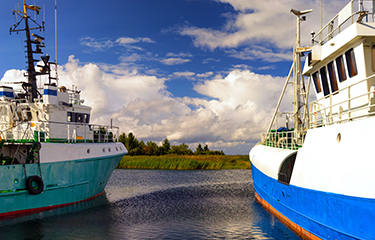
Photo courtesy of Victor Grow/Shutterstock
