






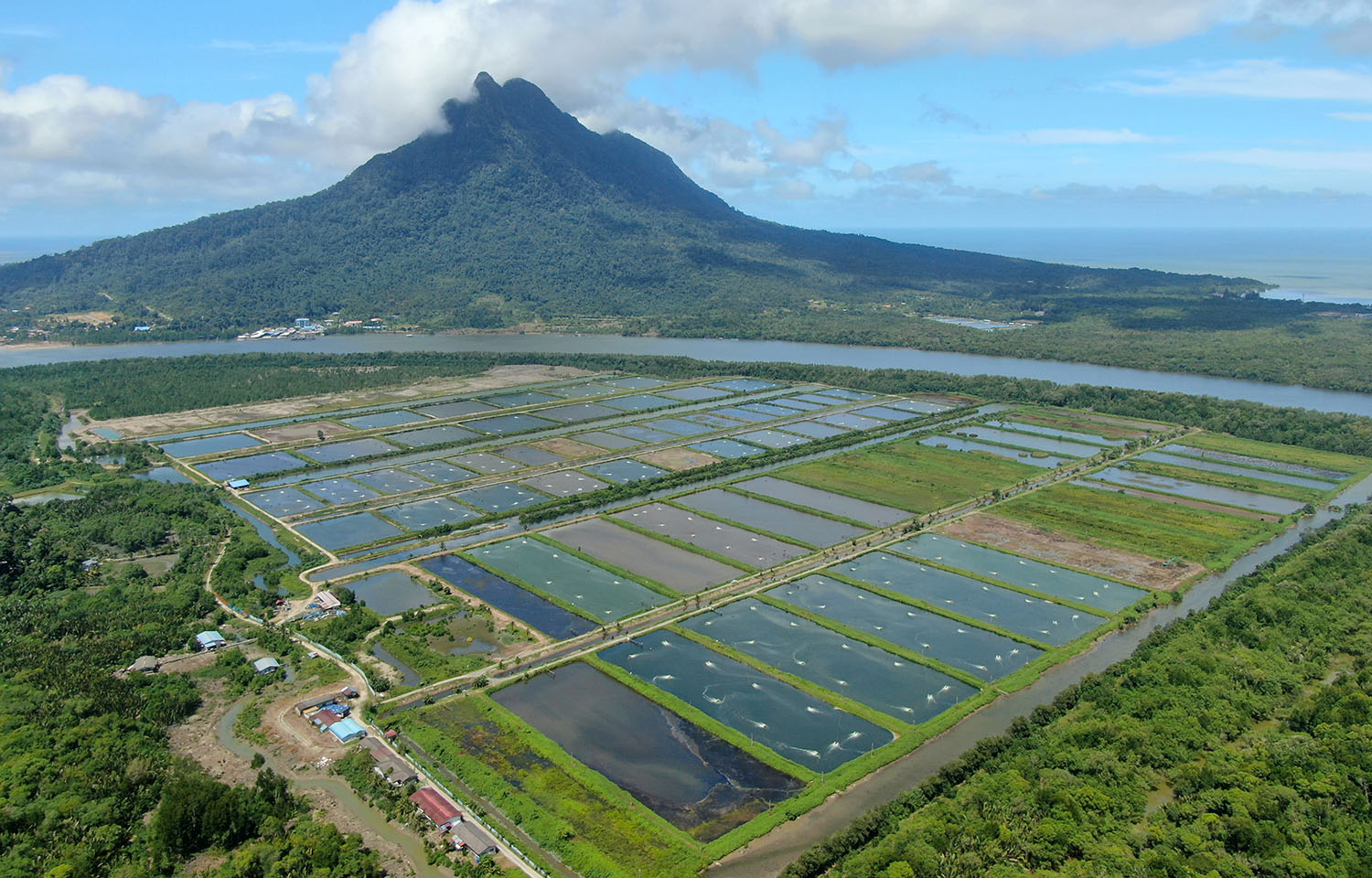
Oversupply of shrimp from major Latin American producers – particularly Ecuador – is causing headaches for producers in Southeast Asia.
Benjamin Saw, the general manager of Malaysian shrimp producer Arus Nagamas Private Limited, based in the country’s Kota Kuala Mudah region, said his firm traditionally relied on strong Chinese demand to suck up supply and stabilize prices in the region. But, the influx of Latin American supply has wiped out profitability on Malaysian farms.
“The global prices are really bad for farmers in Malaysia now as our cost is around CNY 18 [USD 2.50, EUR 2.32] per kilo compared to Ecuador's CNY 12 [USD 1.67, EUR 1.55] per kilo … No wonder they can dump prices. We have managed to clear most of our prawns but only at a small profit,” Saw told SeafoodSource. “Many farmers producing 100 [metric] tons in a six-month cycle are now losing money. We had one pond that produced 6,000 kilograms and still [suffered] a CNY 20,000 [USD 4,200, EUR 3,800] loss. We need prices to be CNY 24 [USD 5.04, EUR 4.56] per kilo and above to allow us to buffer for bad pond performance.”
The traditional bounce in demand from Chinese New Year has also not been as profound this year, according to Saw.
“Prices have [in February] gone up to CNY 24 [USD 5.04, EUR 4.56] now, and demand has been good for Chinese New Year; however, it is still not as strong as previous years where we saw prices range from CNY 27 to CNY 32 [USD 3.75 to USD 4.44, EUR 3.48 to EUR 4.13] per kilo.”
Even as Ecuadorian supply soars, China has signed free trade deals that give it other options in terms of Latin American supply.
In a note to customers, shrimp wholesaler Roda International wrote that while Chinese New Year had lifted prices, “uncertainty” existed over the future of vannamei prices. Chinese buyers have been slow to place new orders and remain cautious about demand after the traditional festival, the shrimp trading firm reported.
Additionally, weaker economic growth has complicated China’s demand outlook, and the future of the country’s economy may hinge on the extent to which Chinese policymakers can revive consumer sentiment.
Amid the collapse of the country’s real estate and infrastructure booms, the Chinese government has sought to stimulate consumption as a new driver of economic growth. China Commerce Minister Wang Wentao said in January 2024 the country plans to focus on increasing domestic consumption this year and is conducting a new round of “policy appraisals,” with a plan to attract more foreign investors.
Meanwhile, average salaries offered by companies in 38 large Chinese cities dropped 1.3 percent in Q4 2023 compared to the same period in 2022, according to data published recently by leading recruitment consultancy Zhilian Zhaopin.
Photo courtesy of
