






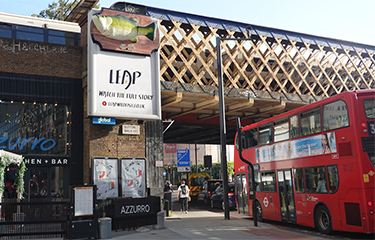
U.K. seafood brand LEAP has brought back an advertising icon of the 2000s as part of its largest campaign to date, aimed at getting the British public to eat more wild-caught fish.
Big Mouth Billy Bass, a wall-mounted fish that lip-syncs songs and has been featured in several TV shows and movies, is back, but this time, it’s in giant animatronic form outside Waterloo – the United Kingdom’s busiest railway station – extolling the taste benefits of consuming wild-caught fish.
Created in partnership with media and entertainment group GlobalSinging, the specially built Big Mouth Billy Bass billboard has the famous fish singing “Take the LEAP,” a new song that is also part of the brand’s first national TV advertising campaign.
LEAP’s two-week Waterloo campaign complements 16 other billboards displaying the messaging of the New England Seafood-owned brand. According to New England Seafood Head of Marketing Lisa Cowell, the campaign aims to put wild salmon “front and center” in consumers’ minds, with the hope to encourage more Brits to try “incredible wild fish.”
“The disruptive creative breaks category norms to communicate the superior taste of wild fish due to their incredible natural diet from a life swimming free,” she said.
The TV ad featuring the new song is seeking to drive the importance of consuming wild fish for its elevated taste and will air across satellite channels, YouTube, and social media through the end of December.
LEAP Brand Marketing Manager Sam Parker told SeafoodSource that the TV messaging encourages consumers to reappraise the fish they buy and explained that the purpose of the advert is to highlight the two different types of fish people can purchase – farmed and wild.
“At LEAP, we believe that the best fish all swim free; however, we understand that aquaculture is going to play a vital role in sustainably feeding a growing world population. Research shows that although LEAP jovially points out that wild fish are tastier than farmed fish, for many consumers, farmed fish will still be the default choice,” Parker said.
With LEAP’s salmon and tuna in particular coming from distant-water fisheries and, therefore, traveling large distances before reaching the U.K. market, Parker said the brand is constantly working to reduce its impact on the natural environment so that it can “continue to offer the U.K. consumer some of the best wild-caught fish [available].”
LEAP’s range of products currently comprises 14 Marine Stewardship Council (MSC)-certified products, including smoked sockeye salmon, sockeye salmon fillets, cod loin and fillets, smoked haddock, and yellowfin and albacore tuna. These are available throughout the U.K. via retail companies Tesco, Waitrose, Ocado, Wholefood, and Mindful Chef.
As LEAP tries to get U.K. consumers to turn toward wild-caught options, the U.K. seafood industry as a whole is experiencing lower levels of imports and retail purchases due to inflationary trends over the past year.
According to the latest figures from U.K. body Seafish, the volume of seafood imported by the U.K. in the first quarter of this year was 6 percent, or 9,402 metric tons (MT), less than in the corresponding period of last year, and the value of these imports was 12 percent higher.
Seafish’s analysis also found that salmon import prices increased more than any other species group at 28 percent in the January through March period, while import volume decreased by 27 percent year over year. Furthermore, salmon import prices continued to grow at a higher rate than at any time in the past decade, while import volume declined at the fastest rate.
More than 60 percent of the U.K.’s salmon import volume came from Norway. However, the authority highlighted that the new 25 percent tax on Norway’s salmon-farming industry could deter U.K. importers from the Norwegian market in the future.
At the end of March 2023, the total value of seafood sold through U.K. retail channels over the past 12 months stood at GBP 4.08 billion (USD 5 billion, EUR 4.7 billion), down 1 percent compared to the previous 12 months. The volume of seafood sold in retail over the same period was 378,046 MT, down 7.5 percent on the previous year.
Photo courtesy of LEAP
