






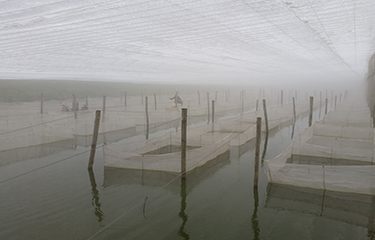
The supply of Chinese tilapia has tightened, and farmgate prices for the product have risen by over 30 percent compared to the same period last year, leading many processors to either suffer through delays in fulfilling contracts or break contracts rather than face sharp losses adhering to them.
Tilapia farmgate prices in the southern province of Hainan peaked at CNY 5.30 (USD 0.74, EUR 0.68) per 500 grams in mid-September, compared to CNY 3.90 (USD 0.54, EUR 0.50) per 500 grams in August 2022.
“Rather than lose money [due to higher farmgate prices for tilapia], lots of Chinese factories are just walking away from contracts,” Didier Boon, the CEO of Beijing-based seafood trading firm East China Seas, told SeafoodSource.
Compounding the issue, supplies have been tight due to a domino effect that kicked off with low market prices for tilapia and higher feed prices that farmers experienced earlier in the year.
“[In the] last half year, tilapia market prices continued to fall, [so] fish farmers in the first quarter of 2023 reduced their pond seedlings by 40 percent [and] also reduced the feed. This meant fish sizes were smaller, and from August to September, there has been a shortage of supply,” Josephine Wang, head of the international market desk at Hainan Golden Springs Food, explained.
Other tilapia processors have reported similar supply shortages.
Lin Xiaowen, the general manager of Hainan Eternal Spring Fisheries Co., told SeafoodSource that his company is under pressure to source enough tilapia needed to fulfill export contracts, but the firm is also paying up to 30 percent more to source raw materials compared to the same time last year.
“Our company was faced with a 60 percent drop in supply for our daily production in some periods of September; it has been very unstable,” Lin said. In terms of fulfilling contracts.
"We have some delays, and we feel very bad about that," Lin said. "We are doing our best to source raw materials.”
While the supply situation has improved since early September, “most of Hainan packers have been short [by about] 30 percent of daily planned raw material volume,” a major tilapia farmer and processor in southern China, who requested anonymity, said. “I expect the lack of supply to continue. Most Hainan packers have stopped offering their prices to non-VIP customers because of limited supply.”
Wang said supply stabilization may arrive following the recent October holiday season, but tighter overall supply levels mean prices are likely to remain elevated for the time being.
More farmers are responding to the higher prices by stocking their ponds. But given that pond-raised tilapia take approximately six months to reach market maturity, it’s not clear if there will be any noticeable impact on supply prior to the spring of 2024.
The near future for the Chinese tilapia sector is, thus, “very unpredictable” and heavily depends on feed prices, as well as demand from key export markets, which has been weak due to inflationary pressures in the E.U. and U.S., said Lin, whose business relies on exports for the bulk of his sales.
“Domestic sales are rising, but export is still more important,” he said.
The upcoming holiday season in Western markets may result in rising demand,, but this could put further strain on tilapia supply, according to Nick Ovchinnikov, the CEO of Oceanside, California, U.S.A.-based Lotus Seafood.
“In the U.S., as we edge closer to the Lent season [February to March of 2024], there’s been a noticeable uptick in replacement costs and seafood demand,” Ovchinnikov told SeafoodSource. “Buyers are building their stock to cater to the anticipated surge during this period.”
Ovchinnikov said he sees the upcoming holiday season driving demand for tilapia in the U.S. and Europe but that the raw material shortage will keep pressure on tilapia prices.
Photo courtesy of Bosstiaan/Shutterstock
