






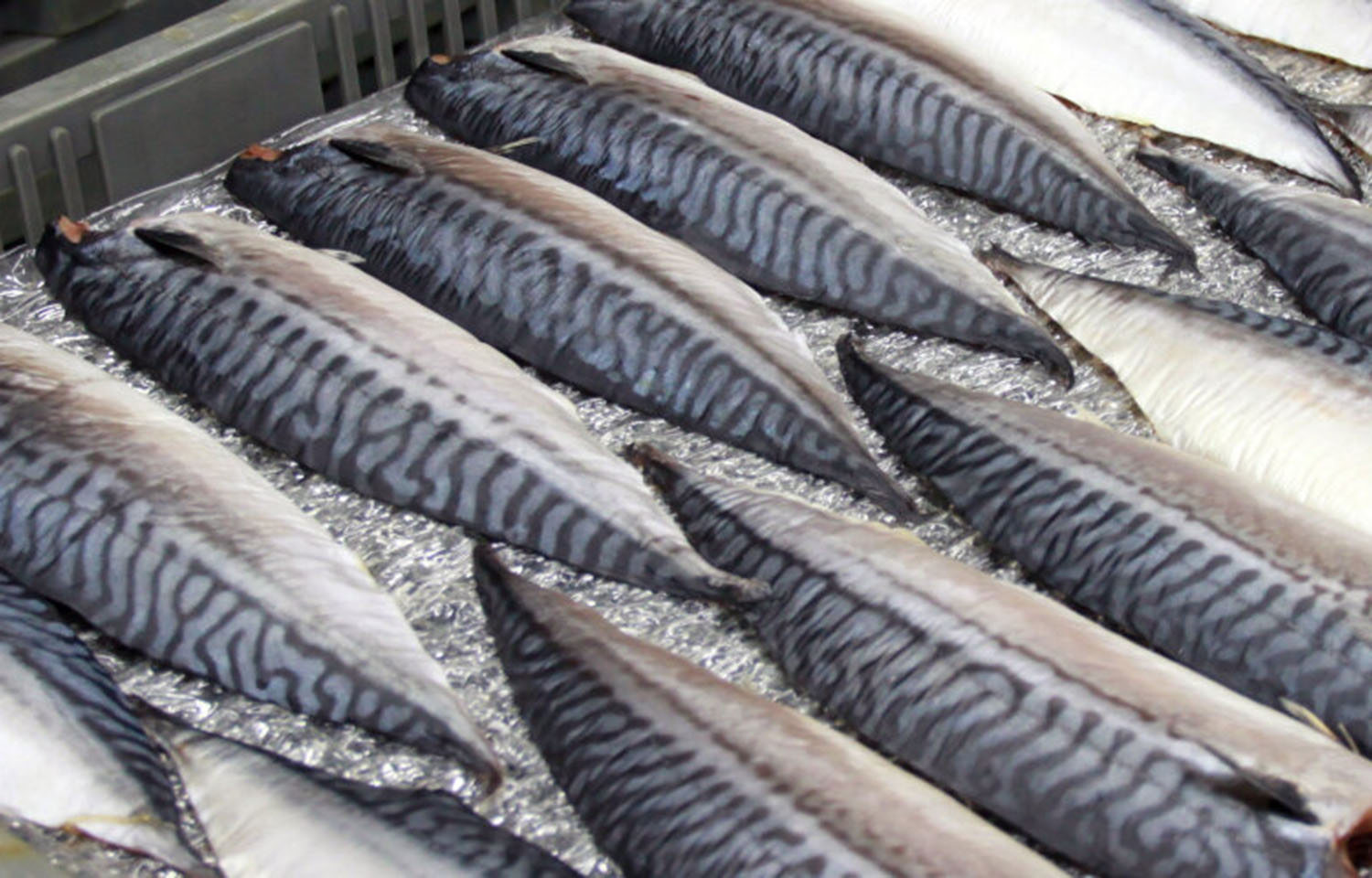
The Norwegian Seafood Council (NSC) has begun to market the country’s mackerel products in China, including through partnerships with Chinese social media influencers, despite ongoing concerns over the stock’s sustainability throughout Europe.
The council recently partnered with Chinese chef Ren Yun Li, whose main account on the app Weibo has 3.2 million followers, and hosted her as a featured attendee at the China International Import Expo in Shanghai in November 2023. At the show, she demonstrated to visitors how Norwegian mackerel can complement traditional Chinese dishes and highlighted the fish’s health benefits.
This collaboration came after Ren traveled to Norway as a guest of the NSC, where she and other Chinese visitors toured a mackerel processing plant in Ålesund on the country’s west coast. Guided by NSC staff, the group also visited salmon and shrimp facilities in Norway.
Andreas Thorud, the former head of NSC’s office in China until October 2023, when he joined Nordic Aqua Partners, said at the time that these types of partnerships were just the beginning of the organization’s marketing effort.
“NSC is working hard to promote various Norwegian seafood products including salmon, cod, mackerel, and shrimp and make sure these high-quality products are accepted and understood by a wider range of Chinese consumers,” he said.
The NSC initiative comes at a time when many in the seafood industry remain concerned over the sustainability of mackerel stocks in Europe, as well as with Norway’s strategy in setting its quotas for the species.
According to Blue Marine Foundation Senior U.K. Marine Policy Manager Jonny Hughes, Northeast Atlantic mackerel is currently fished at around 30 percent above scientifically advised levels, which is causing the stock’s population to nosedive. Hughes said this is largely due to the lack of collaboration between the major coastal states that fish for mackerel, including Norway, the E.U., and the U.K., which have been unable to strike mackerel deals backed by scientific data. Worsening the problem of overfishing, some nations have set their own quotas unilaterally, including Norway, which increased its own quota from around 190,000 metric tons (MT) to just under 300,000 MT in 2021.
“All the parties are setting quotas outside of the [collaborative] coastal states process, as they can’t agree on shares within the negotiations,” he said. “If the parties can’t come to an agreement, there is only one way this ends – with the complete collapse of the stock.”
The Marine Stewardship Council (MSC) has also called on coastal states that harvest Northeast Atlantic mackerel to secure a long-term quota-sharing agreement. These calls are in response to a number of fisheries in the North Atlantic having their MSC certifications suspended due to implemented quotas not aligning with scientific guidance.
Representatives from the E.U. fishing industry have argued that Norway’s steep increase of unilateral quotas puts them at a disadvantage, with Irish fishing bodies particularly incensed.
Irish Fish Producers Organisation (IFPO) CEO Aodh O’Donnell told SeafoodSource that he wants more scrutiny from Irish authorities placed on Norwegian vessels. Ireland’s naval authorities appear to have done just that by stepping up inspections of Norwegian vessels operating in Irish waters. Data provided by the Sea Fisheries Protection Authority (SFPA) shows that in percentage terms, vessels from Denmark and Norway were the most inspected of all foreign vessels landing at Irish ports in 2022, with 48 Norwegian vessels inspected – representing 96 percent of applicable ships – and each of the 17 total Danish vessels inspected by authorities.
By contrast, 41 percent of the 244 French vessels landing at Irish ports underwent inspections and 41 percent of 195 Spanish vessels in 2022 received an inspection.
O’Donnell said the SFPA statistics only reflect inspectios done in Irish ports and “don’t appear to reflect the number or level of catches from Irish waters landed elsewhere.”
Norwegian vessels continue to engage in fishing practices that threaten the sustainability of species such as mackerel, he said.
Photo courtesy of Norwegian Seafood Council
