






The Seychelles has approved several fishing industry policies and regulations in quick succession to spur private investment in key seafood segments and enhance the sustainability of its fishery resources.
The East African island nation's fishing industry regulator, Seychelles Fisheries Authority (SFA), also recently announced the modernization of the nation’s aquaculture policy, which – in tandem with the new policies and regulations – is intended to help attract more foreign direct investment in key seafood segments such as sea cucumbers harvesting, tiger prawn farming, sea urchin farming, and finfish farming.
The Seychelles has prioritized aquaculture because the country considers farming both the inner and outer islands of its coastline to be “a means to mitigate climate change impacts on fisheries by augmenting the local – but declining – supply of preferred fish," according to the SFA.
“Seychelles has a rich marine biodiversity, and it’s likely that other suitable and financially feasible [fish] farming opportunities will be identified, such as sponges and other invertebrates for pharmaceutical, nutraceutical, and cosmetic purposes,” SFA said.
The U.S. has offered assistance in boosting the Seychellois government’s aquaculture development program, which is specifically aimed at improving business opportunities in fish farming with the goal of targeting private-sector investors.
At an August meeting with the SFA, U.S. Ambassador to the Seychelles Henry Jardine said the U.S. recognizes the role aquaculture plays in the global seafood industry and the need to ensure its sustainable management. Jardine said sustainable fish farming contributes to the global drive toward transparency in food supply chains and climate-resilient food systems, especially for small coastal nations like the Seychelles, which relies on seafood for both food security and income.
By expanding its aquaculture sector and updating its national aquaculture policy, the Seychelles is also addressing increasing domestic demand for seafood. The average seafood consumption in Seychelles is an estimated 56 to 65 kilograms per person annually, and seafood accounts for 35 percent to 40 percent of all protein consumed in the country. However, most demersal species in the country’s semi-industrial fishery – and nearly all of the species that comprise artisanal catch – are routinely overexploited, according to the SFA, requiring sustainable management to ensure future supply.
Addressing those issues, on 10 August, Seychelles President Wavel Ramkalawan approved a new harvest strategy and proper management standards for the country’s fishing industry.
The government also replaced the Seychelles Fishing Authority Establishment Act, which dates to 1984. The 2023 Seychelles Fisheries Authority Bill gives the fishing authority more power in managing and sustainably developing the country’s fisheries.
With the new bill, the Seychelles Fishing Authority’s name will be changed to the Seychelles Fisheries Authority and adds one member on to its board. Additionally, the agency has been given the power to promote, organize, develop, and manage sustainable fisheries, as well as the ability to sign agreements related to the management or joint management of fishing ports and their facilities.
Additionally, the Seychelles has approved a ban on the importation and chartering of longline fishing vessels for use in the country’s semi-industrial tuna fishery through June 2024. The ban gives the government more time to address current ongoing challenges such as congestion at fishing ports due to lack of berthing space, as well as inadequate capacity to accommodate foreign crew.
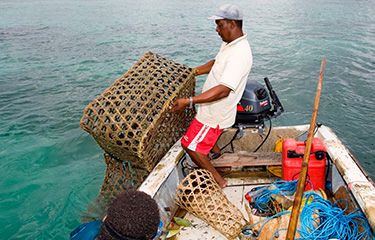
Photo courtesy of the Seychelles Fisheries Authority
