






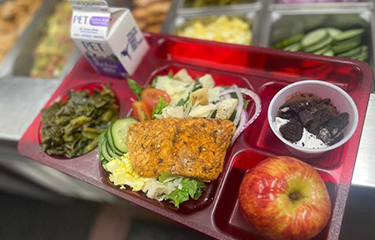
The U.S. government has recently ramped up its seafood purchases for federal school lunch programs across the country, a marked change from its previous practice.
In 2023 alone, the U.S. Department of Agriculture has purchased significant amounts of Alaska pollock, haddock, sockeye salmon, pink salmon, catfish, Pacific shrimp, and Pacific rockfish. And it announced an additional solicitation for up to to 16,720 cases of canned pink salmon for its school lunch program on 16 September.
The change came in parallel with the issuance of dietary guidelines in a November 2022 U.S. General Accounting Office (GAO) report, “National School Lunch Program: USDA Could Enhance Assistance to States and Schools in Providing Seafood to Students," state that school-aged kids should eat between 4 and 10 ounces of seafood weekly. However, until recently, seafood comprised just 1 percent to 2 percent of the animal protein purchased for the U.S. Department of Agriculture’s (USDA) National School Lunch Program (NSLP).
“From states’ and school food authorities’ (SFAs) orders, the USDA purchased a limited quantity of seafood compared to other animal proteins, such as beef, eggs, pork, and poultry, for the NSLP for fiscal years 2014 through 2019,” the report said.
Recognizing the lack of nutritious offerings available to his students, Joe Urban, the director of food and nutrition services for Greenville County Schools in the U.S. state of South Carolina, and Lauren Couchois, the registered culinary dietitian for the school district, introduced a plan to close the gap.
“By prioritizing seafood in [kindergarten through 12th grade] student diets, we can help them build strong bodies, sharp minds, and healthy eating habits that will benefit them for years to come,” Urban and Couchois told SeafoodSource.
As an advocate for increasing seafood consumption in schools through his role as a Seafood Nutrition Partnership chef ambassador, Urban is working to increase the availability of high-quality, sustainable seafood in school meals in his district and encourage others throughout the country to follow in his footsteps, he wrote in a blog post.
“Seafood is not only a sustainable protein option, it is also a vital source of nutrition for growing children that provides an excellent source of omega-3 fatty acids, which are essential for their overall health and development,” Urban wrote. “Omega-3 fatty acids are known to reduce the risk of heart disease, improve brain function, and boost the immune system.”
Additionally, introducing a diverse range of seafood options in school meal programs exposes students to new flavors and culinary experiences.
“This can expand their palates, encourage a love for nutritious foods, and foster a lifelong appreciation for diverse cuisines,” Urban and Couchois said.
To that end, Greenville County Schools utilizes between 5,000 and 7,500 pounds of seafood – including Alaska pollock, wild salmon, mahi, and wild shrimp – monthly. Featured dishes include salmon caesar salads, shrimp and grits, fish tacos, fish sticks, and mahi and grits.
Urban and Couchois said they believe this is a good start, but to truly boost the presence of seafood in school meals, seafood manufacturers should attend more state and national food shows and food brokers should call on school districts to establish partnerships.
“Brokers should be discussing seafood products with confidence and knowledge on how to incorporate seafood items on the menu in ways that may not be the typical school lunch menus we are used to seeing,” they said.
Pacific Seafoods – one of several U.S. suppliers that provide seafood to the NSLP and other federal nutrition programs – is accomplishing what Urban and Couchois have advised by working to introduce more seafood in schools, Pacific Vice President of Marketing and Development Bill Hueffner told SeafoodSource.
“Only one in 10 Americans are following the dietary guideline to eat seafood at least twice a week, with most Americans missing out on the tremendous brain health and heart health benefits that can come from eating more seafood,” Hueffner said. "People develop their dietary habits and preferences during their childhood and youth. Our objective is to make seafood as appealing as it is delicious and make it available and part of the dietary plan in the public school system.”
Pacific decided to get involved after the GAO report shed light on the lack of seafood provided to students across the country, Pacific Seafoods Director of Marketing Lacy Ogan told SeafoodSource.
“There is still much work to be done to ensure students receive the brain-boosting meals they need to be successful in school," Ogan said. "We are actively working alongside fellow industry partners and legislators on increased access to healthy, sustainable seafood for students.”
Urban and Couchois, meanwhile, will discuss the importance of seafood in schools nationwide at Seafood Nutrition Partnership’s 7th Annual State of the Science Symposium – a live-streamed event available for public viewing – in Washington, D.C., on 21 September.
Photo courtesy of Greenville County Schools
