






The New England Fishery Management Council (NEFMC) has decided to halt plans to potentially amend its Atlantic sea scallop fishery management plan to allow leasing scallop permits between boats.
The move came as new stock surveys have revealed scallop biomass has fallen in the waters of the U.S. Northeast in the past few years.
The NEFMC considered three separate motions with different takes on scallop leasing, a process that allows one vessel or company lease scallop quota from another. The first motion would allow temporary leasing in the event of a catastrophic event sch as a vessel breakdown. The second would have developed a plan for voluntary leasing, and the third proposed initiating leasing with a narrower range of alternatives. All three of the motions failed.
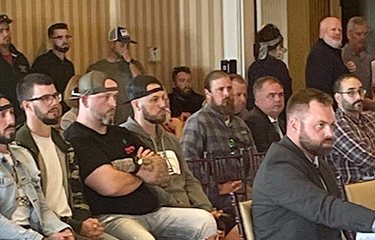
Council members, when considering whether or not to accept leasing, were faced with overwhelming opposition to the concept. Public comments received during the scoping process for the proposal were largely opposed to any form of scallop leasing – according to a council press release, 78 percent of commenters were opposed to leasing.
“Opponents largely expressed concern about consolidation in the fishery and negative impacts to crewmembers and individual vessel owners. Many worried that leasing costs would be passed down to the crew,” the NEFMC release said.
“We have a program in place that has worked for the past 28 or so years and I do not see a need to change to improve some corporate owner's bottom line,” Todd Bragdon, who fishes for scallops out of New Bedford, Massachusetts, said in a written comment opposing the new leasing program.
Supporters of quota leasing said it was a way for individual vessels to obtain additional fishing opportunities and to allow older vessels to be retired, improving efficiency and safety.
“Designing a leasing program that would add flexibility while still maintaining the 5 percent ownership/control cap would increase the economic efficiencies of the fleet while having no added or negative impact to the resource,” Nordic Fisheries Co-Owner Peter Anthony said. “The current management plan of one permit per boat leaves vessels tied to the dock for close to 300 days a year, if a leasing option were available, it could save a tremendous amount of resources such as dock space, wasted fuel being burned while the boats sit idle for months at a time, and it would also limit the potential of environmental issues on unattended vessels.”
Some opponents said decision to lease would effectively be a decision on who gets to stay in the fishery.
“No matter how you look at it, the leasing issue is an economic issue and the council is being asked to make a decision that will decide who stays in the scallop fishery and who are forced to leave the fishery,” John Cardarelli, a fisherman on the scallop vessel Jenna Lee, said. “Currently, the scallop fishery is one of America's greatest fishing successes and is envied throughout the world and I would ask the council to preserve the resource and the fishing communities by rejecting the leasing proposal.”
Fishermen at the meeting told the council that instead of leasing, the most-pressing issue that should be worked in is finding mechanisms to promote scallop recruitment and to address “undesirable practices in the fishery, such as high-grading and deck loading,” the NEFMC release said.
As many fishermen pushed back against the leasing proposal, they also got news that the scallop resource is at its lowest observed level since 1999. The low biomass is related to an extended stretch of below-average recruitment after 2013, according to surveys shared by the NEFMC.
“As a result, access area trip allocations for 2023 are expected to be reduced from 2022 levels,” the NEFMC said.
The results represent a continuation of a trend that began in 2019, when scallop landings hit nearly 60.5 million pounds. Landings in 2020 dropped to just 47.5 million pounds, down 21 percent. The total then dropped again in 2021, sinking to roughly 39 million pounds.
Robust landing totals achieved prior to that were the results of a large 2012 to 2013 year class, which had the highest recruitment event in the fishery’s history. That year-class has run its course, but according to surveys recruitment in 2022 was the best seen since 2015.
“The surveys found several areas with new sets of seed scallops, as well as beds with concentrations of smaller scallops that are continuing to grow. These are positive signs that bode well for the future,” the NEFMC said.
All told, the council is predicting that the acceptable biological catch will likely be less than 44 million pounds in 2023. It also said that Closed Area II will be the access area that “can likely support rotational fishing” in 2023.
Photo courtesy of the New England Fishery Management Council
