






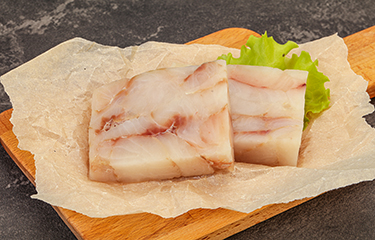
The U.S. Department of Agriculture announced supply contracts for Alaska pollock worth nearly USD 3.7 million (EUR 3.4 million) on 22 May.
And Genuine Alaska Pollock Producers CEO Craig Morris told SeafoodSource the USDA plans to make a near-record purchase of more than 16 million pounds of pollock, as well as canned pink salmon, with bids due 5 June.
Seattle, Washington, U.S.A.-based Trident Seafoods won USD 2.49 million (EUR 2.3 million) of the USDA contract, while Braintree, Massachusetts, U.S.A.-based Channel Fish Processing will supply USD 1.19 million (EUR 1.1 million) worth of Alaska pollock.
The USDA paid an average of USD 2.83 (EUR 2.63) per pound, the highest price USDA has ever paid for Alaska pollock blocks, according to Morris. The agency paid between USD 3.04 to USD 3.09 (EUR 2.82 to EUR 2.87) per pound for the frozen pollock fillets and USD 2.77 to USD 3.03 (EUR 2.57 to EUR 2.82) per pound for frozen pollock sticks.
Now, the USDA’s Agriculture Marketing Service is asking for bids on 16.4 million pounds of frozen pollock and 465,120 cases of canned pink salmon for the government’s domestic food-distribution programs.
“This solicitation, if awarded, would be USDA’s second-largest [for Alaska pollock] in its history,” Genuine Alaska Pollock Producers CEO Craig Morris told SeafoodSource.
The USDA purchased 16.8 million pounds in September 2019, but “prices are so much higher now than they were in 2019 that this will undoubtedly be – if they award the full amount – the largest purchase ever by USDA on a dollar basis,” Morris said. “This buy would also make 2023 the second-largest purchase year since 2019.”
Nonetheless, the new pollock purchase falls far short of the amount of pollock the Alaska Seafood Marketing Institute (ASMI) and Alaska legislators have requested the USDA purchase.
In a late March 2023 letter to USDA Secretary Tom Vilsack, Alaska’s two U.S. senators, Lisa Murkowski and Dan Sullivan, and Alaska’s sole U.S. representative Mary Peltola, urged the agency to purchase more Alaska sockeye salmon and pollock.
“World market and industry conditions combined with record-breaking harvests in 2021-2022 have provided the USDA an opportunity to expand their procurement of highly nutritious and sustainable Alaska sockeye salmon and Alaska pollock,” the legislators wrote. “Currently, Alaska suppliers are nearly finished with the first portion of their Alaska pollock season and need to market this massive harvest. Additionally, planning for the 2023 salmon season has begun while the record-breaking 2022 harvest is still being marketed. Millions of dollars are being spent and committed while waiting on the USDA to declare their need of Alaska seafood.”
It makes sense for the USDA to buy more Alaska seafood, they legislators argued, because the USDA’s 2020-2025 Dietary Guidelines for Americans recommends eating seafood twice weekly, and the U.S. Food and Drug Administration’s new food-labeling proposal calls out salmon independently from other seafood as worthy of carrying a “healthy” label, the legislators said.
“Sustainable wild seafood also contributes to the nutrition, health, and anti-hunger efforts discussed in the recent White House Conference on Nutrition, Hunger and Health,” they wrote.
The USDA has purchased around USD 5 million (EUR 4.6 million) of pollock so far in fiscal year 2023, according to Morris.
The new pollock buy will “help take some supply out of the marketplace,” ASMI Food Aid Program and Development Director Bruce Schactler told SeafoodSource. ASMI originally requested the agency purchase 50 million pounds last September.
“It is presented as some sort of welfare [to Alaska seafood producers]. No one is getting bailed out. If you look at the total amount of food that is being purchased through the food bank systems and the food nutrition support systems the USDA has, the seafood purchases are in very low double digits of the percentage,” Schactler said. “The amount they purchase is insignificant in comparison to their own recommendations for nutritional eating and in comparison to all the other proteins they purchase."
Rising pollock prices in recent months pushed frozen pollock U.S. retail sales down 8.6 percent in April, according to Circana and 210 Analytics. Frozen pollock prices soared nearly 16 percent at retail, the two firms said.
Higher prices are the result of a combination of higher demand and reduced supply, American Seafoods Chief Commercial Officer Rasmus Soerensen told SeafoodSource in April.
“We had a 19 percent drop in our quota last year, which of course immediately had a quite profound impact on pricing for all our products, because we were going through a time of very high demand for everything we produce on our vessels. All of a sudden we [had] almost 20 percent less supply. Consequently, everything frozen off our vessels went to historically high prices in the second half of 2022,” Soerensen said.
However, total allowable catches are “correcting,” so “we are nudging back towards a more normal level at 1.3 million tons this year," Soerensen said.
"It’s [up] 14 percent again,” he said.
Photo courtesy of Andrey Starostin/Shutterstock
